Algeria
 Egypt
 Libya
 Morocco
 Sudan
 Tunisia
 Benin
 Burkina Faso
 Cabo Verde
 Côte d'Ivoire
 Ghana
 Guinea
 Guinea-Bissau
 Liberia
 Mali
 Mauritania
 Niger
 Nigeria
 Senegal
 Sierra Leone
 The Gambia
 Togo
 Cameroon
 Central African Republic
 Chad
 DR Congo
 Equatorial Guinea
 Gabon
 Republic of the Congo
 São Tomé and Príncipe
 Burundi
 Comoros
 Djibouti
 Eritrea
 Ethiopia
 Kenya
 Madagascar
 Malawi
 Mauritius
 Rwanda
 Seychelles
 Somalia
 South Sudan
 Tanzania
 Uganda
 Angola
 Botswana
 Eswatini
 Lesotho
 Namibia
 South Africa
 Zambia
 Zimbabwe
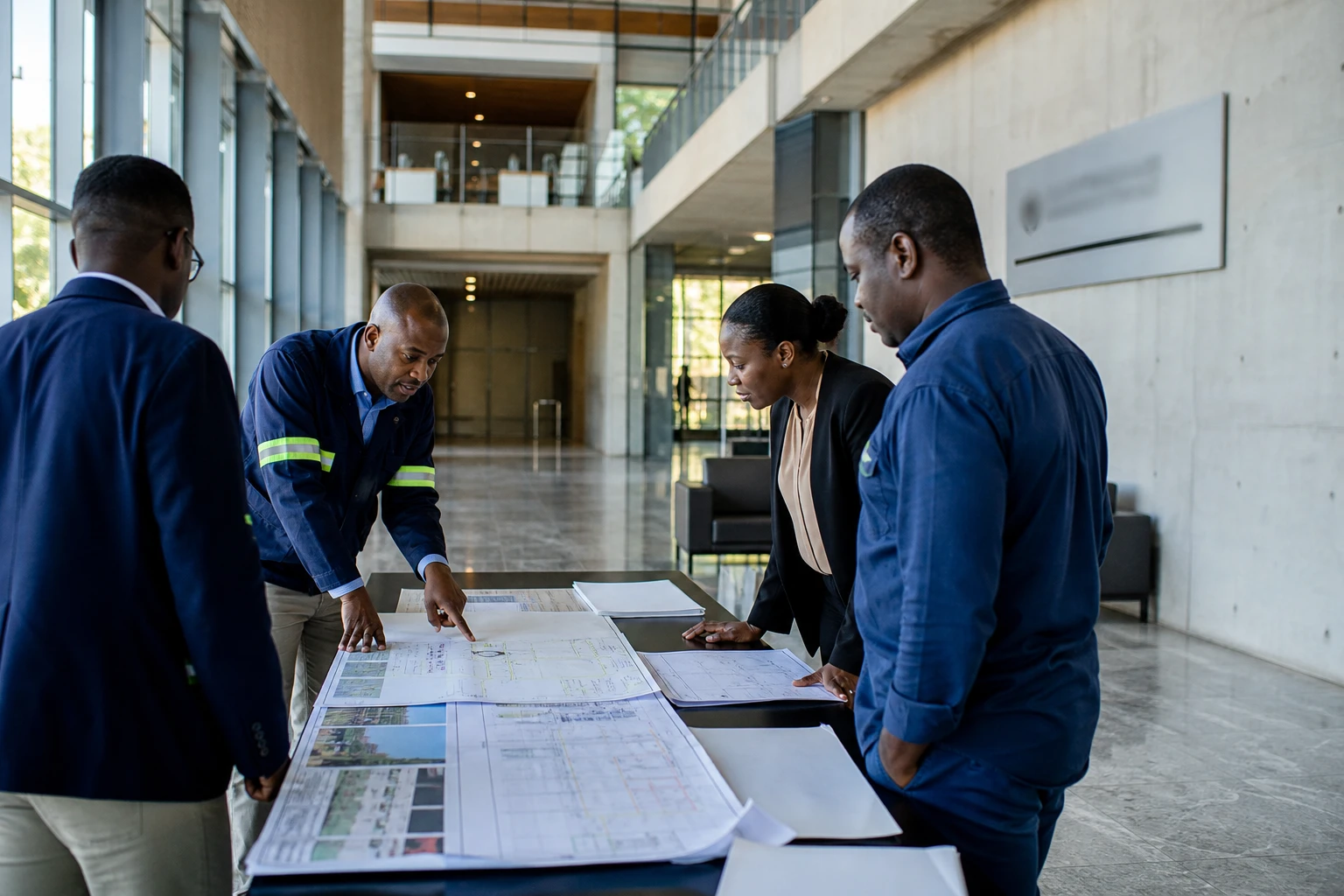
A power plant expected to end reliance on hydropower
In Mozambique, electricity remains an issue of economic security. When rainfall is scarce, bills rise, dams struggle and households and businesses pay the price. It is against this backdrop that the Temane gas-fired power plant is expected to play a role, not as a symbolic project, but as a balancing element in the national electricity system.
For several years, the country has sought to diversify a power supply long dominated by hydropower. In 2025, hydroelectric generation fell by 30.7% to 11.2 million MWh, as a result of an El Niño episode and poor rainfall in the Zambezi basin, according to the government’s annual economic review. Thermal generation, by contrast, held up better, at 3.1 million MWh over the same period. This dependence on climatic conditions explains the attention paid to gas-fired power plants, particularly Temane, in Inhambane province.
Temane, an industrial project turned credibility test
The Temane project was launched in 2022 as a 450 MW combined-cycle gas-fired power plant, intended to feed electricity into the national grid and supply a transmission route to Maputo. The project is structured around Central Térmica de Temane, 85% owned by Mozambique Power Invest and 15% by Sasol Africa, with Globeleq, EleQtra and Electricidade de Moçambique among MPI’s shareholders. The project’s initial total cost was estimated at about $624 million, with financing from the IFC, the US DFC and the OPEC Fund.
The project was also meant to secure a broader strategic link: a 563-kilometre transmission line between Temane and Maputo, described by the International Energy Agency as a building block in a future network connecting the country’s south, centre and north. However, the line can only operate at full capacity once the power plant is running. The delay at Temane is therefore holding up infrastructure that extends well beyond the industrial site itself.
At its 27th ordinary session, the Mozambican government approved a package of rescue measures to restart the project and mobilise additional resources to complete the work. At this stage, the precise sums, concessions granted and new timetable have not been made public in the session statement. The decision marks a turning point: the state is no longer allowing the project to continue along its initial trajectory without intervention.
Delays, cyclone and change of contractor
Temane has faced a series of setbacks since construction began. The International Energy Agency notes that building work started in 2022, but the project was delayed by Tropical Cyclone Filipo in March 2024. President Daniel Chapo later referred in April 2025 to a roughly two-year timeframe for replacing the turbines. The project became more complicated still with the termination of the contract of Spanish company TSK, responsible for design and construction, followed by a new contract with Turkish group ENKA in December 2025.
The new agreement signed with ENKA is worth $158.5 million and provides for 23 months of work. Based on the information currently available, this puts commercial commissioning no earlier than around November 2027, not including the time needed to manufacture and install the replacement turbines. In practice, the project is therefore still a long way from full operational capacity.
The delay has knock-on effects. The power plant is not simply a generation facility. It is also key to ramping up production from Mozambican gas already extracted in the Pande and Temane area, where it is exploited by Sasol and the national hydrocarbons company. It is also delaying the benefits of industrial and energy agreements designed to supply the local market and the SADC region, the Southern African Development Community.
What Temane means for Maputo, Inhambane and the region
For the state, the stakes go beyond electricity generation. Temane is expected to secure dispatchable supply—that is, power available on demand—at a time when drought is weakening dams and urban demand is growing. For EDM, the public electricity utility, it is also a means of reducing emergency imports and making supplies to urban and industrial centres more stable. For households, that means fewer power cuts. For businesses, it means fewer interruptions and more predictable production costs.
In Inhambane, the project also matters to the local economy. Construction jobs, subcontracting contracts and services linked to the site all depend on a timetable that is finally stable. At the same time, the project’s slow progress is delaying the promised benefits for communities in the area, while the turbines destroyed by the storm will have to be replaced with units manufactured in Germany, adding an industrial constraint beyond Maputo’s direct control.
The Temane delay is also holding up exports to Botswana, under an agreement for 100 MW announced in 2022. This regional dimension is important. Mozambique is not seeking only to generate power for itself. It also wants to become a more reliable electricity supplier in the SADC region, where interconnections and energy trading remain crucial to cushioning national shortfalls. The Temane project therefore touches on energy sovereignty, industrialisation and the country’s contractual credibility.
Another step in Mozambique’s energy transition
Mozambique continues to build its energy model around two pillars: hydropower, which still dominates, and natural gas, presented as a transition fuel and a means of stabilising the grid. The International Energy Agency notes that the country produced 19,559 GWh of electricity in 2022, 83% of it from hydropower. This structure explains the system’s extreme sensitivity to climate shocks.
In this context, Temane has wider continental significance. The project shows that a gas deposit alone is not enough to ensure a power plant becomes operational. Financing, engineering, logistics, contractual governance and resilience to climatic hazards must also be coordinated. For southern Africa, it is also a reminder that a credible energy transition cannot be declared in a statement. It has to be built, with robust infrastructure, deadlines kept under control and industrial commitments honoured to the end. Mozambique now wants to regain that control, from Maputo to Inhambane.