Algeria
 Egypt
 Libya
 Morocco
 Sudan
 Tunisia
 Benin
 Burkina Faso
 Cabo Verde
 Côte d'Ivoire
 Ghana
 Guinea
 Guinea-Bissau
 Liberia
 Mali
 Mauritania
 Niger
 Nigeria
 Senegal
 Sierra Leone
 The Gambia
 Togo
 Cameroon
 Central African Republic
 Chad
 DR Congo
 Equatorial Guinea
 Gabon
 Republic of the Congo
 São Tomé and Príncipe
 Burundi
 Comoros
 Djibouti
 Eritrea
 Ethiopia
 Kenya
 Madagascar
 Malawi
 Mauritius
 Rwanda
 Seychelles
 Somalia
 South Sudan
 Tanzania
 Uganda
 Angola
 Botswana
 Eswatini
 Lesotho
 Namibia
 South Africa
 Zambia
 Zimbabwe
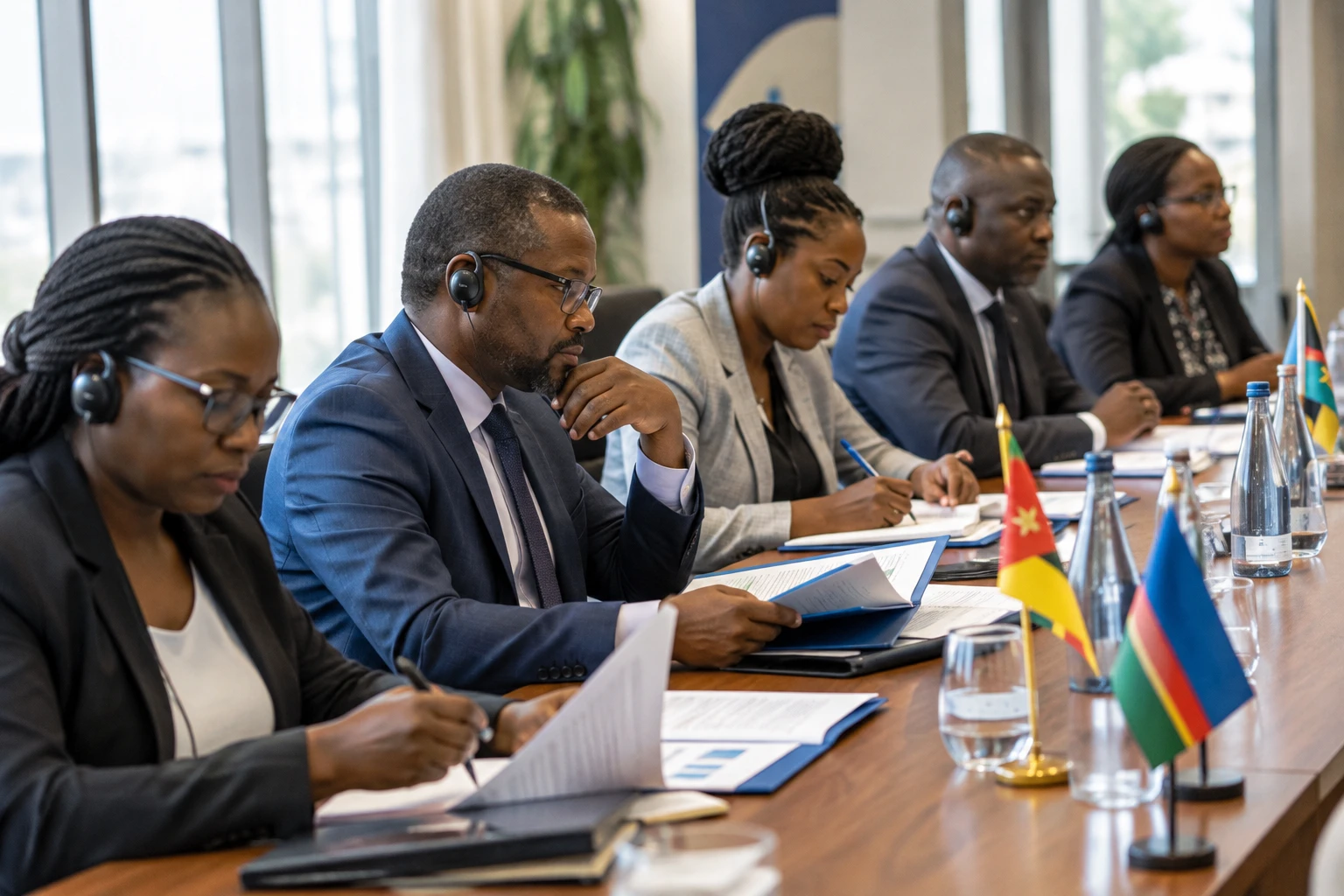
Can gas revenue already received meet immediate needs when Mozambique’s major projects have yet to reach full production? In Maputo, the debate is now as much about how this revenue is spent as about its amount.
A budget adjustment, not a new windfall
On 24 October 2026, Mozambique’s parliament approved a revision to the Economic and Social Plan and the state budget. It adds 3.5746 billion meticais, or about $56 million, to spending planned for this year. The vote pitted MPs from the ruling Frelimo against those from Podemos, Renamo and the Mozambique Democratic Movement, who voted against it, according to reports in the Mozambican and regional press.
This sum does not represent new gas sales made in 2026. It consists of earlier revenues, available in a transitional account linked to Mozambique’s Sovereign Fund, but not included in the year’s initial budget. The distinction matters: the debate concerns the reallocation of funds already received, not a sudden rise in gas revenues.
Mozambique is a member of the Southern African Development Community (SADC), which brings countries in the region together around economic and political co-operation. But the budget decision is first and foremost a domestic one: it concerns the government’s priorities, parliamentary oversight and the capacity of public administrations to carry out the announced works.
Roads, repairs and a parliamentary project
The revision allocates funding across four items. About 1.17 billion meticais, or $18.3 million, is to contribute to the 2026 flood reconstruction programme. An allocation of 1.2 billion meticais, equivalent to $18.8 million, is intended for the rehabilitation of roads and bridges.
The plan also provides 700 million meticais, or nearly $11 million, to repair public infrastructure damaged during the post-election violence of 2024. Finally, 500 million meticais, about $7.8 million, is allocated to the Parliamentary City project.
The choices affect different groups. Passable roads facilitate travel and trade, particularly for producers and traders in affected areas. Repairing public buildings can help restore administrative services. The Parliamentary City, meanwhile, raises questions about funding priorities while repair and public service needs remain substantial.
Parliamentary opposition also focused on the implementation timetable, with just over two months left in the budget year. Opposition MPs questioned whether the works could be launched and completed within that period, and argued for other priorities, including settling arrears owed to teachers and suppliers. These objections do not prove that the funds will go unused; they highlight an oversight issue that the next execution data will make it possible to assess.
Modest revenues set against Rovuma’s promise
Projections illustrate the gap between current revenues and expectations linked to gas. Public revenues from LNG were estimated at $91.8 million in 2024. The government then forecast $79.2 million in 2025 and $76.8 million in 2026. Under the rules set out in budget data, 60% of net revenues go to the state budget and 40% to the Sovereign Fund.
For now, commercial LNG production relies in part on Coral Sul, off the coast of Cabo Delgado province. The Coral Norte project, in the Rovuma Basin, is expected to add capacity of 3.55 million tonnes a year. The National Petroleum Institute says production is due to begin in 2028. In September 2026, the authorities also approved a financing framework of up to $7.2 billion for the project. These are important milestones, but they do not automatically translate into immediate public revenues.
Other Rovuma projects still have development and financing stages to complete before they can sustainably expand sector revenues. Growth in production will also depend on practical factors: the construction of infrastructure, market conditions and the capacity to turn revenues into public investment that is monitored and subject to scrutiny.
The central question: who benefits from gas?
For the government, allocating gas funds to roads and reconstruction links a national resource to visible needs. For residents of flood-hit areas, the measure of success will be the restoration of infrastructure and services, not the overall amount announced. For businesses and workers, completed construction projects can support economic activity; however, budget announcements alone are not enough to establish their effect on employment or incomes.
The management of the Sovereign Fund thus has a political and regional dimension. The framework is intended to govern revenues that may fluctuate with production and prices, while separating sums spent today from those set aside for the future. Transparency over transfers, publication of actual spending and oversight of public procurement will be crucial in judging whether this resource benefits people beyond sectors directly linked to gas.
Across SADC, the development of the Rovuma projects is being watched for its potential effects on energy supply and regional trade. But the decision of 24 October highlights a more immediate challenge for Mozambique: turning still-limited revenues into useful services and infrastructure, without confusing promises of future production with money already available. The next step will be to verify the execution of the revised allocations and track revenue as Coral Norte moves towards its announced start-up.
For budget context, readers can consult Mozambican press reports on the budget revision, the breakdown of allocations and the parliamentary debate, and the National Petroleum Institute’s information on Coral Norte.