Algeria
 Egypt
 Libya
 Morocco
 Sudan
 Tunisia
 Benin
 Burkina Faso
 Cabo Verde
 Côte d'Ivoire
 Ghana
 Guinea
 Guinea-Bissau
 Liberia
 Mali
 Mauritania
 Niger
 Nigeria
 Senegal
 Sierra Leone
 The Gambia
 Togo
 Cameroon
 Central African Republic
 Chad
 DR Congo
 Equatorial Guinea
 Gabon
 Republic of the Congo
 São Tomé and Príncipe
 Burundi
 Comoros
 Djibouti
 Eritrea
 Ethiopia
 Kenya
 Madagascar
 Malawi
 Mauritius
 Rwanda
 Seychelles
 Somalia
 South Sudan
 Tanzania
 Uganda
 Angola
 Botswana
 Eswatini
 Lesotho
 Namibia
 South Africa
 Zambia
 Zimbabwe
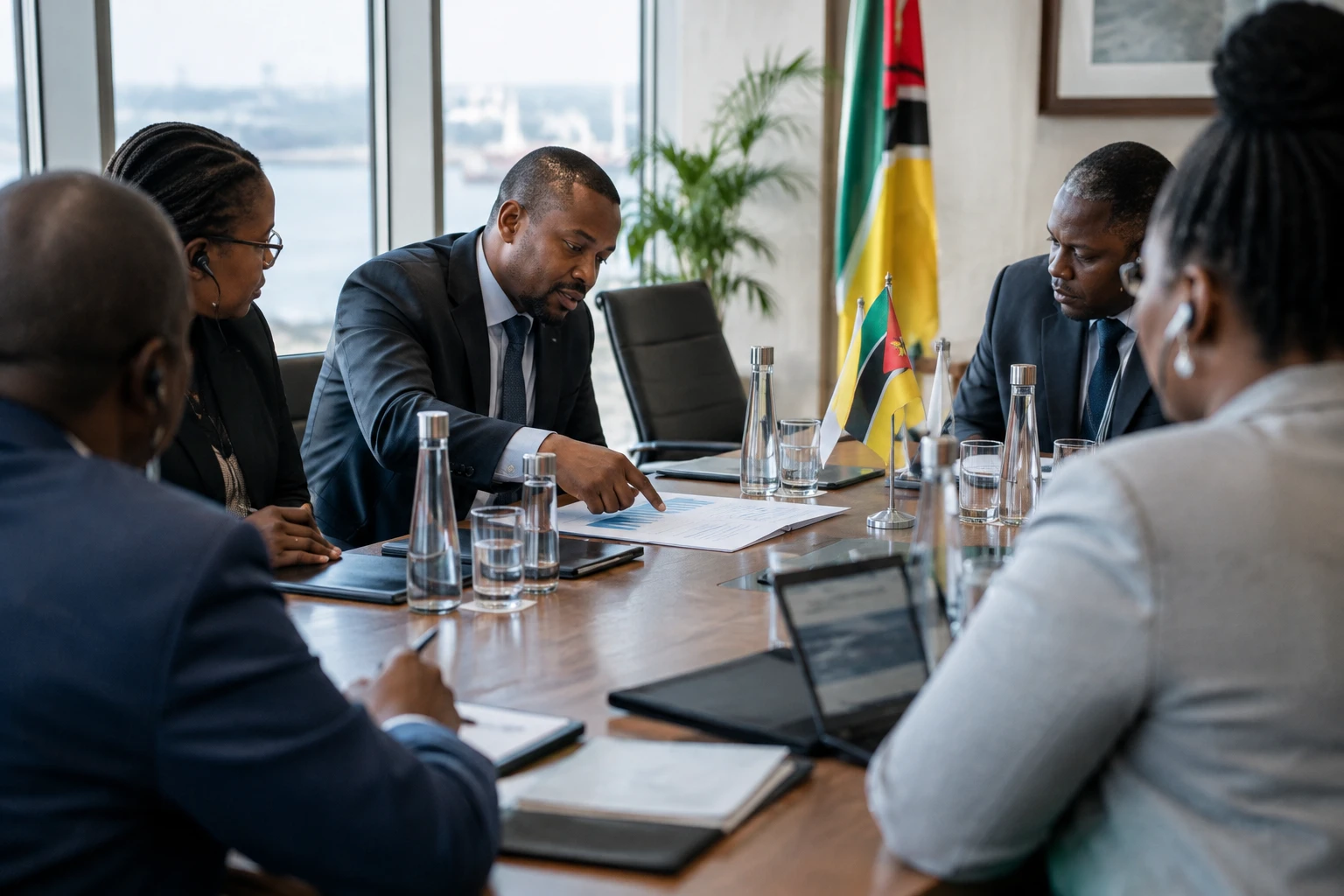
In major gas projects, owning a stake does not guarantee control of operations. Off the coast of Mozambique, state-owned ENH is now entering a demanding technical activity: offshore drilling. The stakes go beyond the number of wells. They concern the experience Mozambican teams can gain and put to use.
From financial partnership to operational work
Mozambique is developing its gas resources in the Rovuma Basin in the north of the country, while the participation of local companies and workers remains a central issue. Cabo Delgado province is home to several major projects. Coral Sul, the country’s first floating liquefied natural gas facility, has been producing gas since 2022. Coral Norte is due to complement it from 2028.
This expansion is also part of a regional framework. Mozambique belongs to the Southern African Development Community (SADC), which promotes, among other things, energy cooperation and regional supply chains. Developing local skills could therefore matter beyond Mozambique’s borders if the capabilities acquired find opportunities in other projects in the region.
On 1 November 2026, a well-drilling and completion campaign began for Coral Norte in Area 4 of the Rovuma Basin. The National Petroleum Institute (INP), the sector’s regulatory authority, had announced up to six wells: four in a first phase, followed by two in a second. The campaign is expected to last about 270 days, or nearly nine months, according to the INP. ENH estimates it will take ten months. Information published by the INP on the drilling campaign and ENH’s statement confirm the general timetable and the maximum number of wells.
Operations have been entrusted to ENH-Saipem Drilling Company, which is 51% owned by ENH and 49% by Italian group Saipem. The Saipem 12000 drillship is carrying out the work. The state-owned company says Mozambican technicians are directly involved in operations alongside Saipem specialists. It is a first for a company with Mozambican participation in offshore drilling.
Local content: rules versus actual capacity
This participation falls under Law No. 9/2026 on local content, adopted on 3 June. It establishes a framework for the involvement of Mozambican suppliers and workers in oil and gas activities. But a legal requirement alone does not create technical skills. The campaign will therefore also serve to gauge the role actually assigned to national teams and the nature of their experience. The legal framework listed by the INP includes this law as well as the new petroleum legislation.
For ENH, the challenge is to move beyond the role of public shareholder in major projects. Taking part in a drilling campaign can allow its teams to learn through hands-on operations, provided they are given substantial responsibilities and the skills are subsequently retained. Mozambican media outlet Zitamar News notes that this operational participation sets field experience apart from simply holding a stake.
The economic impact will also depend on the contracts available to national companies, training and the continuity of employment. Offshore activities are specialised and rely on major contractors. The benefits will therefore not automatically spread to small businesses, self-employed workers or residents of areas far from logistics bases. In Pemba and elsewhere in Cabo Delgado, access to markets and jobs will depend in particular on qualification criteria and local suppliers’ ability to meet the sector’s needs.
A major project, benefits to be assessed
Coral Norte plans to use a floating facility to extract and liquefy gas offshore. Its announced capacity is 3.55 million tonnes of liquefied natural gas a year. The final investment decision was signed in Maputo on 2 October 2025, not in 2026. The INP and Eni put the investment at about $7.2bn. The facility was under construction in South Korea; the INP estimated it was 72% complete at the end of October 2026. Eni’s announcement of the investment decision and the INP’s account confirm the date and the project’s main parameters.
Together with Coral Sul, Coral Norte could raise Mozambique’s LNG production capacity to about seven million tonnes a year. This increase would strengthen the country’s position in energy exports. But it does not, in itself, show what share of the value will be captured by the national economy, or how the benefits will be distributed among the state, companies and communities.
The project is part of a trajectory in which major gas investments coexist with high expectations for jobs, public revenue and industrial development. The expected benefits for national finances are not the same as direct gains for every household. At SADC level, the question is also whether the growth of gas will foster shared trade and skills, rather than an economy focused solely on exports.
The next milestones will be completion of the floating facility, maintaining the 2028 production target and the concrete results of the drilling campaign. To assess local content, it will be necessary to look beyond the announcement: how many Mozambican technicians will have worked on the vessel, what responsibilities they will have undertaken and whether this experience will lead to further contracts.