Algeria
 Egypt
 Libya
 Sudan
 Tunisia
 Benin
 Burkina Faso
 Cabo Verde
 Côte d'Ivoire
 Ghana
 Guinea
 Guinea-Bissau
 Liberia
 Mali
 Mauritania
 Niger
 Nigeria
 Senegal
 Sierra Leone
 The Gambia
 Togo
 Cameroon
 Central African Republic
 Chad
 DR Congo
 Equatorial Guinea
 Gabon
 Republic of the Congo
 São Tomé and Príncipe
 Burundi
 Comoros
 Djibouti
 Eritrea
 Ethiopia
 Kenya
 Madagascar
 Malawi
 Mauritius
 Mozambique
 Rwanda
 Seychelles
 Somalia
 South Sudan
 Tanzania
 Uganda
 Angola
 Botswana
 Eswatini
 Lesotho
 Namibia
 South Africa
 Zambia
 Zimbabwe
Moroccan youth no longer want empty promises
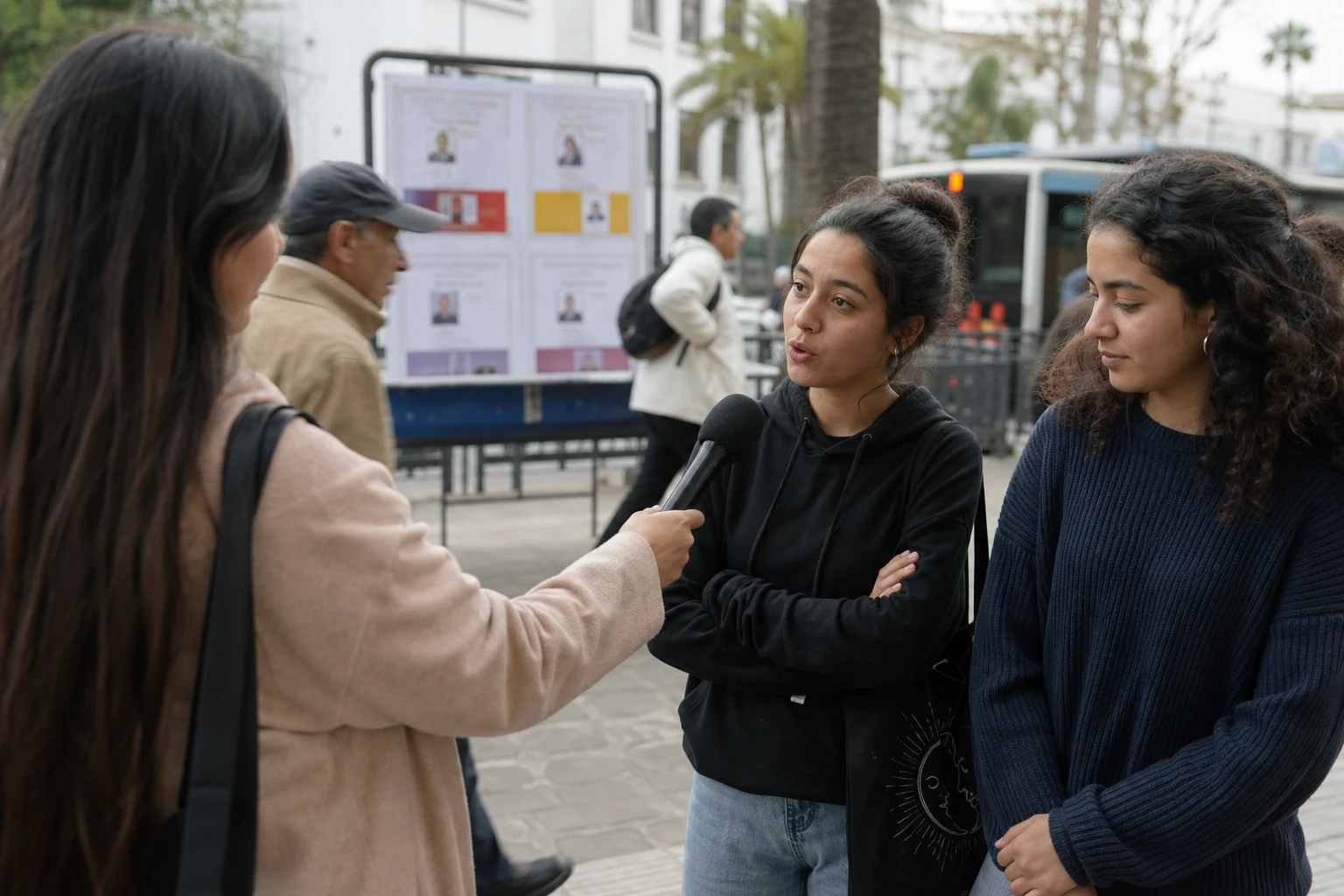
In Casablanca, many young people do not see the legislative elections as an ordinary democratic event. Instead, they view them as a test: of the institutions’ ability finally to address the cost of living, employment and public services deemed too unequal. In Morocco’s most populous city and the heart of its economy, the electoral debate runs up against a simple question: what does a vote really change when everyday life has not changed?
Morocco is heading into this election in a particular climate. Since the Generation Z 212 protests in autumn 2025, health, education and corruption have once again become central topics in public debate. The government has responded with budget announcements and a visible push to increase young people’s political participation, but distrust remains strong. An earlier survey by the High Commission for Planning had already shown low levels of trust among young people in political parties; the tensions of 2025 chiefly confirmed this representational divide.
The election, the figures and the generation gap
Morocco’s legislative elections will be held on Wednesday 23 September 2026, amid close scrutiny of abstention as one of the vote’s major issues. The 2021 precedent remains firmly in people’s minds: national turnout reached 50.35%, higher than in 2016, but was largely boosted by the fact that other elections were held on the same day. Several observers believe that this context will not be repeated this time, fuelling fears of weaker mobilisation.
The generational imbalance is clear. Young people make up about a quarter of Morocco’s population, but their share of the electorate does not follow the same pattern: the latest available data show that 15% of registered voters are aged between 25 and 34, compared with just 4% aged between 18 and 24. In other words, a significant part of the youth experiences public policies without feeling fully represented at the ballot box.
This gap between the young population and electoral participation did not begin with Generation Z 212. In a landmark study on young people, the HCP had already noted that only 24% of them had high or moderate trust in political parties. The problem is therefore not merely a short-term one. It goes to the very credibility of the political parties on offer, in a country where an election alone cannot erase accumulated distrust.
In Morocco, this discontent is also reflected in the real economy. In the first quarter of 2026, unemployment among 15- to 24-year-olds stood at 29.2%, according to the High Commission for Planning. For graduates, young urban residents and some people in rural areas, the issue is not theoretical. It is immediate: finding work, earning enough, securing housing, accessing healthcare and studying in decent conditions.
Reforms announced, expectations remain
In response to this social pressure, Rabat has sent a series of signals. The government has adopted a financial support scheme for young candidates under the age of 35, including those without political affiliation, covering up to 75% of campaign expenses. The measure aims to address some of the inequalities in access to electoral competition, in a system where networks, financial resources and party machinery remain decisive.
At the same time, the authorities are highlighting the 2026 budget. Funding for health and education is set to reach 140 billion dirhams, with more than 27,000 budgeted posts announced for the two sectors. The finance and health ministries have also outlined a series of projects: increasing staffing, modernising hospitals, developing educational facilities and improving budget transparency. On paper, the direction is clear: to narrow the gap between the state’s broad social commitments and the reality experienced in working-class neighbourhoods, urban outskirts and remote provinces.
But this response remains inadequate for some young people. Criticism is not limited to the amounts involved. It targets the pace of implementation, the quality of services delivered and the institutions’ ability to turn a budget announcement into visible change. In practice, a bigger budget does not necessarily reassure a student struggling to find a first job, a family waiting for a medical appointment or a young graduate who sees emigration as the only way out.
The debate is also territorial. Morocco has invested heavily in roads, ports, rail, industry and logistics. The government presents these changes as major achievements. Yet their impact remains uneven across regions and social groups. This is where the gap widens: major infrastructure is advancing, but the promise of a more stable life is not reaching everyone with the same force.
What this vote says about Morocco and beyond
For Morocco’s political parties, the 2026 election is not just about seats. It is about their ability to become credible forums for a generation that often prefers the street, social media or leaving the country. This is a political challenge, but also an institutional one. When parliament seems remote from the decisions that matter, abstention becomes a message.
In this context, Morocco has reached a turning point. On the one hand, the country is pursuing economic modernisation and has strong ambitions across the continent. On the other, it must prove that this momentum is producing measurable results for young Moroccans, in cities and peripheral areas alike. The election period will show whether the promised social state can still win back trust, or whether the generational divide is becoming entrenched.
The implications extend beyond the kingdom’s borders. Across North Africa, the question is no longer simply whether elections are held. It is whether a large, connected, educated and often impatient youth sees them as useful. In Morocco, as elsewhere, political stability no longer depends on institutions alone. It also depends on their ability to deliver visible results quickly, without leaving an entire generation at a distance from power.