
 Algeria
 Egypt
 Libya
 Sudan
 Tunisia
 Benin
 Burkina Faso
 Cabo Verde
 Côte d'Ivoire
 Ghana
 Guinea
 Guinea-Bissau
 Liberia
 Mali
 Mauritania
 Niger
 Nigeria
 Senegal
 Sierra Leone
 The Gambia
 Togo
 Cameroon
 Central African Republic
 Chad
 DR Congo
 Equatorial Guinea
 Gabon
 Republic of the Congo
 São Tomé and Príncipe
 Burundi
 Comoros
 Djibouti
 Eritrea
 Ethiopia
 Kenya
 Madagascar
 Malawi
 Mauritius
 Mozambique
 Rwanda
 Seychelles
 Somalia
 South Sudan
 Tanzania
 Uganda
 Angola
 Botswana
 Eswatini
 Lesotho
 Namibia
 South Africa
 Zambia
 Zimbabwe
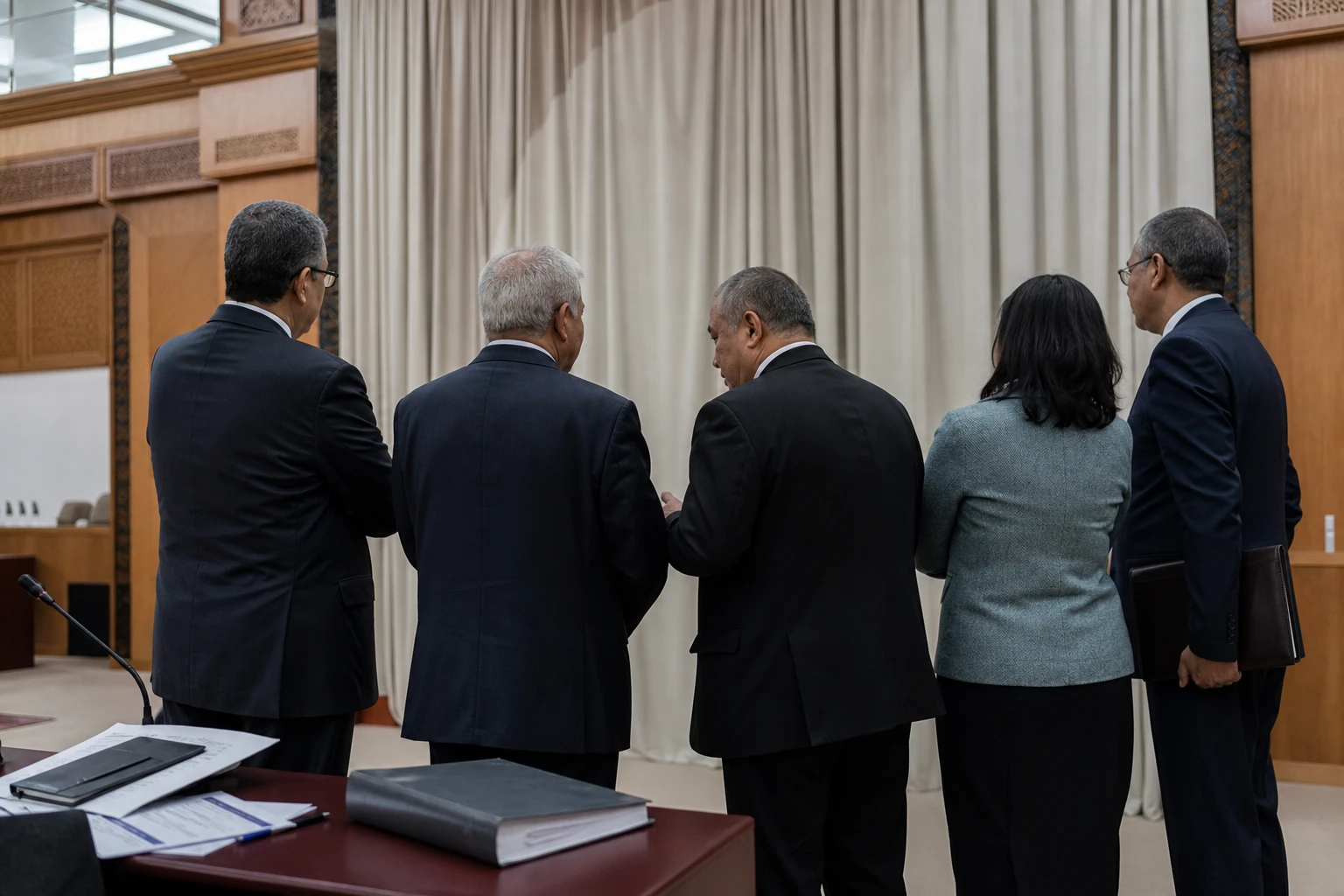
In Morocco, the 23 September 2026 election is about more than the Authenticity and Modernity Party’s victory. It ushers in a period of political negotiations, with fewer than four in ten registered voters turning out.
A reshaped Parliament, with no majority for the leading party
Provisional results announced on Thursday 24 September by Moroccan Interior Minister Abdelouafi Laftit put the PAM in first place with 97 seats out of the 395 in the House of Representatives. The National Rally of Independents (RNI) came next with 66 elected members, ahead of the Istiqlal Party, which won 65 seats.
The Justice and Development Party (PJD) was the main surprise of the election. After its sharp decline in 2021, when it fell from 125 to 13 MPs, it has rebounded to 54 seats. Its return gives it significant weight in parliamentary discussions, although it remains far short of its 2016 level.
<pThe Popular Movement won 29 seats. The Socialist Union of Popular Forces secured 26, the Party of Progress and Socialism 19, and the Constitutional Union 17. The Democratic and Social Movement and the Alliance of the Left each won eight seats. Several other parties complete the House with limited representation.
The PAM nevertheless remains well short of the 198 seats needed for an absolute majority. The next government will therefore have to be built on a coalition. Under Morocco’s 2011 Constitution, the king appoints the head of government from the party that comes first in elections to the House of Representatives. The make-up of the executive will then depend on the alliances negotiated among the parties represented.
Turnout becomes the main political signal
Nearly six million Moroccans voted, according to figures released by the Interior Ministry. National turnout stood at 38.02%, compared with 50.35% in 2021 and 42.29% in 2016, according to official figures reported by the National Broadcasting and Television Company and Reuters.
This is the lowest level recorded since the 2007 parliamentary election, when turnout reached 36.89%. The comparison should, however, be treated with caution. A national rate does not capture all the differences between major cities, rural areas and the southern regions.
Morocco had 15,801,162 registered voters, according to statistics compiled before the election. This electorate does not include everyone of voting age. Young people aged 18 to 24 account for just 4% of registered voters, while those aged 60 and over make up 29%. People aged 25 to 34 account for 15%.
This demographic profile shapes how abstention is interpreted. Concerns about jobs, the cost of living, education, healthcare and economic prospects weigh heavily on younger generations. Yet they are less represented on the electoral rolls than their demographic weight would suggest.
RNI’s decline unsettles the outgoing coalition’s balance
The RNI’s result marks another turning point. The party, which won 102 seats in 2021 and led the outgoing government coalition, has lost 36. The PAM, for its part, has risen from 87 to 97 MPs. Istiqlal has fallen from 81 to 65 elected members.
These shifts do not automatically mean a change of majority. The PAM, RNI and Istiqlal have already governed together in the coalition formed after the 2021 election. However, the new balance of power changes their respective weight at the negotiating table.
For party leaders, the immediate challenge will be to form a stable majority. For businesses and investors, continuity in public policy will be an important indicator. Households will be more focused on tangible results on prices, jobs, public services and reducing regional disparities.
Low turnout adds a political constraint. It does not point to any single cause. It may reflect distance from political parties, electoral fatigue, limited confidence in parliamentary action or difficulties with registration. The results nevertheless show that electoral participation remains highly uneven across social groups and regions.
A Moroccan election watched across the Maghreb and Africa
The election comes amid a regional environment in which political and economic balances are changing rapidly. Morocco does not have a Maghreb regional economic community as integrated as ECOWAS in West Africa or SADC in southern Africa. The Arab Maghreb Union, meanwhile, remains largely inactive institutionally. Rabat therefore pursues much of its regional engagement through bilateral relations and African Union frameworks.
Across the continent, the election matters both for its result and for the question of political representation. Morocco is seeking to strengthen its economic and diplomatic role in Africa. The stability of its institutions, its government’s ability to carry out reforms and citizen participation will all shape that trajectory.
The next steps will be the definitive validation of the results, followed by the appointment of the head of government and the formation of a new cabinet. The negotiations will test the PAM’s strength, the PJD’s ability to recover and the place the RNI will retain in the new parliamentary balance.
Beyond the seat count, the strongest message from this election is about participation. Morocco now has a reshaped House, but it must also address a deeper question: how can it rebuild lasting ties between representative institutions and voters, particularly younger people?



