Algeria
 Egypt
 Libya
 Sudan
 Tunisia
 Benin
 Burkina Faso
 Cabo Verde
 Côte d'Ivoire
 Ghana
 Guinea
 Guinea-Bissau
 Liberia
 Mali
 Mauritania
 Niger
 Nigeria
 Senegal
 Sierra Leone
 The Gambia
 Togo
 Cameroon
 Central African Republic
 Chad
 DR Congo
 Equatorial Guinea
 Gabon
 Republic of the Congo
 São Tomé and Príncipe
 Burundi
 Comoros
 Djibouti
 Eritrea
 Ethiopia
 Kenya
 Madagascar
 Malawi
 Mauritius
 Mozambique
 Rwanda
 Seychelles
 Somalia
 South Sudan
 Tanzania
 Uganda
 Angola
 Botswana
 Eswatini
 Lesotho
 Namibia
 South Africa
 Zambia
 Zimbabwe
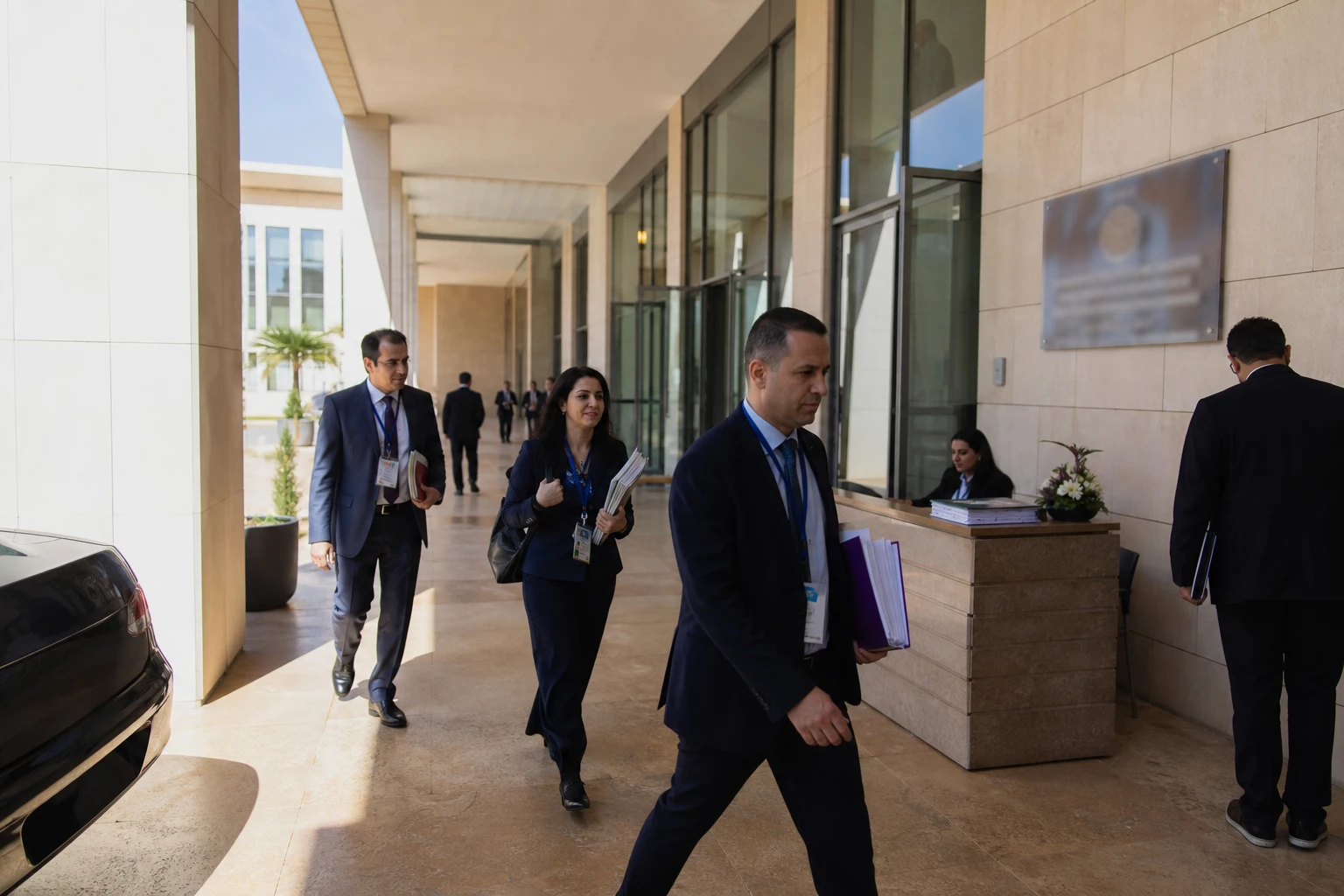
A relationship shifting from chill to pragmatism
In Rabat, French-Moroccan diplomacy has picked up pace. After months of gradual recovery, the 15th High-Level Meeting brought concrete issues back to the table: transport, energy, water, security, culture, education and scientific cooperation. For Morocco, the meeting mattered as much for the decisions signed as for the political signal it sent about a bilateral relationship long marked by tensions, followed by a thaw that began in 2024.
The context is clear. Morocco, whose capital is Rabat, has made its external partnerships a central lever of its economic and diplomatic agenda. France remains one of its most important partners, with close human, economic and security ties. Paris points out that the High-Level Meeting has been held since 1997 and serves to manage relations between the two governments. Following Emmanuel Macron’s state visit to Rabat in October 2024, the two capitals worked to turn their political rapprochement into sectoral roadmaps.
A carefully structured reset in Rabat
The details are precise. On 16 July 2026, Sébastien Lecornu travelled to Rabat at the head of a delegation of around ten members of the French government, alongside ministers responsible for sectoral issues. The meeting was co-chaired by Aziz Akhannouch, Morocco’s head of government. Moroccan officials described it as the first session in this format since 2019. The stated aim on the French side was to review the decisions taken by the two heads of state and shape the bilateral agenda for the coming months.
The most sensitive diplomatic message concerned the Sahara. Paris confirmed that its position remained aligned with the one set out by the French president in his letter of 30 July 2024 to King Mohammed VI: for France, the present and future of Western Sahara fall within the framework of Moroccan sovereignty. This position, reiterated by the Élysée in 2024, remains one of the foundations of the rapprochement between Rabat and Paris. It has also provided the political framework for the revival of a dialogue that had slowed sharply before 2024.
At the same time, the two sides discussed a future friendship treaty, which is expected to be signed during a forthcoming state visit to France by King Mohammed VI. French official sources also say the two countries are working on a bilateral text intended to provide a lasting framework for their relationship. If this timetable is confirmed, the stakes will be more than symbolic: the aim will be to place already advanced cooperation, long subject to political ups and downs, on a more stable footing.
What the agreements signed will change
The Rabat meeting produced a series of agreements and declarations that go well beyond diplomatic formulas. The two countries approved funding for the future high-speed rail line between Kenitra and Marrakech, confirmed support from the French Development Agency for a suburban rail line in the Rabat metropolitan area, and launched a call for expressions of interest for an electricity connection as part of their cooperation. These projects address very practical needs: daily mobility, urban integration, the energy transition and infrastructure security.
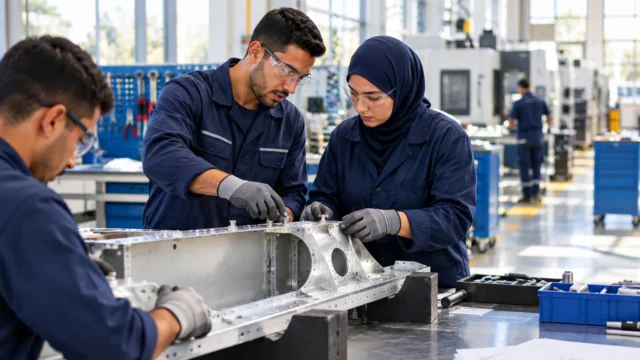
The people-to-people dimension is just as important. France announced measures to make it easier for Moroccan students and entrepreneurs to travel. For Morocco, this could smooth university pathways, strengthen skills exchanges and support some of its qualified young people, who are already well represented in economic and academic networks between the two countries. For businesses, the logic is different: Rabat is seeking financing, technology and markets; Paris wants to consolidate its position in a rapidly changing Moroccan market.
Security remains another pillar of the relationship. The two governments praised their cooperation mechanisms for combating terrorism and organised crime. But the issue is not limited to surveillance. It also involves the flow of information, judicial coordination and the sharing of expertise in a Euro-Mediterranean region where cross-border risks remain high. In this context, security cooperation serves the interests of the Moroccan state as much as those of France, which sees Morocco as a partner for stability on the southern shore of the Mediterranean.
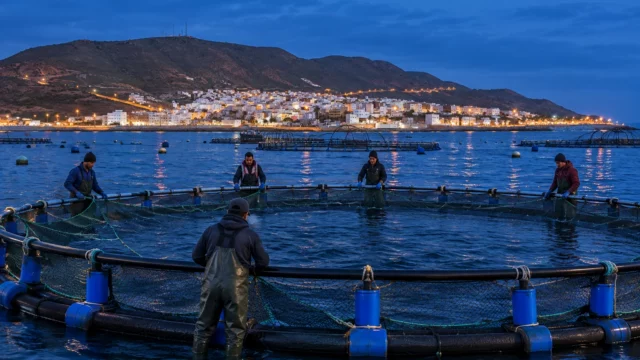
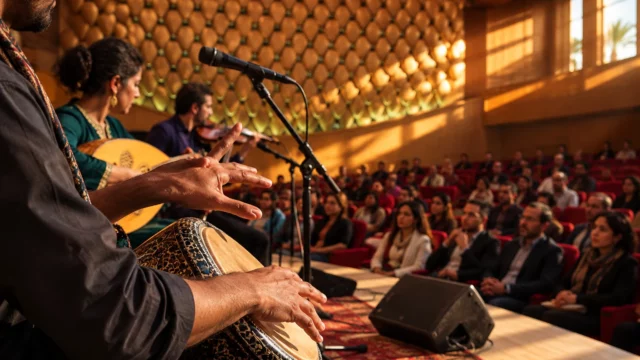
Several texts add depth to the meeting: water, civil aviation, the Arabic language and history and geography in French schools in Morocco, scientific exchanges, culture, infrastructure engineering, risk management, postal services, fisheries science and aquaculture. This accumulation says something essential: the relationship is no longer solely diplomatic or security-focused. It is becoming more rooted in local needs, more technical and more widely shared among government departments, universities, public-sector bodies and productive industries. That is often where the strength of a partnership is built.
Significance for Morocco, North Africa and Africa
For Morocco, the stakes go beyond its relationship with Paris. Rabat is seeking to strengthen its position as a hub connecting Europe, North Africa and the rest of the continent. The cooperation agreements signed in Rabat are therefore part of a broader strategy, in which mobility, energy, training and infrastructure also support the Kingdom’s regional reach. Across Africa, this type of agreement is a reminder that a bilateral partnership can influence highly practical projects: networks, water, transport, skills mobility and financing for transitions.
The implications are also political. France remains attentive to the balance of its positions in North Africa, while Morocco is consolidating alliances that serve its diplomacy and economy. The next step will be decisive: the announced state visit by King Mohammed VI to France, followed by the conversion of the promises made in Rabat into projects that can be delivered. Only then will it be clear whether the rapprochement of 2024 and 2026 has produced a lasting framework or merely a well-staged diplomatic interlude.