Algeria
 Egypt
 Libya
 Sudan
 Tunisia
 Benin
 Burkina Faso
 Cabo Verde
 Côte d'Ivoire
 Ghana
 Guinea
 Guinea-Bissau
 Liberia
 Mali
 Mauritania
 Niger
 Nigeria
 Senegal
 Sierra Leone
 The Gambia
 Togo
 Cameroon
 Central African Republic
 Chad
 DR Congo
 Equatorial Guinea
 Gabon
 Republic of the Congo
 São Tomé and Príncipe
 Burundi
 Comoros
 Djibouti
 Eritrea
 Ethiopia
 Kenya
 Madagascar
 Malawi
 Mauritius
 Mozambique
 Rwanda
 Seychelles
 Somalia
 South Sudan
 Tanzania
 Uganda
 Angola
 Botswana
 Eswatini
 Lesotho
 Namibia
 South Africa
 Zambia
 Zimbabwe
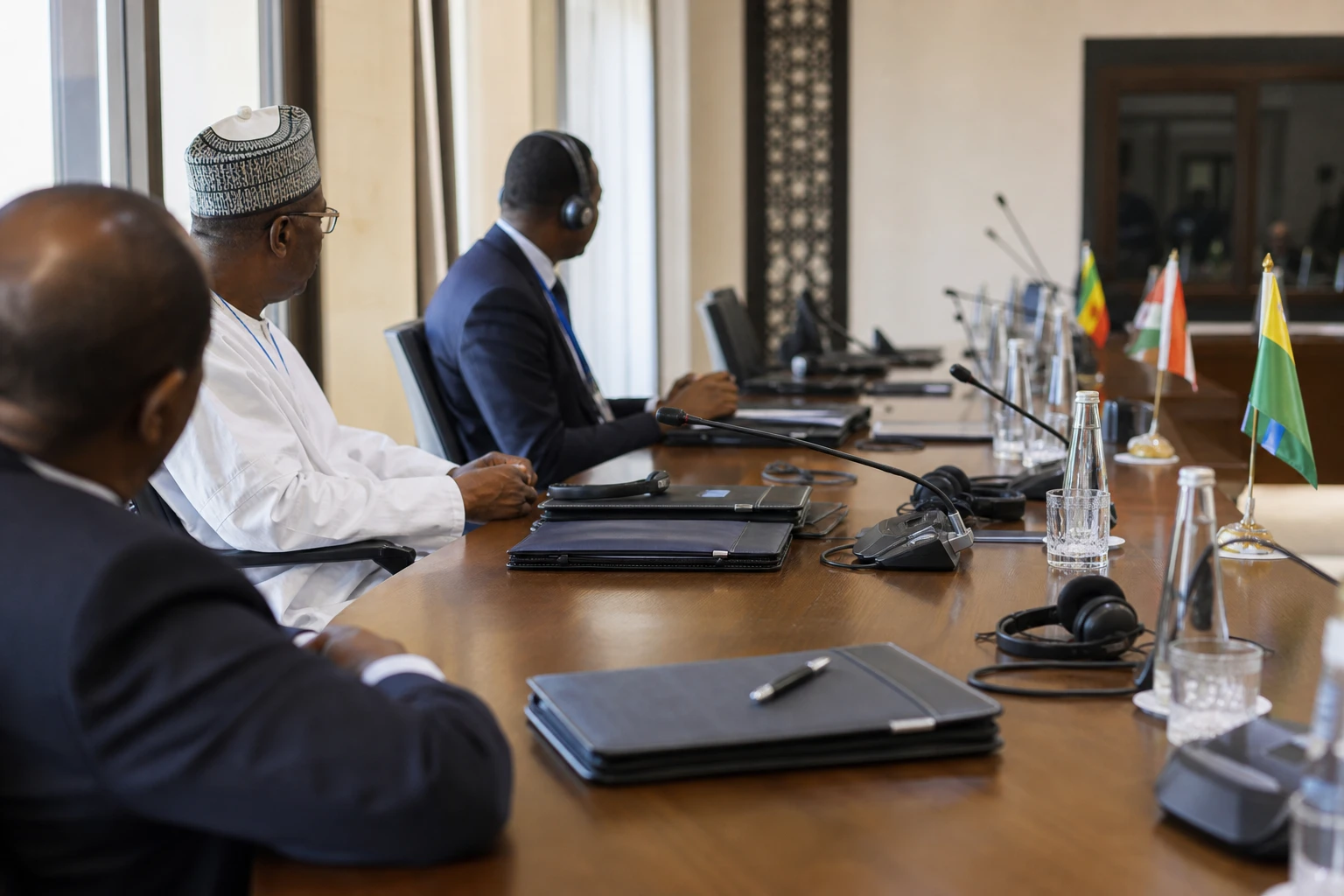
In Rabat, world football is also a political game
When FIFA moves its major gatherings to Morocco, it is not merely sending its leaders to the Kingdom’s capital. It is also placing North Africa at the heart of a moment of power, where governance, money and influence intersect. Rabat thus becomes more than a host city: it is a point of balance between the interests of world football and the expectations of a continent that is playing an increasingly important role in organising the game.
This shift comes as Gianni Infantino seeks to consolidate his authority ahead of the FIFA presidential election scheduled for March 2027. The next elective Congress, the 77th, is due to be held on 18 March 2027 in Rabat, Morocco, with all 211 member associations expected to attend. The Royal Moroccan Football Federation has confirmed that it will host the event, which is being described as only the second time the Kingdom has organised a general assembly of this scale, after Marrakech in 2005.
A governance crisis sparked by a controversial financial plan
The current sequence of events is about more than a question of timing. It was triggered by the abandonment of a plan to open a new FIFA commercial entity to private investors. Valued at around $20 billion by the international press, the plan drew strong opposition, notably from UEFA, which warned of legal risks and damage to the governance of world football. The affair then took on broader significance, with criticism of the process and the concentration of power around the FIFA president.
FIFA, for its part, says it launched the project to increase the resources devoted to developing football. In an official document published last week, the governing body said it wanted to raise its development funding to more than $10 billion, subject to approval by its members. It says it is seeking a “geographically diversified” group of investors from Europe, the Americas, Asia and Africa. This detail matters: it shows that the African continent is not merely a host venue, but also a region FIFA wants to involve in its financial strategy.
Infantino had already announced in May 2026 that he would seek another term in 2027. The declaration, made before the Vancouver Congress, set the campaign in motion long before the formal opening of the election. Since then, every governance crisis has become a political test. Every public endorsement, every reservation and every silence tips the balance.
Morocco, an African showcase for sporting power in the making
For Morocco, these developments form part of a broader trajectory. The country is already at the centre of the continent’s and the Mediterranean basin’s major football ambitions. The Confederation of African Football backed Morocco’s bid for the 2030 World Cup, co-hosted with Spain and Portugal. FIFA has also confirmed that the 2026 FIFA U-17 Women’s World Cup will be held in Morocco from 17 October to 7 November 2026. The sporting calendar thus makes Rabat an organisational hub, not merely a ceremonial stop.
This visibility strengthens Rabat’s role in African sports diplomacy. The Kingdom already hosts competitions, CAF meetings and observation missions linked to major tournaments. The city brings together the institutions, hotels, infrastructure and administrative contacts needed for such events. In practice, this gives Morocco a rare advantage on the continent: it is simultaneously a host, a partner and a platform for negotiations.
The choice of Rabat therefore has clear symbolic significance. It places Africa at the centre of a vote that concerns the future of FIFA first and foremost, but also touches on the continent’s representation in the global governance of football. In a federation often criticised for the asymmetry of its power relations, hosting the elective Congress gives an African country a leading role on the main stage.
What these developments mean for Africa and FIFA
For African federations, the stakes go beyond Infantino himself. They concern the continent’s real place in budget decisions, the allocation of competitions and access to resources. FIFA says its development investments should benefit all 211 member associations. But the central question remains the same: who decides, with what transparency, and for the benefit of which regions?
Across Africa, the benefits are not shared equally. Sporting capitals and already powerful federations are quicker to capture the gains in visibility and hosting opportunities. Inland regions, smaller clubs, women’s football and training centres, meanwhile, are waiting for sustained investment. This is where the development promise must be judged: not in grand speeches, but in facilities, local competitions and the actual flow of resources.
The crisis triggered by the financial plan also reveals a structural tension: FIFA wants to expand its resources without losing control of its model. This explains the caution shown after the plan was withdrawn, as well as the unease among some figures in European football. What happens next will depend on Infantino’s ability to turn a tactical retreat into political stability. At this stage, Rabat looks set to be a decisive place to gauge the balance of power between his camp, African federations and opponents of his approach.
At continental level, the March 2027 gathering will say something broader still. It will show whether Africa can merely host the major decisions of world football, or whether it can also exert greater influence over their substance. For Morocco, the challenge is to consolidate its position as a leading sporting hub. For FIFA, it is to prevent a battle over money from turning into a lasting crisis of legitimacy.