
 Algeria
 Egypt
 Libya
 Sudan
 Tunisia
 Benin
 Burkina Faso
 Cabo Verde
 Côte d'Ivoire
 Ghana
 Guinea
 Guinea-Bissau
 Liberia
 Mali
 Mauritania
 Niger
 Nigeria
 Senegal
 Sierra Leone
 The Gambia
 Togo
 Cameroon
 Central African Republic
 Chad
 DR Congo
 Equatorial Guinea
 Gabon
 Republic of the Congo
 São Tomé and Príncipe
 Burundi
 Comoros
 Djibouti
 Eritrea
 Ethiopia
 Kenya
 Madagascar
 Malawi
 Mauritius
 Mozambique
 Rwanda
 Seychelles
 Somalia
 South Sudan
 Tanzania
 Uganda
 Angola
 Botswana
 Eswatini
 Lesotho
 Namibia
 South Africa
 Zambia
 Zimbabwe
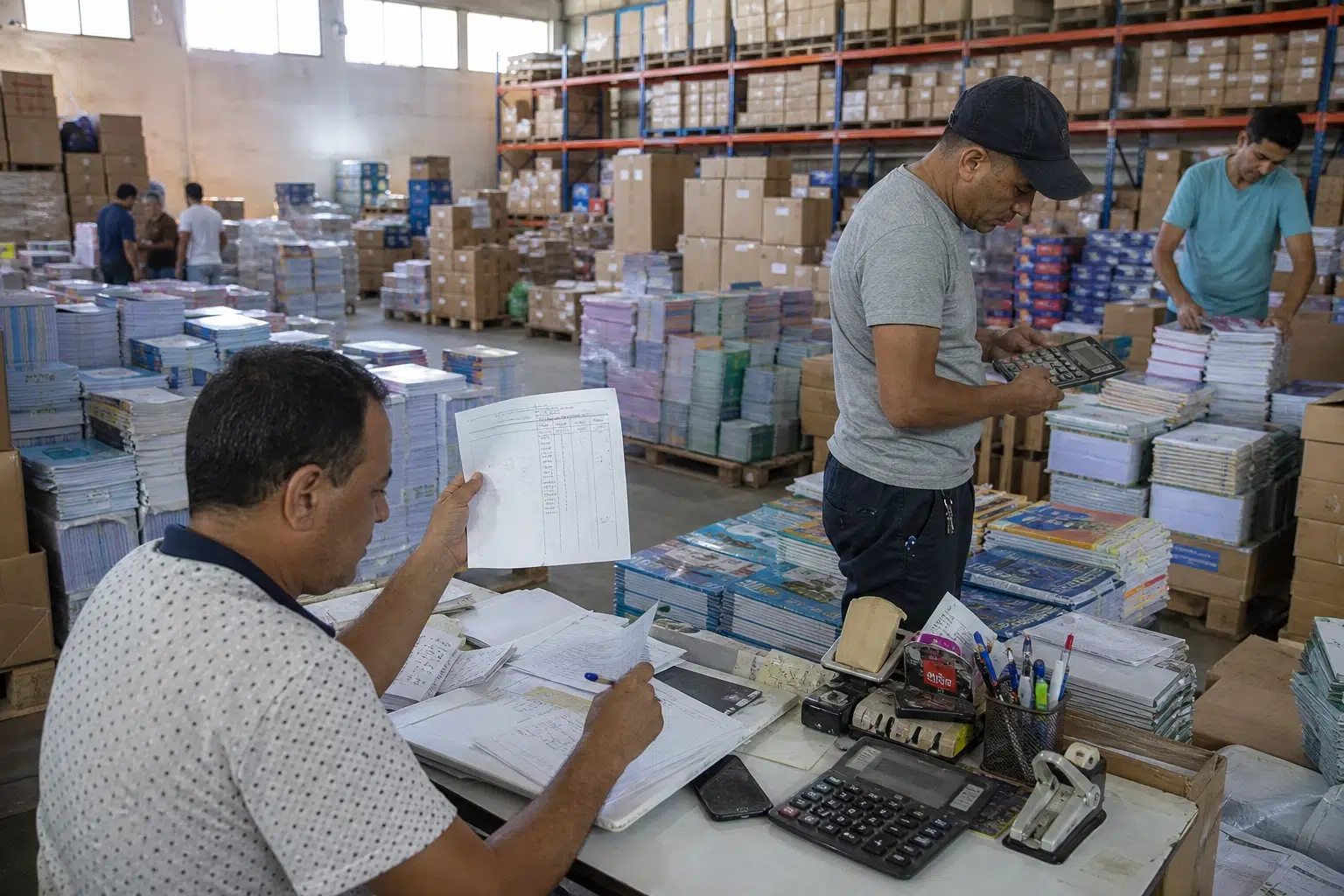
When the start of the school year becomes a political test
In Morocco, the start of the school year is not just a time for schoolbags and exercise books. For many families, it has become a budget item, and then a verdict on public education. Between tuition fees, textbooks and transport, families often face the choice in Rabat and Casablanca, in cities and on their outskirts: pay for private education, or hope that public schools can still deliver on their promise of social mobility. Recent figures confirm that the private sector continues to gain ground, while the debate over the quality of public education remains central.
This issue carries all the more weight because Morocco has made education reform a stated priority in its 2022-2026 roadmap, under framework law 51-17. The ministry presents the roadmap as the practical expression of a national undertaking, but on the ground, confidence is not returning at the same pace as the announcements. Education has therefore become a campaign issue and a measure of performance, because it affects household purchasing power, equal opportunities and the credibility of public policy.
Public schools, Moroccan families’ foremost concern
In the big cities, parents often share the same assessment: public schools remain indispensable, but are no longer automatically seen as a safe choice. Private education then becomes a fallback, sometimes a choice made out of necessity. Ministry statistics for 2024-2025 show a system in which the private sector has a significant presence, while the public sector remains the majority. Nationally, the High Commission for Planning estimates that private schools account for 11.6% of pupils, up on the previous year. In some regions, such as Tangier-Tetouan-Al Hoceima, private schools already account for 15.3% of primary pupils.
This trend says more than just something about families’ preferences. It also tells a story of social division. Households able to absorb monthly fees protect themselves. The rest remain dependent on a public system that bears the weight of both hopes and criticism. The ministry itself stresses the fight against school dropout, which it describes as a major challenge for the system. In other words, the battle is not just about curricula. It concerns continuity in education, especially in areas where distance, poverty or a lack of infrastructure make access to stable schooling more precarious.
In this context, political parties can no longer make do with general statements. Voters expect clear commitments: less crowded classrooms, better-trained teachers, boarding facilities, school transport, meals and proper monitoring of learning. The issue is national, but its effects are tangible in poor urban neighbourhoods and rural communes, where every hour of travel and every dirham spent weigh on the decision to keep a child in school.
Public universities, another front in the education battle
The malaise does not end at secondary school. In higher education, tensions have flared again over draft law No. 59.24 on higher education and scientific research, submitted to Parliament in autumn 2025 and then discussed within the House of Representatives. The bill has prompted strong union mobilisation, particularly over the governance of institutions, the role of university councils and the place given to the private sector.
SNESup, the higher education union, sees it as a risk to the genuine autonomy of public universities and to free access. The government, for its part, presents the reform as a means of modernisation, strategic planning and improving quality. The disagreement is therefore less technical than it might appear. It concerns the balance between state oversight, campus autonomy and public-sector funding. For academic staff, the issue is governance. For students, it is the value of their degree and the university’s ability to remain a vehicle for social mobility.
This episode matters for another reason. It shows that education is no longer just a primary or secondary school issue. It cuts across the entire system, from the first years of schooling to university and vocational training. In Morocco, as in many African countries, pressure on public schools eventually reaches universities, because that is where employability, social mobility and confidence in the state are at stake.
A Moroccan issue, but also a signal for North Africa
The debate in Morocco resonates beyond Rabat. Across North Africa, governments face the same equation: achieve more with constrained budgets, respond to stronger social demand and limit the gap between public and private schools. Morocco has a solid institutional framework and a roadmap running to 2026, but the real question remains one of implementation. The reform will be judged less by its slogans than by measurable outcomes: learning, school retention, territorial equity and families’ confidence.
The continental significance is clear. When public schools lose standing in households’ eyes, the education system becomes more segmented. And when universities become a site of constant tension, the promise of merit is weakened. Morocco is therefore at a pivotal moment: either it makes education a lasting budgetary and political priority, or it allows a two-tier model to take hold, with visible consequences for the labour market, social cohesion and young people’s place in the formal economy. This is the precise issue that families, teachers and students are now watching, well beyond the electoral calendar alone.



