Algeria
 Egypt
 Libya
 Sudan
 Tunisia
 Benin
 Burkina Faso
 Cabo Verde
 Côte d'Ivoire
 Ghana
 Guinea
 Guinea-Bissau
 Liberia
 Mali
 Mauritania
 Niger
 Nigeria
 Senegal
 Sierra Leone
 The Gambia
 Togo
 Cameroon
 Central African Republic
 Chad
 DR Congo
 Equatorial Guinea
 Gabon
 Republic of the Congo
 São Tomé and Príncipe
 Burundi
 Comoros
 Djibouti
 Eritrea
 Ethiopia
 Kenya
 Madagascar
 Malawi
 Mauritius
 Mozambique
 Rwanda
 Seychelles
 Somalia
 South Sudan
 Tanzania
 Uganda
 Angola
 Botswana
 Eswatini
 Lesotho
 Namibia
 South Africa
 Zambia
 Zimbabwe
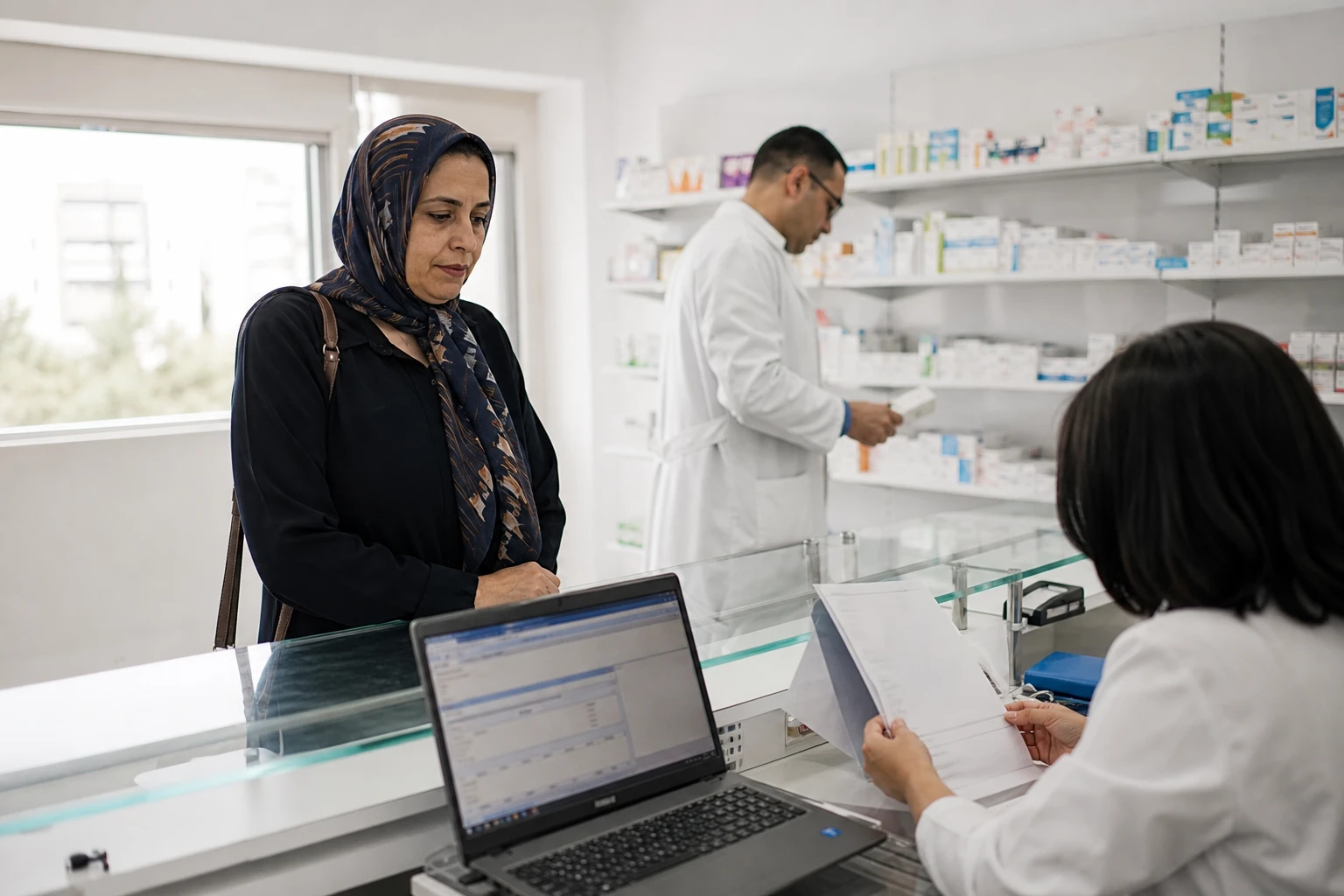
A digital shift changing the daily lives of Moroccan doctors
In Morocco, the modernisation of healthcare is not happening only in hospitals or doctors’ surgeries. It also involves paperwork, delays and queues. Doctors can now handle a registration, transfer of a file or change of address from a screen, without making repeated trips between government offices.
It is in this spirit that the National Council of the Order of Doctors of Morocco, based in Rabat, has launched its new digital platform. The tool brings together several procedures related to medical practice. It is part of a legal framework already established by Law No. 131-13 on the practice of medicine and its implementing decree No. 2-15-447 of 16 March 2016, published by Morocco’s General Secretariat of the Government.
What the platform enables in practice
The platform is aimed at doctors registered with, or seeking registration with, the Order. It enables them to submit an application for registration on the roll, request a transfer from one regional council to another, declare a change of status, update a professional address or report that they have ceased practising. Fees can also be paid by bank transfer, with the relevant regional council’s bank details provided directly online. These procedures already existed within the Order’s organisation; they are now brought together in a single digital space.
According to information made public by the Order, Morocco has around 35,000 doctors spread across 12 regional councils. This overview highlights the role of a highly structured profession, in which registration on the roll is a condition of lawful practice. The Order’s official website also states that it brings together all doctors practising in Morocco, in both the public and private sectors.
An established legal framework now equipped for the digital age
Morocco is not inventing the principle of medical regulation. It is speeding up its implementation. Law No. 131-13, promulgated in February 2015, governs the practice of medicine and the organisation of the Order. Decree No. 2-15-447, dated 16 March 2016, sets out the implementing procedures. The new portal does not replace the rules; it makes them more accessible. In practice, this reduces the time cost of administration for practitioners and eases the workload of the regional councils.
The issue of personal data is not secondary. The processing of medical and professional files demands a high level of vigilance. The platform therefore falls within the scope of Moroccan Law No. 09-08 on the protection of personal data, overseen by the CNDP, the competent national authority. The Commission’s website sets out its supervisory role and the legal basis for this framework.
Why the reform matters beyond the profession
For doctors, the benefit is immediate. Remote procedures limit travel, especially for those practising outside major cities. They may also reduce processing times, provided regional councils have the technical and human resources to manage applications online. In a country where medical resources remain heavily concentrated around urban centres, every administrative simplification matters. It could make it easier for doctors to move between regions, a sensitive issue for access to healthcare.
For the administration, the stakes are broader. Digitisation makes it possible to track applications, standardise required documents and limit differences in how cases are handled across regions. It also brings the Order closer to practices already common in other Moroccan public services, where digitalisation is used to reduce bureaucratic delays. In the health sector, this shift can affect service quality as much as institutions’ reputation for efficiency.
The benefits are not limited to established practitioners. Young doctors, specialists applying for registration, doctors moving to another region and practitioners temporarily ceasing their activity all stand to gain from a clearer process. The platform also clarifies transitions between the public, private, academic and military sectors, all of which shape medical practice in Morocco.
A signal for Moroccan public health and North Africa
This development also has regional significance. Across North Africa, health systems are seeking to reconcile professional regulation, the mobility of skills and the digitalisation of services. Morocco, which has pursued a series of public governance reforms in recent years, is sending a simple message: modernising healthcare also means simplifying the procedures governing those who provide care. In Rabat, the initiative may seem technical; nevertheless, it has a direct effect on the organisation of medical work nationwide.
One fundamental question remains: does digitisation merely speed up the form-filling, or does it also improve the actual movement of doctors between regions? The answer will depend on regional councils’ ability to process applications quickly, the platform’s reliability and practitioners’ willingness to use it. If the experience proves successful, it could inform other digital initiatives in regulated professions in Morocco and then serve as a model for the region. In a sector where administrative time is costly, this platform could become a quiet but decisive lever.