
 Algeria
 Egypt
 Libya
 Sudan
 Tunisia
 Benin
 Burkina Faso
 Cabo Verde
 Côte d'Ivoire
 Ghana
 Guinea
 Guinea-Bissau
 Liberia
 Mali
 Mauritania
 Niger
 Nigeria
 Senegal
 Sierra Leone
 The Gambia
 Togo
 Cameroon
 Central African Republic
 Chad
 DR Congo
 Equatorial Guinea
 Gabon
 Republic of the Congo
 São Tomé and Príncipe
 Burundi
 Comoros
 Djibouti
 Eritrea
 Ethiopia
 Kenya
 Madagascar
 Malawi
 Mauritius
 Mozambique
 Rwanda
 Seychelles
 Somalia
 South Sudan
 Tanzania
 Uganda
 Angola
 Botswana
 Eswatini
 Lesotho
 Namibia
 South Africa
 Zambia
 Zimbabwe
A story of borders, networks and reputation
In Rabat, the security apparatus has long been portrayed as an asset for stability. But whenever a crisis erupts at the border or in the digital sphere, that strength also becomes a fault line. New allegations against Moroccan officials bring a simple question back to the fore: where does the management of the state end, and the political use of the security services begin?
Since returning to the African Union in January 2017, Morocco has pursued a more assertive diplomacy on the continent. The kingdom has also strengthened its ties with Europe, above all with Spain and France, on migration and counter-terrorism. In this context, every suspicion involving intelligence, borders or electronic surveillance quickly extends beyond the national arena. It affects regional, and sometimes pan-African, balances.
What the former Moroccan official says
Mehdi Hijaouy, a former Moroccan intelligence official now living in exile abroad, directly accuses two central figures in the kingdom’s security and political apparatus: Abdellatif Hammouchi, who heads domestic security and the national police, and Fouad Ali El Himma, long regarded as one of the Palace’s most influential figures. His statements concern two separate cases, linked by the same thread: the power of the services.
The first concerns Ceuta. In the summer of 2026, a surge in migration again put the Spanish enclave under pressure, and a Spanish police report referred to a planned entry, accompanied by “permissiveness” on the part of Moroccan forces, without formally attributing it to a political authority or a specific organiser. Hijaouy goes further. He claims that a movement on such a scale could not have taken place without the approval, or at least the knowledge, of the highest levels of the security apparatus. For now, this remains an allegation, not proof. But it is part of a body of evidence already identified by Spanish investigations.
The second case concerns Pegasus, the spyware developed by NSO Group. Hijaouy claims that technicians from the Israeli company presented it in Rabat as early as 2017, before it was deployed against targets considered sensitive. This timeline is consistent with what international investigations and technical analyses had already established in 2021: Morocco was among the suspected Pegasus clients, and several devices linked to journalists, activists and public figures bore traces of infection. The kingdom has always denied these allegations.
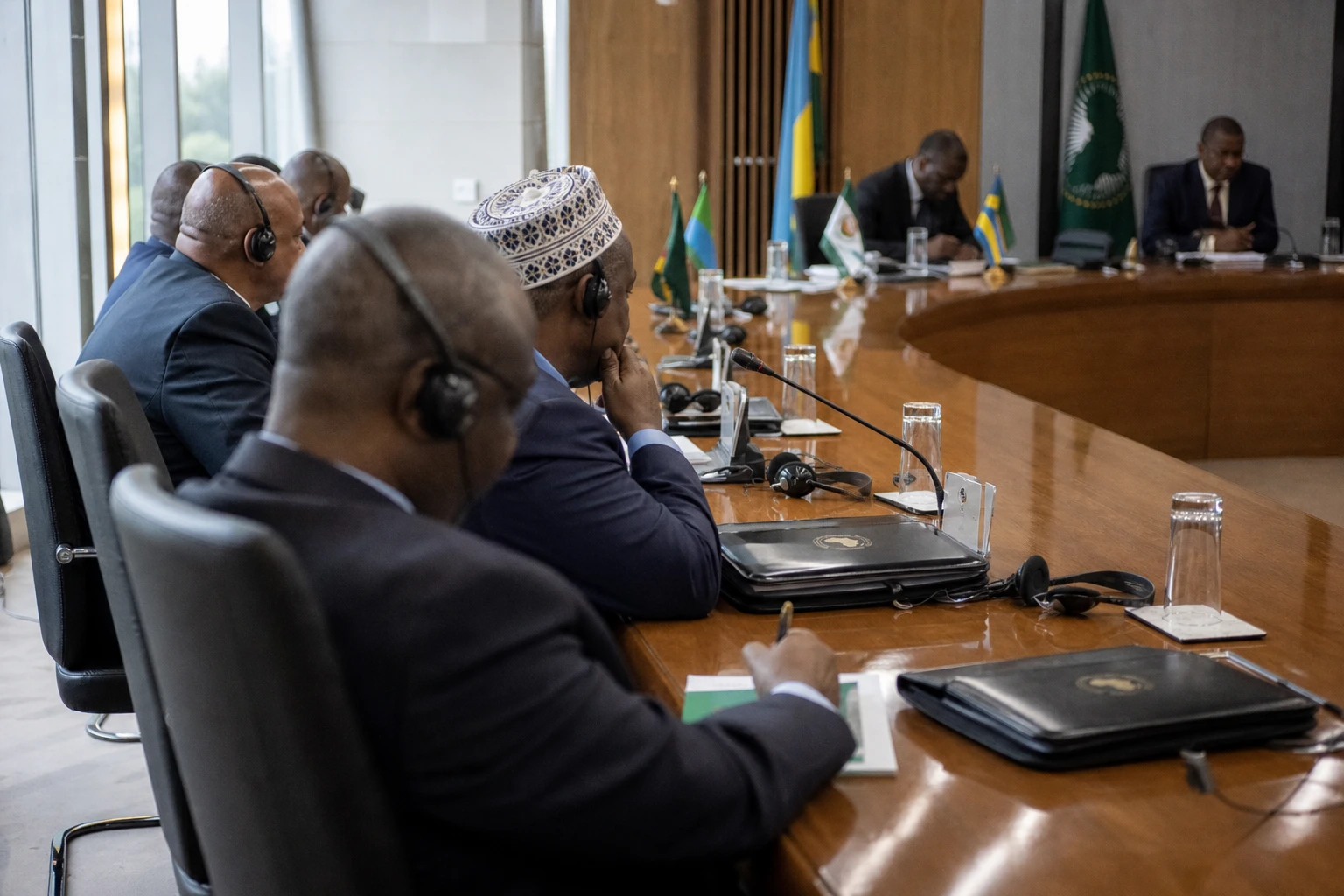
The testimony is new in one specific respect: Hijaouy says Pegasus was allegedly used not only against opponents or journalists, but also against African leaders attending the African Union’s extraordinary summit in Kigali in March 2018. The AU confirms that an extraordinary summit was held in Kigali on 21 March 2018 and marked an important step in the African Continental Free Trade Area project, AfCFTA. But, at this stage, nothing in the public sources consulted makes it possible to verify the precise scale of the alleged targeting or the identities of the heads of state targeted.
Why these allegations matter beyond Morocco
The Ceuta case says something about the highly sensitive relationship between Rabat and Madrid. The border is not merely a crossing point. It is also a diplomatic lever in a region where migration, maritime control and police cooperation are closely intertwined. When a police report refers to “permissiveness” on the Moroccan side, the issue goes beyond the July crisis alone: it speaks to the kingdom’s ability to regulate, or ease, flows depending on the political context. For Spain, the impact is immediate in Ceuta. For Morocco, it affects its image as a reliable partner.
The Pegasus case is broader still. Since the revelations of 2021, Morocco has faced this suspicion in several European and African capitals. Investigations by the Pegasus Project showed that the same tool could be used to monitor journalists, activists, diplomats and public officials. Morocco challenged these revelations, but new publications in 2026 reopened the case, describing a surveillance arsenal broader than NSO’s software alone. In this landscape, the question is not merely technical. It is institutional: who decides who is targeted, what oversight is in place, and what chain of accountability applies?
Mehdi Hijaouy’s allegations also carry particular weight because they concern figures already prominent in Morocco’s public debate. Abdellatif Hammouchi embodies security continuity. Fouad Ali El Himma, meanwhile, symbolises the link between the Palace, political networks and influence strategy. The fact that a former insider accuses them both reinforces the idea of a system of governance in which security is not limited to protecting the state: it can also be used to discipline political and media spaces. This is precisely what journalists, human rights defenders and some Moroccan exiles have challenged for years.
What the continent should watch
For North Africa and the rest of the continent, the case is a reminder of a now unavoidable reality: surveillance technologies travel faster than oversight mechanisms. Pegasus is not only a Moroccan or European scandal. It raises an African question in the fullest sense: how can security services be modernised without placing them beyond the reach of the law? The answers will not be found in Rabat alone. They are also being debated at the African Union, where data protection, cybersecurity and digital sovereignty are gaining prominence.
The next point to watch is therefore not only judicial. It is political and diplomatic. If documentary evidence emerges to substantiate the allegations over Ceuta, they will weigh on Morocco-Spain dialogue, already marked by episodes of tension. If new technical evidence emerges on Pegasus, it will reopen a dispute affecting several African capitals as well as European ones. In both cases, Morocco remains at the centre of a debate that extends beyond its borders: one about the power of the security apparatus, its limits, and the price a state pays when it turns intelligence into an instrument of leverage.



