Algeria
 Egypt
 Libya
 Sudan
 Tunisia
 Benin
 Burkina Faso
 Cabo Verde
 Côte d'Ivoire
 Ghana
 Guinea
 Guinea-Bissau
 Liberia
 Mali
 Mauritania
 Niger
 Nigeria
 Senegal
 Sierra Leone
 The Gambia
 Togo
 Cameroon
 Central African Republic
 Chad
 DR Congo
 Equatorial Guinea
 Gabon
 Republic of the Congo
 São Tomé and Príncipe
 Burundi
 Comoros
 Djibouti
 Eritrea
 Ethiopia
 Kenya
 Madagascar
 Malawi
 Mauritius
 Mozambique
 Rwanda
 Seychelles
 Somalia
 South Sudan
 Tanzania
 Uganda
 Angola
 Botswana
 Eswatini
 Lesotho
 Namibia
 South Africa
 Zambia
 Zimbabwe
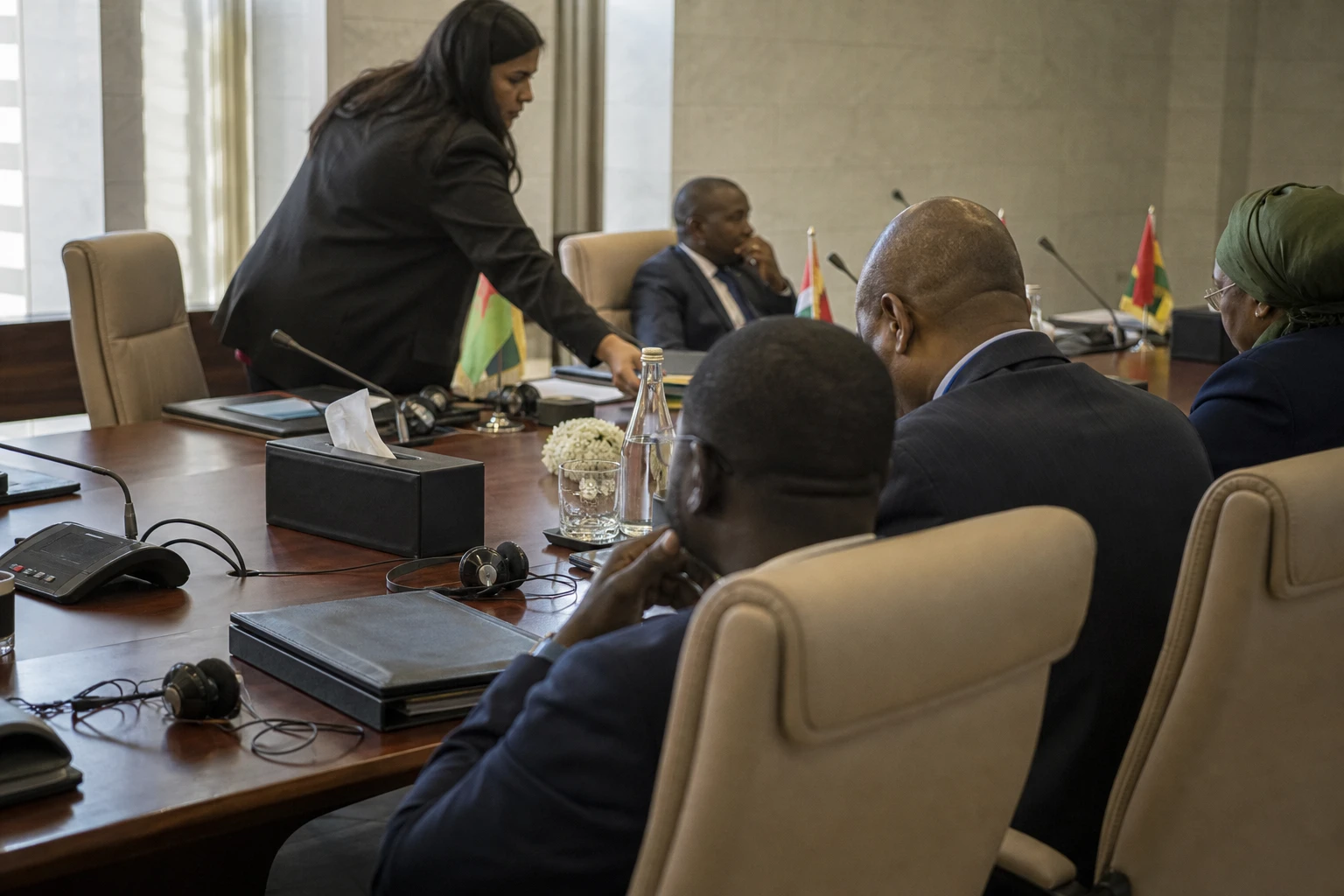
In Tetouan, a state ritual that says more than a ceremony
In Tetouan, the allegiance ceremony is not mere pageantry. It is a political, institutional and symbolic signal. Each year, it recalls that the Moroccan monarchy is part of a historical continuity, while also conveying a highly practical understanding of power: governing, arbitrating, representing and holding together territories, local elites and a society shaped by strong expectations. This year, the event took on particular significance because it coincided with renewed tensions on the border with Ceuta, where thousands of people attempted to reach the Spanish enclave from Morocco.
Morocco celebrates Throne Day around 30 July, the date Mohammed VI was enthroned in 1999. The 27th anniversary of his accession to the throne was marked, as is customary, with a ceremony at Mechouar Square at the Royal Palace in Tetouan, in the north of the Kingdom, attended by representatives of the 12 regions. In Moroccan usage, the bai’a, or allegiance, refers to the political and institutional oath of loyalty sworn to the sovereign.
What the ceremony showed, and why it matters
King Mohammed VI presided over the ceremony on Friday morning in Tetouan, surrounded by members of the royal family, ahead of the other highlights of Throne Day. The ritual brought together representatives of the Kingdom’s different regions, who came to renew their allegiance to the sovereign. In this context, the gesture is not merely protocol. It recalls the architecture of contemporary Morocco: a strong central state, local authorities that are more visible than before, and a monarchy that remains the political system’s point of balance.
This staging is all the more important because Tetouan was not chosen at random. The city lies in a pivotal area, between the Tangier-Tetouan-Al Hoceima axis, the Strait of Gibraltar and the border with Ceuta. It is a space where tourism, port activity, the movement of people, the border economy and migration pressure intersect. In northern Morocco, the state sees both a showcase for stability and a zone of persistent tension. In this context, the allegiance ceremony serves as a reminder that the political centre intends to remain in control of events, even when the border is in turmoil.
The timing is also diplomatically sensitive. A few hours after the ceremony, Spain announced that tens of thousands of migrants had already left Ceuta to return to Morocco. On Friday, the AP reported “tens of thousands” of voluntary departures, while Spanish authorities and several media outlets said the crisis was far larger than that of May 2021, when about 8,000 people reached Ceuta in two days. Exact figures varied by source, but the scale of the movement was enough to revive questions about border controls between Rabat and Madrid.
Moroccan and Spanish perspectives: two accounts that do not always align
On the Moroccan side, the episode is being approached cautiously. Authorities in Rabat have suggested that the influx was not what they wanted, while Madrid denounced a breakdown in border controls. Spanish sources describe a migration and security crisis, while Moroccan sources place greater emphasis on the need to restore order and preserve bilateral co-operation. This divergence in framing is typical of Morocco-Spain issues: migration often becomes an instrument of pressure, a security concern and a diplomatic variable all at once.
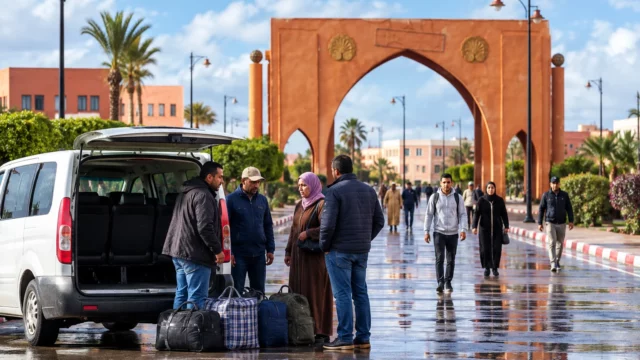
For Ceuta’s residents, the issues are immediate: reception capacity, police management, access to healthcare, unaccompanied minors and then return procedures. For Morocco, the challenge is twofold. It must prevent the crisis from turning the border into a stage for political posturing. It must also show that co-ordination mechanisms with Spain remain active. Operation Marhaba 2026, launched in June to welcome Moroccans living abroad, also shows that Morocco views crossings between the two shores as a flow to be organised, not merely a line to be sealed.
Domestically, the episode says much about the social pressures facing some of Morocco’s young people. Movements towards Ceuta are not simply a security issue. They also reflect income disparities, employment expectations and Europe’s enduring appeal, even when the risks are high. This is not unique to Morocco. But the Kingdom finds itself at the intersection of its ambitions as a regional power, its duties to control migration and the aspirations of a population seeking greater mobility, more opportunities and better prospects.
A significance that extends beyond Morocco and speaks to all of North Africa
On a continental level, the episode is a reminder that North Africa’s borders have become spaces for negotiation with Europe. Morocco plays a central role in this system, both as a country of departure and transit, and as a partner in co-operation. This position gives the Kingdom diplomatic leverage, but also exposes it to conflicting expectations: stem departures, co-operate with the European Union, protect its sovereignty and preserve its image as a stable country.
Throne Day adds another perspective. It showcases a state that claims stability as a political asset. In a Maghreb where relations between capitals often remain tense, Morocco emphasises institutional continuity of a kind that few countries in the region can claim in the same way. In that sense, the allegiance ceremony is not just a monarchical rite. It is a way of asserting that the country intends to remain predictable, governed and able to handle crises without being swept up by them.
The next point to watch will be the actual follow-up to the return of those who crossed through Ceuta, the response of the Spanish authorities, and how Rabat and Madrid prevent the episode from turning into a lasting crisis. At the same time, Morocco will continue its Throne Day events, with the royal speech expected around the anniversary date. The current direction is often discernible there: domestic consolidation, a regional message and a reminder of the Kingdom’s priorities.