Algeria
 Egypt
 Libya
 Morocco
 Sudan
 Tunisia
 Benin
 Burkina Faso
 Cabo Verde
 Côte d'Ivoire
 Ghana
 Guinea
 Guinea-Bissau
 Liberia
 Mali
 Mauritania
 Niger
 Nigeria
 Senegal
 Sierra Leone
 The Gambia
 Togo
 Cameroon
 Central African Republic
 Chad
 Equatorial Guinea
 Gabon
 Republic of the Congo
 São Tomé and Príncipe
 Burundi
 Comoros
 Djibouti
 Eritrea
 Ethiopia
 Kenya
 Madagascar
 Malawi
 Mauritius
 Mozambique
 Rwanda
 Seychelles
 Somalia
 South Sudan
 Tanzania
 Uganda
 Angola
 Botswana
 Eswatini
 Lesotho
 Namibia
 South Africa
 Zambia
 Zimbabwe
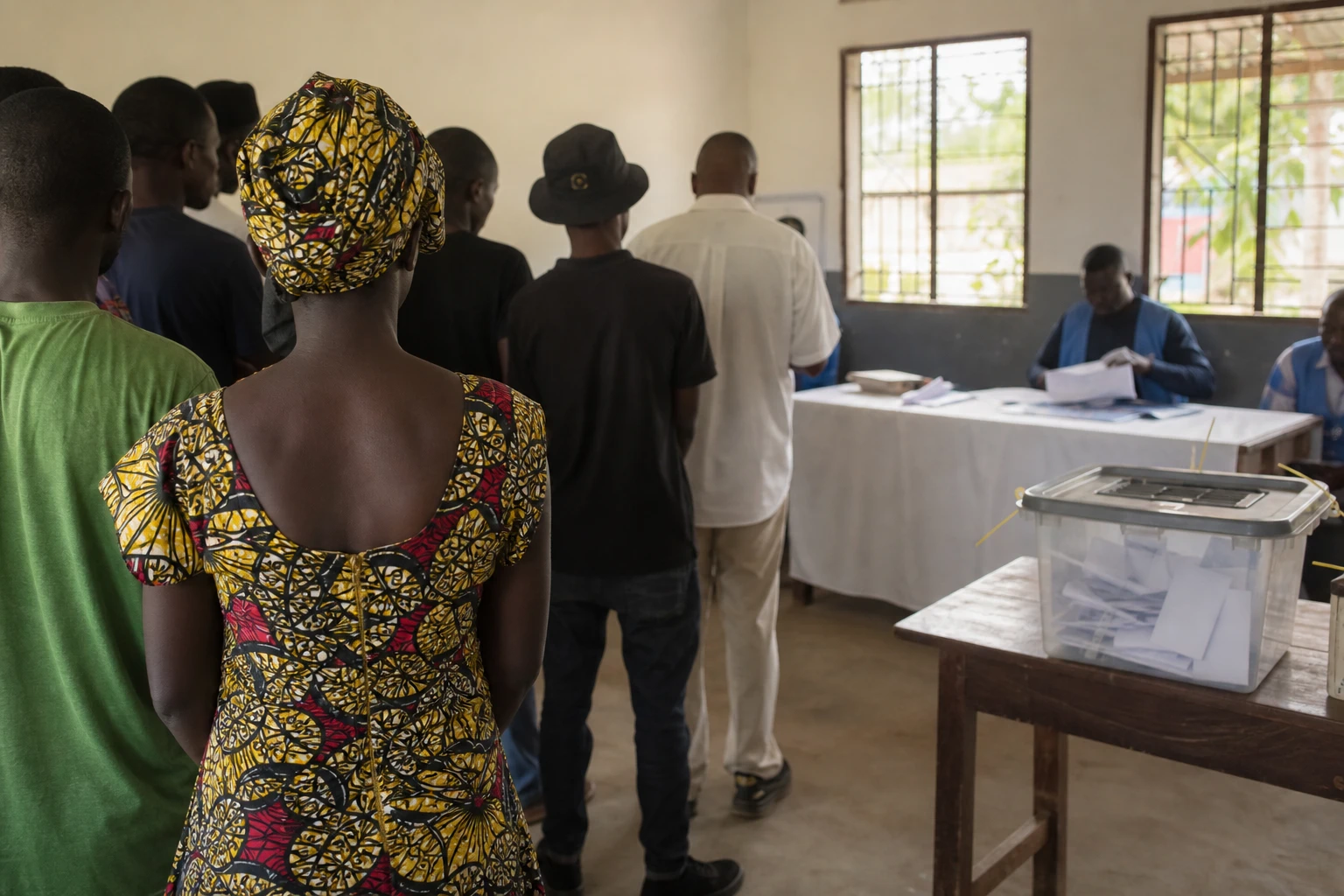
In Mongbwalu, water is still lacking where hygiene should save lives
In a mining area with heavy movement of people, Ebola prevention depends as much on healthcare workers as on water available at the tap. In Mongbwalu, in Ituri, this link remains fragile. When families walk several kilometres to find a free source, regular handwashing stops being a simple act and becomes a cost, in both time and money. This reality directly weighs on the response, as the Bundibugyo Ebola outbreak was confirmed in the Democratic Republic of the Congo on 15 May 2026 and Ituri still accounts for most cases.
The problem extends beyond Mongbwalu. In the east of the Democratic Republic of the Congo, health crises overlap with access constraints, insecurity and informal economic activity. The World Health Organization says Ituri remains the epicentre of the 2026 outbreak, while Oxfam describes a situation in which only one in five residents of Mongbwalu has reliable access to safe water. The organisation adds that the town has nearly 140,000 inhabitants and that hygiene services there remain very inadequate.
The facts: a health response hampered by basic needs
In Mongbwalu, in Ituri province, residents say they have to travel long distances to collect water for free from natural sources. According to data reported by Oxfam, only a limited share of the population has access to genuinely safe drinking water, and functioning sanitation facilities remain rare. At the same time, traders at the central market report a lack of handwashing facilities and disinfectant, even though such equipment is central to Ebola prevention.
The cost of water increases pressure on households. One resident quoted in the source material cites a price of 1,000 Congolese francs for three jerrycans, forcing some households to choose between water and other essential expenses such as food. This figure is not isolated: it illustrates how everyday poverty undermines public health. When water becomes expensive or scarce, preventive measures lose their effectiveness, especially in an area where people remain highly mobile.
NGOs have installed reservoirs to improve access to water, but the effort remains insufficient given the needs. Oxfam also says it has stepped up its work in the area, providing water, sanitation and hygiene facilities, while the WHO stresses that the current response relies heavily on the involvement of local communities. In Mongbwalu, then, the challenge is not only medical. It is also logistical, social and community-based.
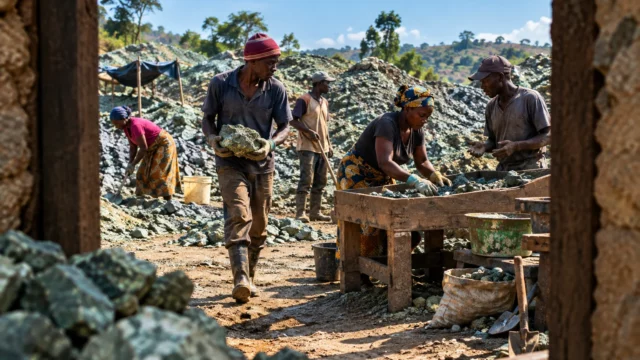
The situation is further complicated by local gold-mining activity. Mongbwalu is a mining town, and groundwater may be exposed to waste from mining areas, according to the source material. In a town whose economy also revolves around gold, the issue of safe drinking water is not only a public health emergency. It also concerns the protection of water sources, land management and the health of workers, who are often caught between mining, displacement and a lack of public infrastructure.
What this means for residents, the province and the region
For families in Mongbwalu, the impact is immediate. Fetching water takes time. Paying for water weighs on household budgets. Forgoing handwashing increases exposure to the virus. For traders, the lack of washing points at the central market undermines business and makes recovery more uncertain. For healthcare teams, limited access to water complicates the care of suspected cases, staff protection and community trust. The WHO also emphasises that communities must be fully involved for the response to work.
Across Ituri, the water issue is linked to displacement, security and the volume of exchanges in mining areas. The province remains an important transit point between several territories in the east of the DRC. Yet an epidemic spreads faster there when public services are weak and people depend on precarious solutions. That is why the Ebola response cannot be limited to treatment and surveillance. It must also provide sustained funding for water, hygiene and sanitation.
At national level, this crisis highlights a recurring reality in the Democratic Republic of the Congo: health emergencies are often worsened by structural deficits, particularly in the eastern provinces. The outbreak announced in May 2026 has already led the WHO to classify the event as a public health emergency of international concern, a sign that the response extends beyond the Congolese context alone. But on the ground, the most decisive solution is often the simplest: safe, available, affordable water close to residents.
The implications are also regional. The east of the DRC is connected to neighbouring countries through commercial, family and humanitarian movements. When an epidemic takes hold in a densely populated mining area, it prompts wider vigilance in Central Africa and the Great Lakes region. The WHO’s monitoring also shows that the outbreak has spread to several provinces, with Ituri still at the centre of the response. What is at stake in Mongbwalu therefore extends beyond a market or neighbourhood: it is a major test for public health in the DRC and for health cooperation across the region.