Algeria
 Egypt
 Libya
 Sudan
 Tunisia
 Benin
 Burkina Faso
 Cabo Verde
 Côte d'Ivoire
 Ghana
 Guinea
 Guinea-Bissau
 Liberia
 Mali
 Mauritania
 Niger
 Nigeria
 Senegal
 Sierra Leone
 The Gambia
 Togo
 Cameroon
 Central African Republic
 Chad
 DR Congo
 Equatorial Guinea
 Gabon
 Republic of the Congo
 São Tomé and Príncipe
 Burundi
 Comoros
 Djibouti
 Eritrea
 Ethiopia
 Kenya
 Madagascar
 Malawi
 Mauritius
 Mozambique
 Rwanda
 Seychelles
 Somalia
 South Sudan
 Tanzania
 Uganda
 Angola
 Botswana
 Eswatini
 Lesotho
 Namibia
 South Africa
 Zambia
 Zimbabwe
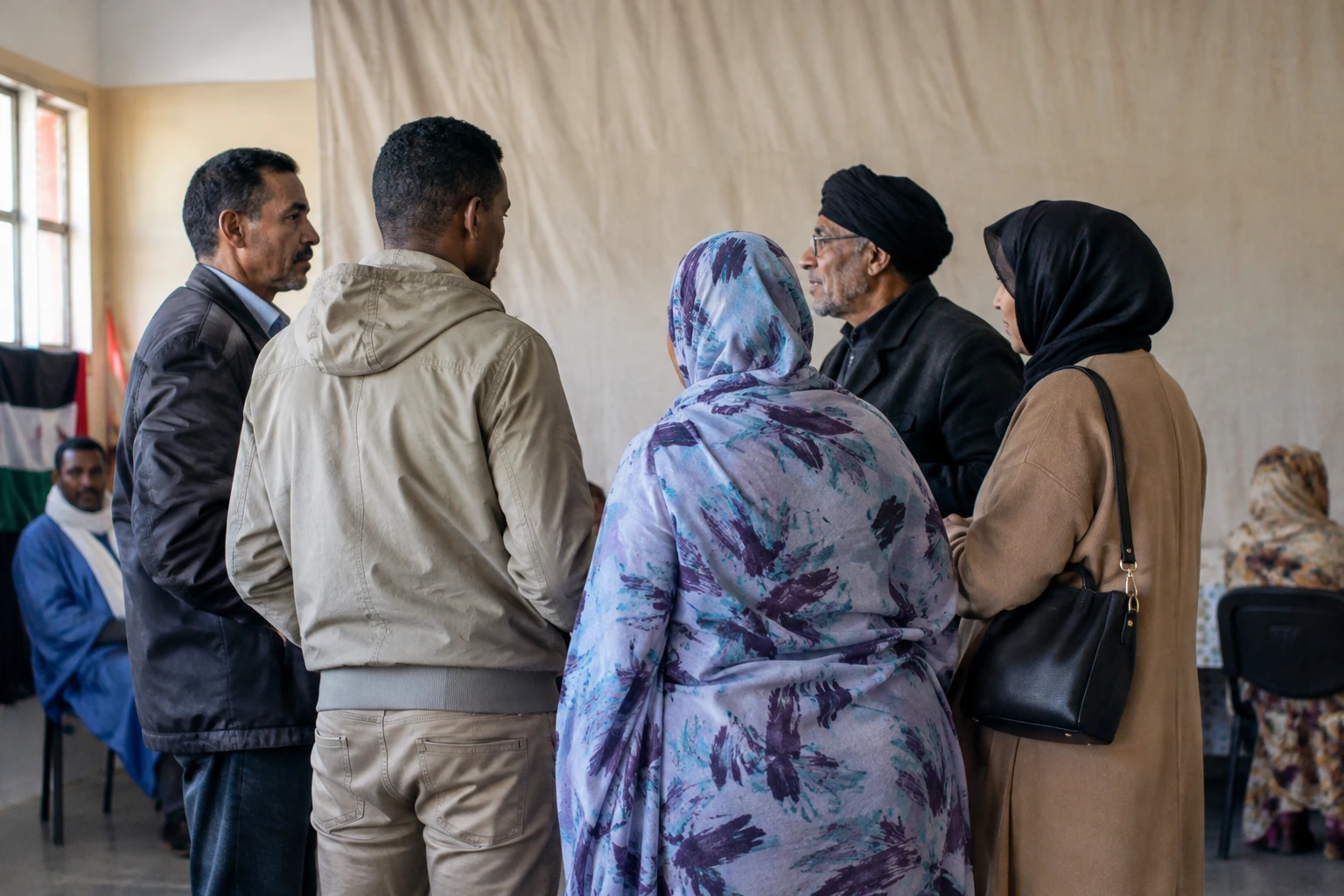
In Laayoune, Moroccan flags accompanied a commemoration that went beyond the memory of 1975 alone. Fifty-one years after the Green March, the dispute over Western Sahara remains unresolved and the UN presence is entering an unprecedented phase: MINURSO ceased operations on 1 November 2026.
A celebrated memory, a disputed territory
On 6 November 1975, a mobilisation organised by the Kingdom of Morocco marked a decisive step in its claim to Western Sahara, then under Spanish administration. For Rabat, the Green March embodies the recovery of a territory it considers Moroccan. For supporters of Sahrawi independence, by contrast, it ushered in a period of takeover and displacement.
This divergence remains at the heart of the present dispute. Morocco administers most of the territory and advocates an autonomy plan under its sovereignty. The Polisario Front calls for independence and upholds the Sahrawis’ right to self-determination. Families remain divided between the territory and refugee camps in the Tindouf region of Algeria.
The dispute also has a regional dimension. The Arab Maghreb Union, which brings together Morocco, Algeria, Tunisia, Libya and Mauritania, remains paralysed by persistent tensions between Rabat and Algiers, particularly over Western Sahara. The rivalry weighs on trade and cooperation in a region where political borders hinder joint projects.
MINURSO leaves the ground, not the issue
Several hundred Sahrawis who support Morocco gathered in Laayoune for the anniversary, according to press reports corroborated by regional media. Participants expressed their support for King Mohammed VI and the autonomy plan advocated by Rabat. “In our eyes, his autonomy initiative is the most appropriate proposal for resolving this dispute,” said Layla Choraifi, a participant in the gathering.
Some demonstrators also denounced the UN mission’s ineffectiveness. Established in 1991, MINURSO — the United Nations Mission for the Referendum in Western Sahara — monitored the ceasefire and was tasked with helping to organise a self-determination vote. That referendum never took place.
The institutional situation has, however, changed since the events commemorated: the Security Council did not renew the mission’s mandate, which expired on 31 October 2026. MINURSO began its liquidation the following day. The end of its operations does not in itself mean that the dispute has been resolved or that the right to self-determination has disappeared. The UN says its political efforts can continue through other channels.
The withdrawal nevertheless changes the arrangements on the ground. The mission monitored the ceasefire and had military observers in an area where tensions between Morocco and the Polisario have not disappeared. The closure of its facilities and the gradual departure of its personnel therefore raise questions about mechanisms for verification and incident prevention.
A new diplomatic phase, without a political deal
The commemoration comes as Morocco’s autonomy plan gains ground in some capitals. Security Council Resolution 2797, adopted on 31 October 2025, had extended MINURSO’s mandate until 31 October 2026 and presented autonomy as a possible basis for negotiations. It also called for a mutually acceptable political solution that guarantees the self-determination of the Sahrawi people.
These diplomatic developments do not amount to an agreement between the parties. Morocco considers autonomy under its sovereignty a realistic outcome. The Polisario and its supporters maintain that the population must be able to choose its future, including through a referendum offering independence as an option. The interpretation of international texts and the terms of any consultation therefore remain contested.
The consequences are not limited to leaders and diplomats. For residents of cities administered by Morocco, continuity of services, infrastructure and economic activity is a daily concern. For Sahrawis in the Tindouf camps, the lack of a settlement sustains uncertainty over their return and the territory’s political status. The public positions expressed at a gathering do not, on their own, reflect the diversity of Sahrawi opinion.
The debate also runs through the African Union. Morocco rejoined the organisation in 2017, while the Sahrawi Arab Democratic Republic has been a member since 1982. This institutional coexistence puts the continental organisation in the face of a sensitive question: how to foster dialogue between two members without prejudging the territory’s final status.
The next challenge: maintaining a framework for negotiations
For Morocco, the celebration of the Green March reinforces a national narrative linked to territorial integrity and supports a strategy of diplomatic recognition. For independence supporters, it is a reminder that the central question — the Sahrawis’ political choice — remains unanswered. Between these interpretations, MINURSO’s withdrawal makes the search for a credible framework for monitoring and talks more urgent.
The continental significance will be measured by the ability of the UN, the African Union and regional actors to prevent a deterioration of the ceasefire and restart a process accepted by the parties. The withdrawal of the blue helmets does not close the file: it opens a period in which on-the-ground guarantees and the place of self-determination will be central to the balance of power.
Sources consulted: report on the commemoration in Laayoune, regional coverage of the end of the UN mission, UN information on MINURSO’s liquidation, Security Council Resolution 2797, list of African Union member states.