Algeria
 Egypt
 Libya
 Morocco
 Sudan
 Tunisia
 Benin
 Burkina Faso
 Cabo Verde
 Côte d'Ivoire
 Ghana
 Guinea
 Guinea-Bissau
 Liberia
 Mali
 Niger
 Nigeria
 Senegal
 Sierra Leone
 The Gambia
 Togo
 Cameroon
 Central African Republic
 Chad
 DR Congo
 Equatorial Guinea
 Gabon
 Republic of the Congo
 São Tomé and Príncipe
 Burundi
 Comoros
 Djibouti
 Eritrea
 Ethiopia
 Kenya
 Madagascar
 Malawi
 Mauritius
 Mozambique
 Rwanda
 Seychelles
 Somalia
 South Sudan
 Tanzania
 Uganda
 Angola
 Botswana
 Eswatini
 Lesotho
 Namibia
 South Africa
 Zambia
 Zimbabwe
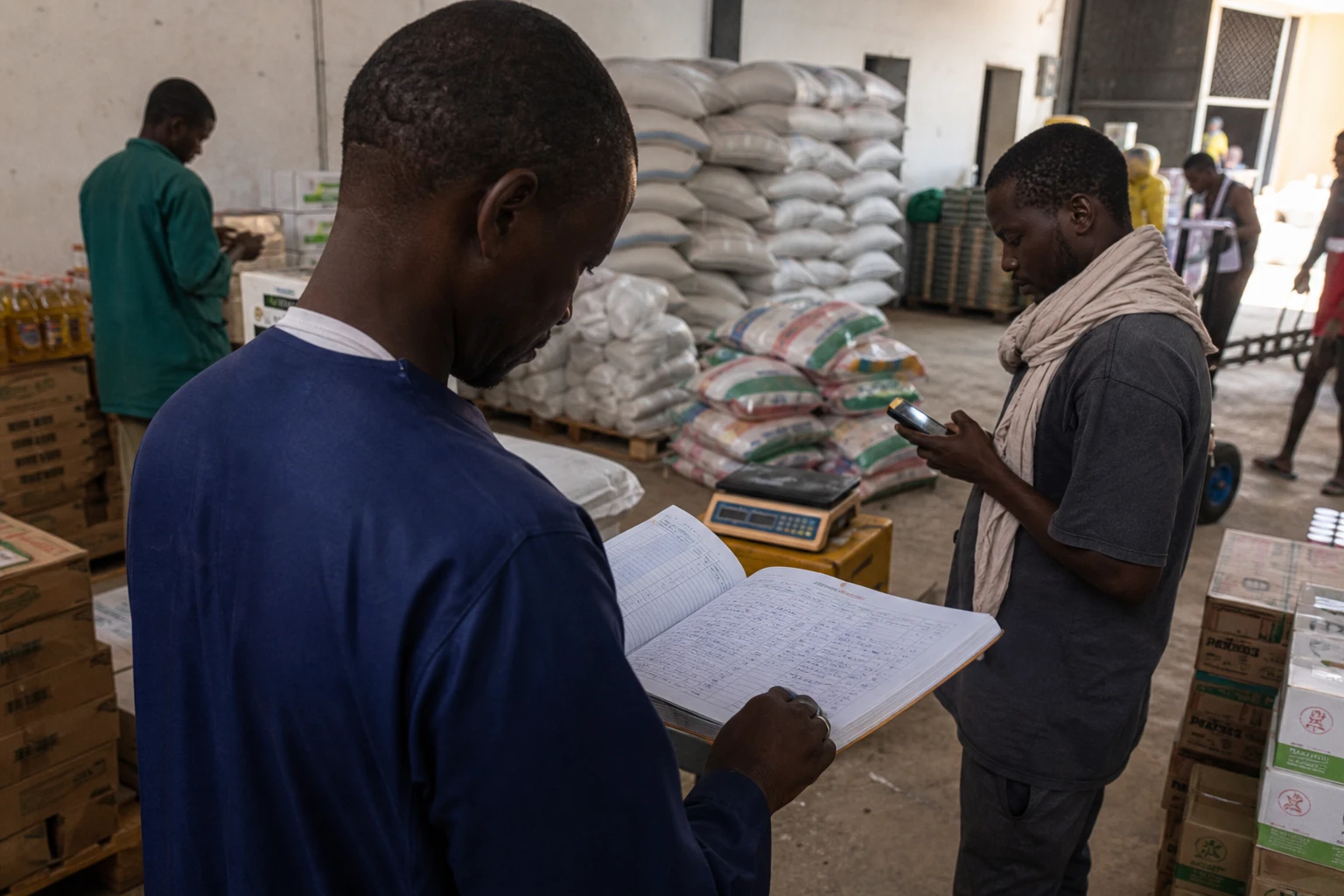
A simple but decisive question for Nouakchott
When a country multiplies platforms, forums and announcements on youth employment, the real question is not just about the initiative. It is about scaling up, monitoring and delivering tangible results for Mauritanians seeking a first job, useful training or a stable income. In Nouakchott, the debate on employment is taking on a new dimension with artificial intelligence, but the underlying challenge remains the same: turning a large youth population into a productive force without leaving graduates behind.
This question goes beyond the capital. In Mauritania, pathways into work are still marked by a gap between businesses’ needs, the training available and the realities of a labour market in which a significant share of the workforce remains underused. The issue affects urban centres as much as inland regions, where training provision, digital access and professional mobility remain unequal.
Nouakchott puts employment tools back in the spotlight
On 21 July 2026 in Nouakchott, Mauritania’s Minister for Youth Empowerment, Employment, Sport and Civic Service, Mohamed Abdellahi Ould Louly, opened the National Forum on the Future of Employment in the Age of Artificial Intelligence, in the presence of his counterpart responsible for vocational training and representatives of Mauritanian employers. The stated aim is clear: to build a joint labour-market monitoring mechanism, better measure graduates’ transition into work and continuously adjust curricula.
The official message emphasises shared responsibility between the state, training sectors and the private sector. In a country where employment policies are often designed in silos, this approach seeks to better connect ministries, businesses and career guidance programmes. In June 2026, the ministry had already launched the digital platform Mourchid, designed to bring together programmes, services and opportunities related to employment and training. Radio Mauritanie and AMI described the tool as a digital one-stop shop available to young people around the clock.
In practice, such a tool is only valuable if it feeds into a reliable, up-to-date database used by employers, training institutions and the administration. This is precisely what is often missing: not the announcement of reform, but its continuity. The government says it has already audited previous employment programmes and prepared new social and statistical reforms. It remains to be seen whether these tools will be linked and made publicly available in a clear format.
A longstanding need, with tools already tried
Mauritania is not starting from scratch. As early as 2015, a project to support the finalisation of the national employment policy and the labour-market information system, PNE-SIMEF, was launched with just over $1m in funding from the African Development Bank and a planned duration of 43 months. Its aim was already to improve understanding of the labour market and training.
This continuity says a great deal about Mauritania’s problem. The tools change, but the ambition remains the same: to have a credible map of skills, available jobs and business needs. Yet without a regularly published public review, it is difficult to know what has worked, what has failed and what needs correcting. This weakness in monitoring does not mean that no action is being taken. It chiefly means that public action is not measured enough to be assessed by citizens, young graduates or economic partners.
The issue is all the more sensitive because the government has also rolled out numerous programmes to support access to employment and entrepreneurship. In April 2025, it presented figures on grants, loans, training and several hundred jobs supported under a local emergency programme. In 2026, it also reported new public-sector recruitment and expanded social measures. But these figures remain scattered across several communications, making it difficult to assess their real impact on youth unemployment.
Figures underline the social urgency
Official data confirm that pressure on the labour market remains high. In 2024, the unemployment rate as defined by the ILO was 11.1%, according to the national quarterly employment survey cited in April 2025 by the Ministry of Economy and Finance. Unemployment affects more women, at 15%, than men, at 8.7%. Including time-related underemployment, the rate rises to 16.3%. And when the potential inactive labour force is added, it reaches 30.5% of the active population.
These figures shed light on the daily reality for many young Mauritanians. A degree does not guarantee swift entry into the labour market. Training is not always enough if it is not aligned with businesses’ needs. And formal employment remains harder to access in the economy’s most dynamic sectors, while the informal sector continues to absorb some of the demand for work. In this context, women remain more exposed to dropping out of the labour market, reflecting social constraints, mobility and access to opportunities.
The overall picture is consistent with the World Bank’s analysis, which highlights the underuse of human capital in Mauritania and the need to improve links between education, skills and employment. The institution also stresses that the country must do more to turn growth into sustainable jobs, especially for young people and women.
What this means for Mauritania and Africa
For Mauritania, the issue goes beyond access to work. It affects the credibility of public policy. A well-designed employment monitoring system can help redirect training programmes, identify occupations in high demand, better target support and narrow the gap between promises and results. By contrast, isolated, unevaluated and poorly interoperable programmes risk producing little more than administrative messaging.
The question also has regional significance. Mauritania belongs to the Arab Maghreb Union, in a sub-region where employment, training and professional mobility policies remain fragmented. In the Sahel and along the West African Atlantic coast, demographic pressure, rapid urbanisation and climate shocks make more flexible skills policies increasingly necessary. The Mauritanian case thus echoes a wider continental debate: how to create productive jobs in economies where young people enter the labour market faster than formal positions are created.
The next test will be implementation. If the Nouakchott forum leads to a transparent, shared system whose results are published regularly, it could finally provide a backbone for the country’s employment policies. If not, Mauritania will remain caught in a familiar pattern across the continent: many tools, little public evidence, and a generation still waiting for access to work to become a measurable reality.