Algeria
 Egypt
 Libya
 Morocco
 Sudan
 Tunisia
 Benin
 Burkina Faso
 Cabo Verde
 Côte d'Ivoire
 Ghana
 Guinea
 Guinea-Bissau
 Liberia
 Mali
 Niger
 Nigeria
 Senegal
 Sierra Leone
 The Gambia
 Togo
 Cameroon
 Central African Republic
 Chad
 DR Congo
 Equatorial Guinea
 Gabon
 Republic of the Congo
 São Tomé and Príncipe
 Burundi
 Comoros
 Djibouti
 Eritrea
 Ethiopia
 Kenya
 Madagascar
 Malawi
 Mauritius
 Mozambique
 Rwanda
 Seychelles
 Somalia
 South Sudan
 Tanzania
 Uganda
 Angola
 Botswana
 Eswatini
 Lesotho
 Namibia
 South Africa
 Zambia
 Zimbabwe
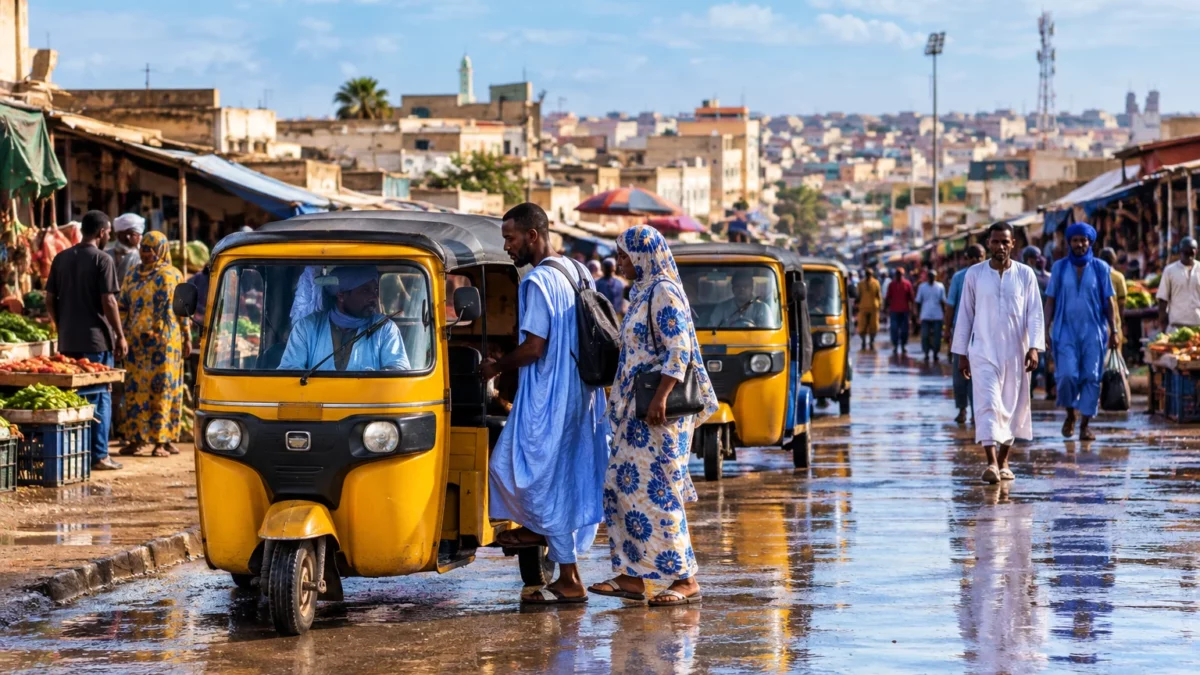
In Nouakchott, tuk-tuks meet two immediate needs: getting around at low cost and finding paid work. But behind these quick journeys, drivers juggle rental fees, fuel costs and traffic rules that limit their routes.
An urban service turned into a livelihood
Near markets and busy thoroughfares in the Mauritanian capital, tricycles wait for passengers. They attract people from varied backgrounds: mechanics, electricians, plumbers and graduates looking for an income rather than remaining without work. Driver Aliou Soumaré describes a choice of work, not a single calling: “We don’t want to just sit around like this with our arms folded. We just want to earn a living.”
The phenomenon is part of an urban transport market that is already largely informal. The Greater Nouakchott Sustainable Urban Mobility Plan estimates that the city has between 6,500 and 7,000 taxis, licensed or not. These vehicles account for a significant share of motorised journeys. The document also notes the recent growth of tuk-tuks, while warning of road safety risks.
Tricycles occupy a particular place in this offer. They can serve neighbourhoods and routes that users consider poorly covered by cars. A passenger quoted in a report from Nouakchott says she chooses this mode because it is cheaper and quicker for her journey. This account illustrates a practical advantage, but is not enough to assess fares or service quality across the city.
Owner or renter: very different incomes
Owning the vehicle has a direct bearing on what a driver can keep. Housseynou Bandy Sy, who says he has been working for more than 20 years, reports daily rental fees of 5,500 to 8,000 ouguiyas, depending on the owners. These are the amounts he cites from his own experience; they are neither an official rate nor a verified average.
After paying the rent, drivers still have to cover fuel and household expenses. The day’s earnings can therefore be small, or barely enough to fill the tank, according to the drivers interviewed. Those who own their tricycle, by contrast, avoid the daily fee, but remain exposed to maintenance costs, fuel prices and slow periods.
National data also require careful interpretation. ANSADE, Mauritania’s statistics agency, puts the unemployment rate at 11.97% in the first quarter of 2026, compared with 12.77% a year earlier. This figure refers to unemployment as statistically defined and does not specifically measure youth unemployment. It therefore cannot, on its own, quantify the number of young people turning to tuk-tuks.
Regulating without cutting off access to work
Tricycle traffic is governed by national legislation. An order published in the Official Gazette in 2023 provides, among other things, for a transport permit specifying authorised zones or routes, a professional driving licence, insurance and periodic roadworthiness tests. It also sets a maximum speed of 40 km/h for tricycles in urban areas. These requirements are intended to improve safety and organise the service, but their implementation must take account of the actual conditions in which drivers work.
Regulation has also taken the form of geographical restrictions. In July 2023, the authorities banned tuk-tuks from driving in certain parts of central Nouakchott, citing road safety in particular. Drivers and users then reported the effects of these limits on their journeys and incomes. In 2025, the Road Transport Regulatory and Organisation Authority announced a system for identifying tricycles by colours and badges associated with the capital’s wilayas.
The challenge is to enforce safety requirements without restricting travel to the best-served areas. A ban in the city centre may reduce exposure to risks on certain roads, but it may also lengthen journeys or force passengers to find a connecting service. For drivers, a narrower authorised zone potentially means fewer customers and more uncertain daily earnings.
The Greater Nouakchott mobility plan proposes professionalising informal transport by integrating existing operators and improving the safety of the fleet. This approach highlights a key point: tricycles are not just a traffic problem to be managed. They are also an economic activity and a service used by some residents.
An issue that extends beyond the capital
For public officials, the challenge is to reconcile road safety, traffic flow and access to employment. For drivers, it is about working in predictable conditions and covering their costs. For passengers, particularly those with limited means, the priority is to retain an affordable transport option. These interests are not necessarily in conflict, but they require clear rules, known routes and dialogue with professionals.
Regionally, Mauritania is a member of the Arab Maghreb Union, while Nouakchott is also a West African crossroads. The question facing the capital reflects a wider challenge for Africa’s growing cities: integrating informal transport into urban policies rather than leaving it in a grey area between tolerance and prohibition. Monitoring permit rules, traffic restrictions and mobility projects will show whether this organisation improves safety, service and drivers’ incomes.