Algeria
 Egypt
 Libya
 Morocco
 Sudan
 Tunisia
 Benin
 Burkina Faso
 Cabo Verde
 Côte d'Ivoire
 Ghana
 Guinea
 Guinea-Bissau
 Liberia
 Mali
 Niger
 Nigeria
 Senegal
 Sierra Leone
 The Gambia
 Togo
 Cameroon
 Central African Republic
 Chad
 DR Congo
 Equatorial Guinea
 Gabon
 Republic of the Congo
 São Tomé and Príncipe
 Burundi
 Comoros
 Djibouti
 Eritrea
 Ethiopia
 Kenya
 Madagascar
 Malawi
 Mauritius
 Mozambique
 Rwanda
 Seychelles
 Somalia
 South Sudan
 Tanzania
 Uganda
 Angola
 Botswana
 Eswatini
 Lesotho
 Namibia
 South Africa
 Zambia
 Zimbabwe
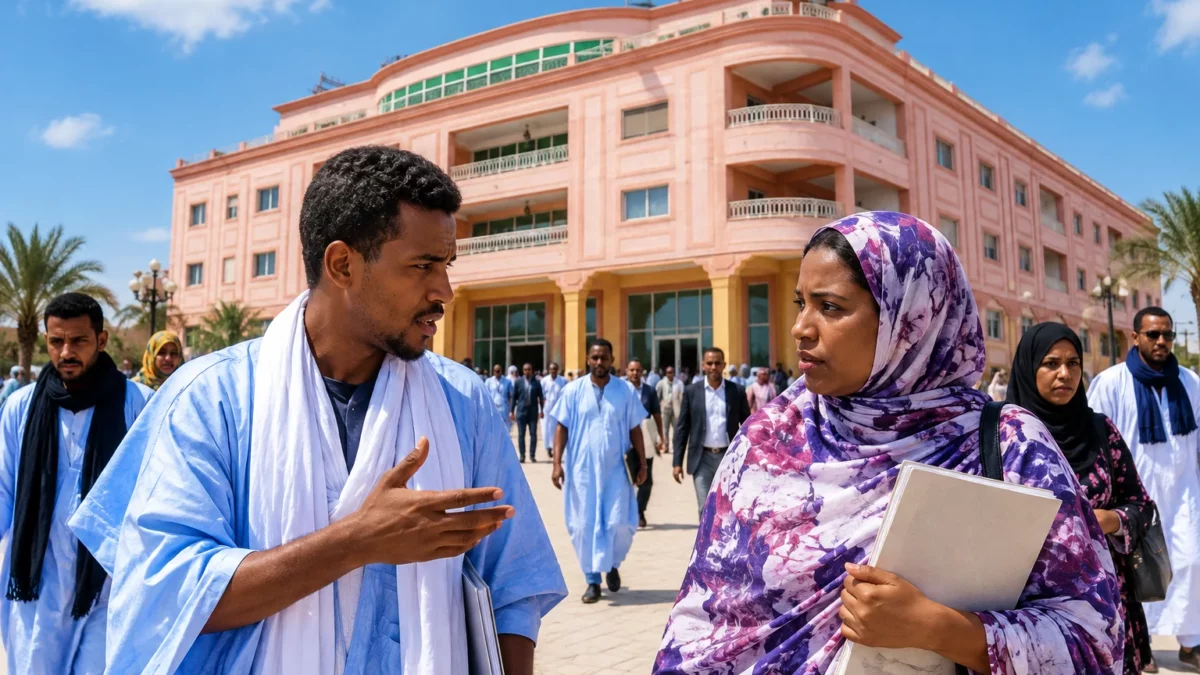
In Mauritania, a video showing money being handed over raises a question that goes beyond the controversy surrounding an opposition figure: how can political activity be funded without exposing its backers, and without allowing doubt to take the place of transparency? Biram Dah Abeid acknowledges the footage. However, he disputes the interpretation that it proves a quid pro quo or corruption.
Controversy follows resignation
The footage circulated on social media in November 2026. It shows Biram Dah Abeid receiving a sum of money from Seyidna Ali Ould Mohamed Khouna, a former minister. In the video, the latter describes the sum as 50 million old ouguiyas, paid on behalf of a person named Mohamed. This amount and description are those given in the footage and reported by Mauritanian media; by themselves, they do not prove where the funds came from or what they were for.
In a recording broadcast on 19 November, the opposition figure acknowledged that the footage was authentic. He says the scene dates back to late 2019 and that the money was support intended to back his activism, with no conditions or quid pro quo. He did not disclose the donor’s identity. These are his account of events: no document made public in the available reporting independently establishes the reason for the payment.
The controversy comes shortly after his resignation from the National Assembly, announced on 9 November 2026. Biram Dah Abeid had denounced corruption and criticised the way Parliament operates. Mauritanian outlet Info Plus reports on the circumstances of his resignation. A video shared by Africanews also confirms that he announced his departure and said he intended to continue his opposition through legal means and on the ground.
What the video establishes — and what it does not resolve
Acknowledging that the footage is authentic is an important fact. But it does not answer every question: who provided the money, under what terms, and was any quid pro quo expected? On these points, the opposition figure’s statement and the details shown in the video are not enough to reach a conclusion. No corroborated information available here makes it possible to state that an offence was committed.
The same caution applies to the allegation of a campaign to destabilise him. Biram Dah Abeid argues that the video was released to discourage businesspeople from funding him ahead of the 2028 parliamentary elections and the 2029 presidential election. This intention has not been independently established. It must therefore remain attributed to him, rather than being presented as a proven fact.
Likewise, citing a sum of 50 million old ouguiyas is not enough on its own to assess the political impact of the affair. It would be necessary to know the applicable disclosure rules, the funder’s identity, how the money was used and any accounts held by the organisation or campaign concerned. Without these documents, the controversy rests mainly on a video and on conflicting or incomplete explanations.
Political funding and public trust
For voters, the issue is not limited to the reputation of an opposition leader. Party and campaign funding affects trust in institutions: citizens must be able to distinguish between a political donation, personal assistance and a payment linked to a decision. Clear rules and accessible oversight mechanisms can reduce suspicion, regardless of the political affiliation of those concerned.
The video also comes amid criticism of institutions. When he resigned, the opposition figure accused the National Assembly of failing, in his view, to fulfil its oversight role. Supporters at his rally defended political freedoms, while he denounced what he considers an attempt to discredit him. These allegations reflect his reading of the balance of power; they do not replace an independent assessment of how parliament operates or of the alleged corruption.
Biram Dah Abeid is also a leading figure in the abolitionist movement in Mauritania, at the head of the Initiative for the Resurgence of the Abolitionist Movement. This background gives the controversy significance beyond a personal dispute: it touches on the place of the opposition and rights groups in public life. It does not, however, exempt political leaders from answering questions about their funding clearly.
A story to watch ahead of upcoming elections
In Nouakchott and across the regions, the affair could influence how voters assess opposition figures and the authorities. Biram Dah Abeid’s political and financial backers are directly affected by his allegations of intimidation. More broadly, citizens have an interest in having access to verifiable information rather than partisan accounts circulating online.
Mauritania belongs to the Arab Maghreb Union and has political and economic ties with West Africa. The controversy does not in itself herald a regional shift. However, it reflects a question facing many democracies across the continent: how can political funding be made traceable without oversight of supporters becoming a means of putting pressure on the opposition?
The next milestones will be the possible publication of information that would allow the source and use of the funds to be verified, as well as clarifications from those involved. At this stage, the established facts are limited: Biram Dah Abeid has acknowledged the video, dated the scene to late 2019 and says it showed unconditional support. The donor’s identity and the precise terms of the payment remain unclear.