Algeria
 Egypt
 Libya
 Morocco
 Sudan
 Tunisia
 Benin
 Burkina Faso
 Cabo Verde
 Côte d'Ivoire
 Ghana
 Guinea
 Guinea-Bissau
 Liberia
 Mali
 Niger
 Nigeria
 Senegal
 Sierra Leone
 The Gambia
 Togo
 Cameroon
 Central African Republic
 Chad
 DR Congo
 Equatorial Guinea
 Gabon
 Republic of the Congo
 São Tomé and Príncipe
 Burundi
 Comoros
 Djibouti
 Eritrea
 Ethiopia
 Kenya
 Madagascar
 Malawi
 Mauritius
 Mozambique
 Rwanda
 Seychelles
 Somalia
 South Sudan
 Tanzania
 Uganda
 Angola
 Botswana
 Eswatini
 Lesotho
 Namibia
 South Africa
 Zambia
 Zimbabwe
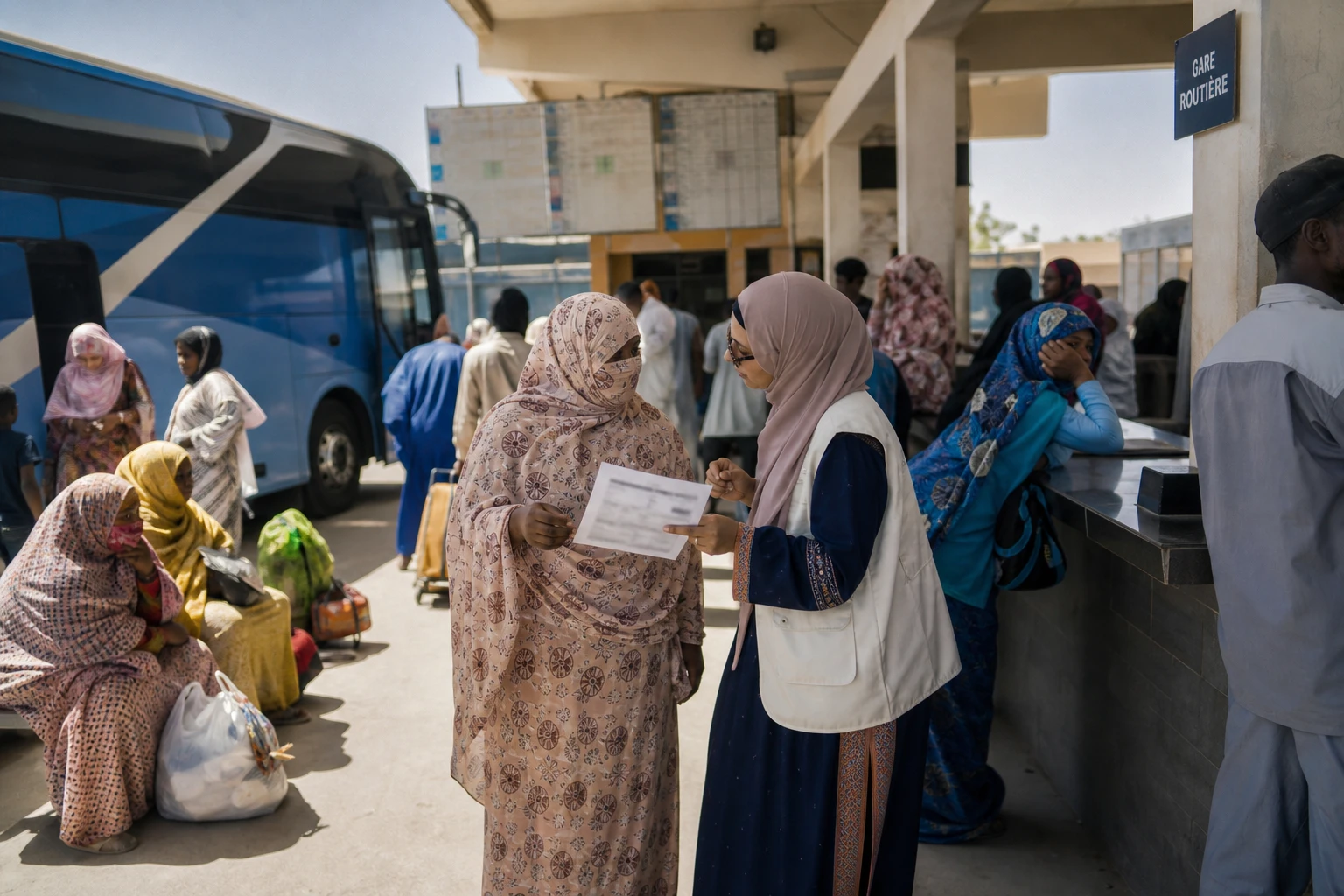
In Nouakchott, the question is no longer simply how to condemn sexual violence after each case. It is now whether Mauritania will finally give victims a clear legal framework capable of preventing assaults, prosecuting perpetrators and organising support for those affected.
A bill awaited for several years
The draft law known as “Karama”, meaning “dignity”, is back at the centre of the national debate. Mauritanian civil society organisations called on Thursday 24 September 2026 for a clear timetable for its consideration and adoption by Parliament.
The call comes after several years of waiting. The government approved an initial bill on violence against women and girls in May 2020. The text was intended to complement a legal framework considered too fragmented to address sexual, domestic, physical, psychological and economic violence.
In its review of government action, the Mauritanian Prime Minister’s Office presented Karama as a tool to protect victims and punish perpetrators. But the bill was never definitively adopted. Documents submitted to United Nations mechanisms even indicate that Parliament rejected the text twice before the government withdrew it.
The situation is now fuelling a fresh campaign. On 5 September 2026, the alleged sexual assault of a seven-year-old girl in Toujounine, in the capital Nouakchott, renewed calls for criminal justice reform. The case provoked outrage among rights groups and several political figures. The judicial circumstances of the case remain to be established by the competent authorities.
A debate shaped by law, religion and victim protection
The stalemate over Karama cannot be explained solely by parliamentary procedure. The bill lies at the intersection of several sensitive debates: the definition of violence, the protection of minors, the role of criminal justice and compatibility with the religious references of the Islamic Republic of Mauritania.
In 2023, President Mohamed Ould Cheikh El Ghazouani recalled that any text contrary to sharia could neither be presented nor adopted. The authorities have nonetheless said that the revised version of Karama was intended to strengthen women’s dignity and protection without challenging the country’s religious foundations. The Mauritanian Information Agency reported the president’s position.
Civil society therefore rejects the idea of an automatic conflict between the protection of women and Islamic references. In an interview published in September 2026, Sectou Mohamed Vall, president of the NGO AMANE, said the current text was the result of several revisions and consultations involving legal experts, religious leaders, parliamentarians and associations.
According to this account, the national debate held on 19 and 20 September 2023 was intended to examine the bill article by article. Organisations involved in advocacy believe that the initial objections have been taken into account. They are now calling for the text to be judged on its current version, rather than on criticisms levelled at an earlier draft.
What Karama could change in practice
The issue goes beyond creating a new offence. For associations, a dedicated law would first make it possible to define sexual and gender-based violence more clearly. It would also give judges, police officers and social services more precise grounds for action.
Under the current framework, victims can face several obstacles. Violence is sometimes dealt with under general provisions of the criminal code. Reporting mechanisms remain uneven. Access to legal assistance, healthcare and psychological support also varies across regions.
In Nouakchott, a victim may have greater access to a police station, medical services or an association. In rural areas, the distance from courts and health facilities often makes it harder to file a complaint and follow proceedings. Women who are financially dependent on those around them may also hesitate to report violence committed within the home.
A law alone would therefore not be enough. Its effectiveness would depend on the resources allocated to the justice system, police, social services and health facilities. It would also require procedures adapted to children, witness protection and regular training for professionals.
The bill will also need to specify measures for redress and support. International recommendations have called on Mauritania to include violence committed online, as well as guarantees for the protection, support and compensation of victims.
A national issue with regional resonance
Mauritania operates in a regional context where gender-based violence remains a major public policy issue. The country is a member of the Arab Maghreb Union and has close ties with West Africa, notably through its relations with ECOWAS, the Economic Community of West African States.
Its path nevertheless has particular features. Mauritania must reconcile its African and international commitments with its constitutional order, which affirms its attachment to Islam and also recognises the African Charter on Human and Peoples’ Rights. This dual reference helps explain the sensitivity of the debate, but does not absolve institutions of the responsibility to address violence reported in the country.
For the authorities, the next challenge will be to clarify the parliamentary timetable. For associations, the priority will be to scrutinise the final text, its enforceability and the resources allocated to it. For victims and their families, the need is more immediate: to be able to file a complaint, receive protection and obtain justice without having to begin their struggle anew with every case.