Algeria
 Egypt
 Libya
 Morocco
 Sudan
 Tunisia
 Benin
 Burkina Faso
 Cabo Verde
 Côte d'Ivoire
 Ghana
 Guinea
 Guinea-Bissau
 Liberia
 Mali
 Niger
 Nigeria
 Senegal
 Sierra Leone
 The Gambia
 Togo
 Cameroon
 Central African Republic
 Chad
 DR Congo
 Equatorial Guinea
 Gabon
 Republic of the Congo
 São Tomé and Príncipe
 Burundi
 Comoros
 Djibouti
 Eritrea
 Ethiopia
 Kenya
 Madagascar
 Malawi
 Mauritius
 Mozambique
 Rwanda
 Seychelles
 Somalia
 South Sudan
 Tanzania
 Uganda
 Angola
 Botswana
 Eswatini
 Lesotho
 Namibia
 South Africa
 Zambia
 Zimbabwe
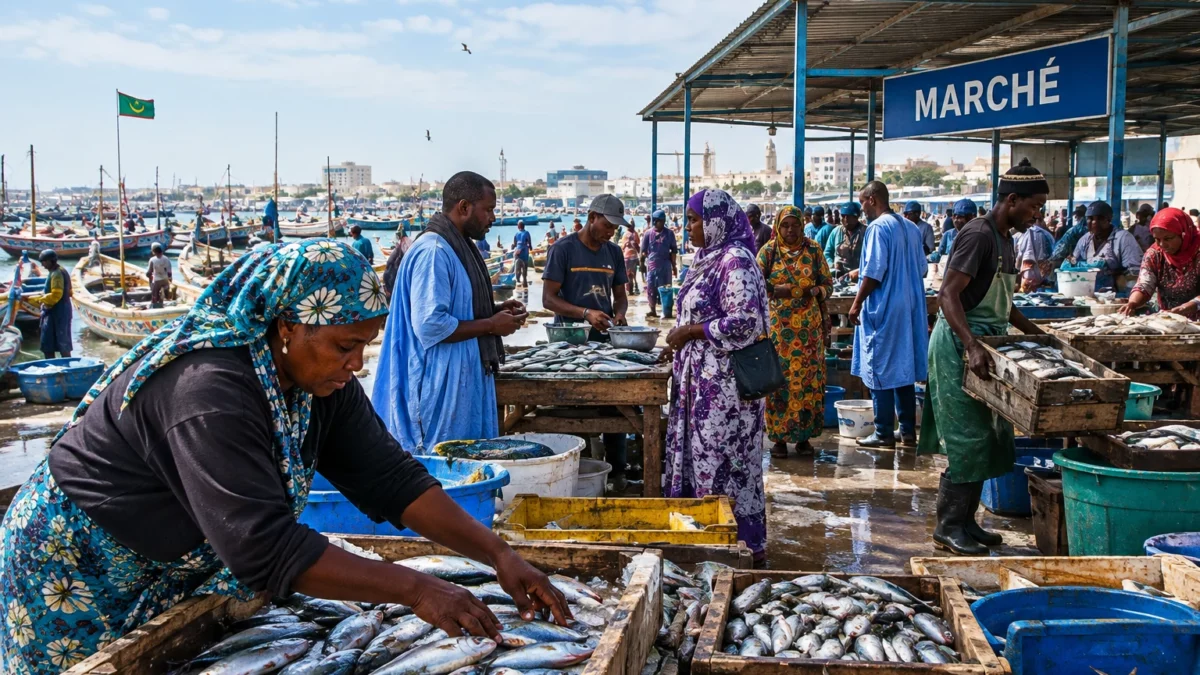
A fishing agreement can be concluded in Nouakchott without a single European vessel being able to set sail again the next day. For Mauritanians, the stakes go beyond access for foreign fleets: they also concern the value created in the country, jobs and the management of a resource essential to coastal activities.
A political agreement, but no return to sea yet
Mauritania and the European Union announced an agreement on a new fishing protocol on 22 November 2026. It is intended to govern European vessels’ access to Mauritanian waters and form part of their fisheries partnership. The European Commission confirmed the agreement the following day, while noting that some details remained to be finalised before it could be signed.
The distinction matters: a political agreement does not amount to immediate authorisation to fish. The previous protocol expired on 14 November. Since then, European vessels have no longer been able to operate in the area under that text. The Commission still expects technical and institutional steps to be completed, with the protocol’s entry into force envisaged for February 2027. That remains an announced timetable, not a guaranteed date.
The new protocol is to set out fishing opportunities, financial terms and cooperation measures. As of 24 November, the two sides had not published all its clauses. It is therefore premature to claim that catch volumes or financial compensation will remain unchanged from the previous text.
What the previous protocol provided for
The framework that has now expired allowed vessels from ten EU member states to fish for several categories of species: shrimp, demersal fish — which live near the seabed —, tuna and small pelagic fish. The annual ceiling stated in European documents was 280,050 tonnes. The EU’s annual public contribution for access was €57.5 million, in addition to sectoral support planned over the duration of the protocol.
Figures sometimes cited for the total annual amount vary depending on whether they include the different financial components and adjustments made during the protocol. EU Council documents detail €57.5 million for access and €16.5 million in sectoral support over five years. The Commission and the Mauritanian authorities will therefore need to make the new agreement’s amounts and their destination clear.
On the Mauritanian side, negotiations focused in particular on better remuneration, more local jobs and stronger oversight of the resource. The ministry responsible for fisheries presented the text as a way to preserve stocks, increase national economic benefits and improve supplies to the local market. These are objectives announced by the authorities; their impact will depend on the final clauses and how they are implemented.
Value added at the heart of discussions
For Nouakchott, the question is not limited to the amount paid to authorise catches. It also concerns the share of the value chain that remains in Mauritania: fish processing, onshore jobs, purchases from local operators and the availability of products in markets. Measurable commitments would make it possible to assess whether the protocol benefits more than public revenues and shipowners.
The effects will not be the same for everyone. European vessels are waiting for a stable legal framework to plan their fishing campaigns. The Mauritanian authorities are seeking to balance revenue, oversight and stock conservation. In ports and processing activities, local workers and businesses have an interest in the agreement boosting employment and landings without reducing Mauritanian fishers’ access to resources.
This last issue makes monitoring catches crucial. A theoretical ceiling does not, by itself, show which species will actually be caught, where, or how closely quotas match the state of stocks. Publishing licences, declared catches and inspection results would help assess the real balance between foreign fleet access and sustainable management.
A longstanding relationship in a sensitive regional space
Fisheries cooperation between the EU and Mauritania dates back to 1987. The 2021-2026 protocol was part of a sustainable fisheries partnership agreement that combines fishing opportunities with support for the sector. The current agreement should therefore be seen in the context of a long-term relationship, as well as a broader setting in which coastal states are seeking to negotiate a greater share of the value derived from their marine resources.
Mauritania is part of the Maghreb and participates in the Arab Maghreb Union (AMU), a regional organisation that also brings together Algeria, Libya, Morocco and Tunisia. It is not a member of ECOWAS. Its position between North Africa and West Africa nevertheless gives it particular importance in Atlantic trade and the region’s fisheries policies. The management of migratory stocks, which do not stop at maritime borders, also calls for cooperation between coastal countries.
The next announced step is technical finalisation, followed by review of the text by European institutions and its signature. A visit to Mauritania by a European delegation is expected to help clarify the clauses. Those details — duration, species, ceilings, payments, local jobs and oversight mechanisms — will make it possible to judge whether the new agreement meets the priorities set out in Nouakchott and ensures sustainable exploitation.