Algeria
 Egypt
 Libya
 Morocco
 Sudan
 Tunisia
 Benin
 Burkina Faso
 Cabo Verde
 Côte d'Ivoire
 Ghana
 Guinea
 Guinea-Bissau
 Liberia
 Mali
 Niger
 Nigeria
 Senegal
 Sierra Leone
 The Gambia
 Togo
 Cameroon
 Central African Republic
 Chad
 DR Congo
 Equatorial Guinea
 Gabon
 Republic of the Congo
 São Tomé and Príncipe
 Burundi
 Comoros
 Djibouti
 Eritrea
 Ethiopia
 Kenya
 Madagascar
 Malawi
 Mauritius
 Mozambique
 Rwanda
 Seychelles
 Somalia
 South Sudan
 Tanzania
 Uganda
 Angola
 Botswana
 Eswatini
 Lesotho
 Namibia
 South Africa
 Zambia
 Zimbabwe
A credibility test for a sector still in its infancy
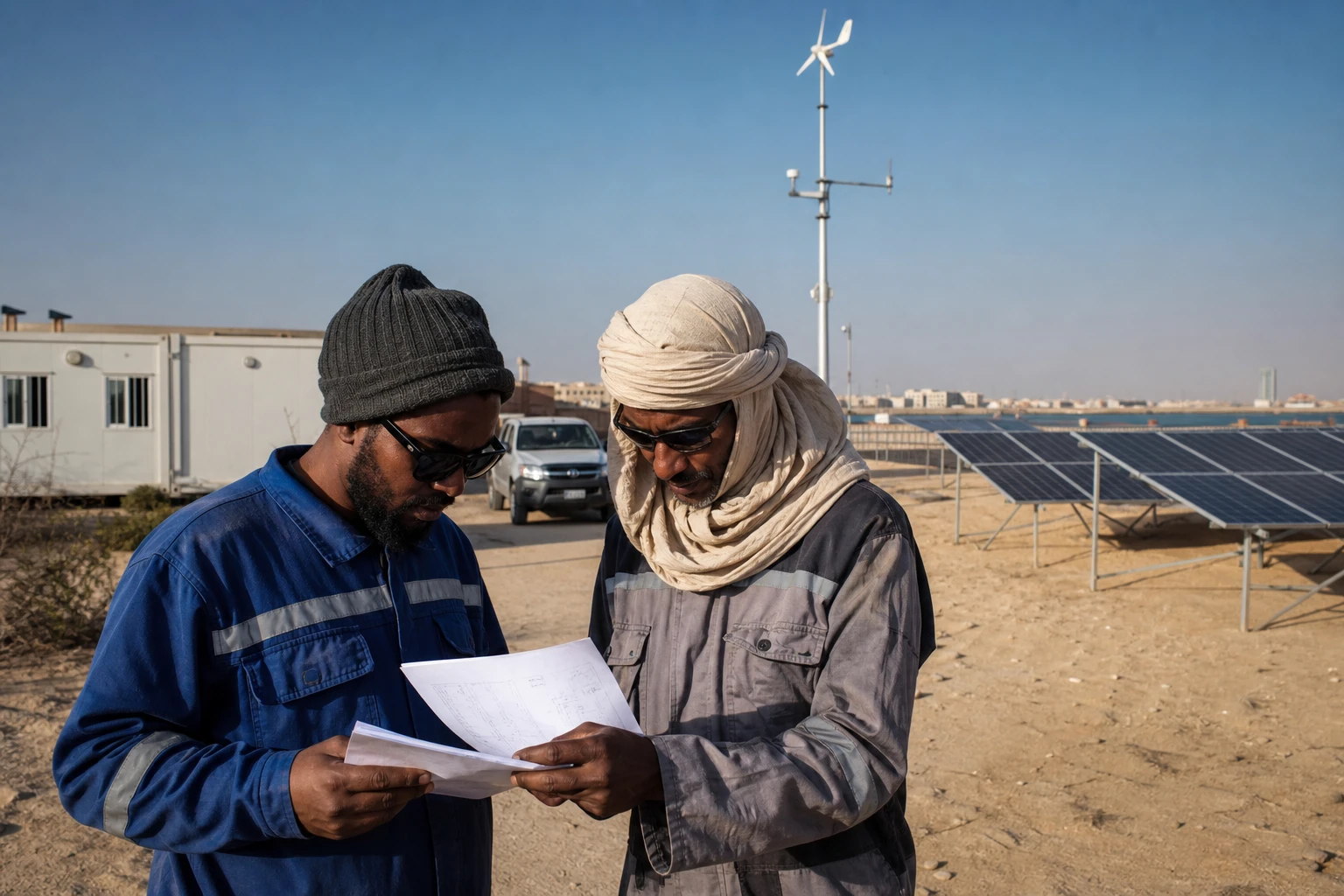
In Nouakchott, Mauritania is advancing a promise that has become strategic: turning its solar and wind potential into an export industry. But in green hydrogen, the real difference is not made when announcements are issued. It is made when contracts become bankable, when financing follows, and when buyers make long-term commitments. That is what measures a project’s strength, not the figures presented at its launch.
The Aman project is part of a broader national trajectory. Since 2024, Mauritania has had a Green Hydrogen Code, presented by the authorities as a legal and fiscal framework designed to give investors security and structure a sector still in its infancy. In 2026, the ministry also launched a National Green Hydrogen Agency, signalling that Nouakchott wants to move from promises to a clearer institutional framework.
Aman takes a step forward, but has not yet crossed the decisive line
On 16 September 2026, Mauritania’s Ministry of Energy and Petroleum and CWP Global signed a global agreement for the Aman project in Nouakchott. The authorities describe it as the first agreement of its kind in the country for green hydrogen. It sets out the project’s future phases over the long term, along with its fiscal, economic and development conditions. The ministry also says the project has entered the FEED phase, meaning the detailed engineering studies that precede a possible final investment decision.
This step matters. It takes Aman beyond the preliminary agreements signed in 2021 and 2022. But it does not yet mean that financing is in place. The authorities and CWP Global are targeting a final investment decision, or FID, before 2030. Several hurdles remain: approval of the agreement by law, securing capital, and then signing firm sales contracts, known as offtake agreements, without which a project of this scale cannot get off the ground.
The ambitions are considerable. The project aims to produce about 1.2 million tonnes of green hydrogen and 6.6 million tonnes of green ammonia a year, according to the ministry and the Mauritanian News Agency. CWP Global says the project could also supply the fertiliser industry, food security, clean fuels and, in time, some heavy industries such as green steel.
Mauritania wants to turn its natural advantage into industrial value
Mauritania’s logic is clear. The country has strong sunshine, recognised wind potential and a coastline that facilitates future export flows. The authorities also want to link green hydrogen to other national priorities: local industrialisation, adding value to iron ore, fertiliser production and moving exports up the value chain. In its reference documents, the ministry even presents the sector as a way to capture a share of the global hydrogen and green steel market by 2050.
This strategy does not stand alone. It is part of a broader reform of Mauritania’s energy sector, including an electricity code, tendering procedures for green hydrogen and support from technical partners, including the African Development Bank and the European Union. In other words, Nouakchott is trying to build a market, not just a flagship project. For a Sahelian country on the Atlantic coast, the challenge is twofold: attracting international capital and keeping part of the value chain at home.
This ambition, however, comes with a political and economic cost. While major announcements multiply, the population is chiefly waiting for tangible results: jobs, training, infrastructure and visible tax revenues. Coastal industrial zones near Nouakchott and Nouadhibou could capture the first gains. More distant regions will benefit from the boom only if projects translate into local procurement, stronger electricity grids and domestic supply chains. Without that, the risk is familiar: a sector that is highly visible abroad but has little reach at home.
A signal for Africa, where projects are moving slowly
The Mauritanian case resonates far beyond the country. The International Energy Agency estimates that current low-carbon hydrogen production in Africa amounts to only about 6 kilotonnes, all from renewables. The continental pipeline includes 31 projects announced for 2030, with potential production of 1.2 million tonnes, but only one has reached a final investment decision. The contrast between the scale of the announcements and the slow pace of delivery is stark.
Against this backdrop, Aman is becoming a regional test. If Mauritania manages to secure financing, it could serve as a model for other African countries seeking to turn renewable resources into an export industry. If, on the other hand, the project stalls, it will be a reminder that green hydrogen megaprojects remain highly sensitive to the cost of capital, public guarantees and international demand. For now, Mauritania has chiefly gained one thing: institutional time and a regulatory head start over several neighbours. What happens next will show whether that lead becomes a plant, or simply another file in the continent’s long list of energy promises.