Algeria
 Egypt
 Libya
 Morocco
 Sudan
 Tunisia
 Benin
 Burkina Faso
 Cabo Verde
 Côte d'Ivoire
 Ghana
 Guinea
 Guinea-Bissau
 Liberia
 Mali
 Niger
 Nigeria
 Senegal
 Sierra Leone
 The Gambia
 Togo
 Cameroon
 Central African Republic
 Chad
 DR Congo
 Equatorial Guinea
 Gabon
 Republic of the Congo
 São Tomé and Príncipe
 Burundi
 Comoros
 Djibouti
 Eritrea
 Ethiopia
 Kenya
 Madagascar
 Malawi
 Mauritius
 Mozambique
 Rwanda
 Seychelles
 Somalia
 South Sudan
 Tanzania
 Uganda
 Angola
 Botswana
 Eswatini
 Lesotho
 Namibia
 South Africa
 Zambia
 Zimbabwe
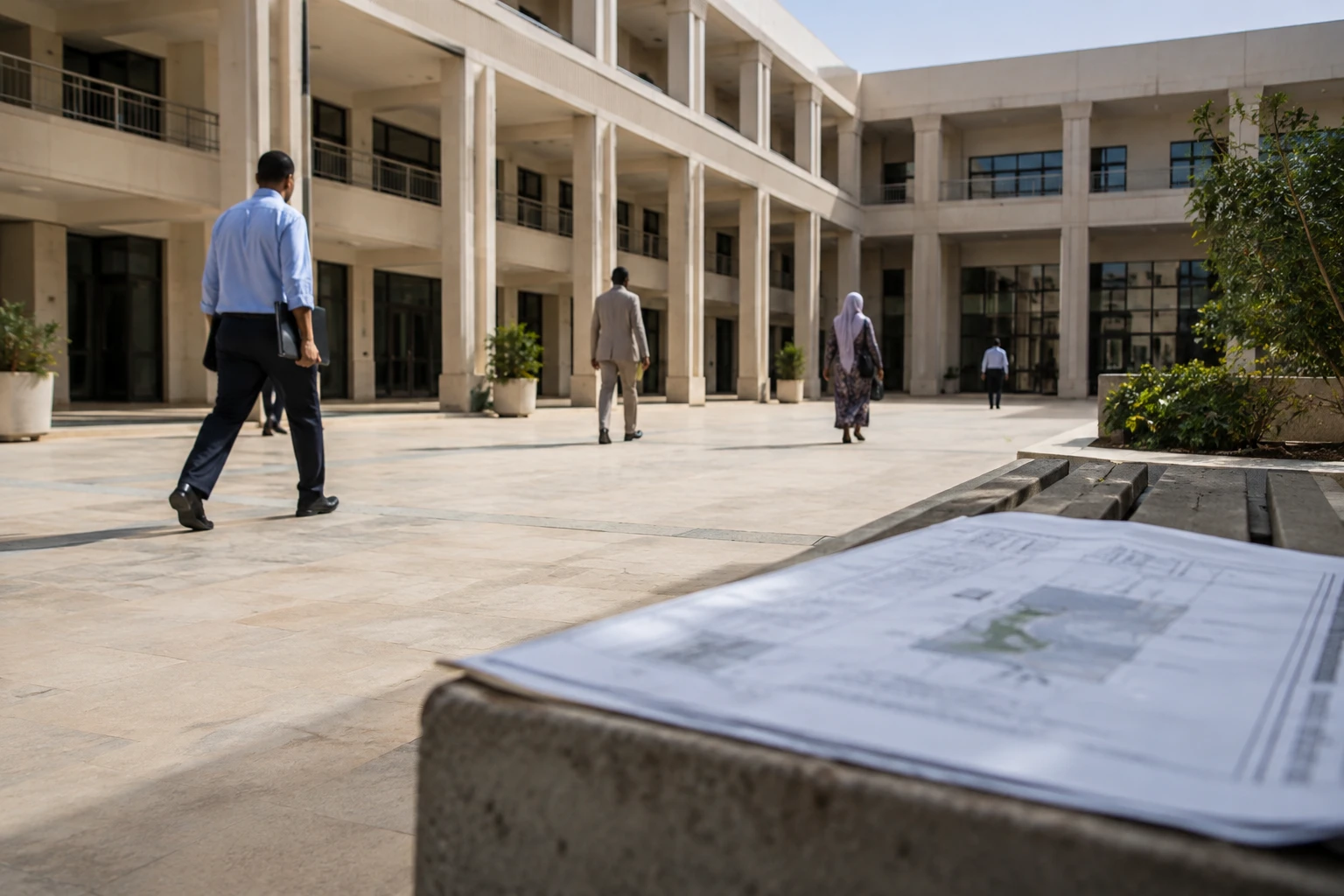
A budget can show a surplus and still leave one question open: will projected revenues arrive in time to fund the services and projects announced? In Mauritania, the draft 2027 Finance Bill highlights a positive balance while placing investment under a new fiscal discipline rule.
A rule to constrain spending
The Council of Ministers adopted the draft on 21 October 2026 in Nouakchott. The text forms part of the national strategy for growth and shared prosperity, as well as the 2027-2029 medium-term budget framework adopted in July. It must still go through the legislative process before becoming next year’s Finance Act.
The draft forecasts 152.11 billion ouguiyas in revenue and grants, against 145.91 billion in expenditure and net lending. The difference produces a projected overall surplus of 6.20 billion ouguiyas. These figures are forecasts: their delivery will depend in particular on tax revenues, extractive-sector income and the execution of spending.
The text applies a fiscal rule enshrined in the organic law of June 2026. It caps the primary deficit excluding extractive revenues — the balance of revenue and expenditure before interest payments, excluding mining and gas income — at 3.5% of nominal GDP. According to government projections, this balance would reach precisely -3.5% of GDP in 2027, compared with -4% in 2026.
The rule aims to limit the budget’s dependence on resources from extractive industries. It also sets an overall spending ceiling based on anticipated revenues and the deficit target. The government thus presents investment and fiscal discipline as two goals to be pursued together, rather than competing options.
Projects between Nouakchott and Nouadhibou
The announced investments cover several regions and different needs. The second phase of the Nouakchott development programme is estimated at 11.59 billion ouguiyas. A programme to expand access to essential services for local development has an allocation of 26.4 billion over 2025-2027.
In Nouadhibou, the country’s main port and fisheries centre, the wilaya development programme for 2026-2029 is worth about 39.6 billion ouguiyas. The announced allocation includes infrastructure to support fishing and productive activities, as well as investment in water, sanitation, roads and urban development. These multi-year allocations do not mean that the full amounts will be spent in 2027.
The practical impact will therefore depend on the timetable and completion of the works. For Nouakchott residents, the issues concern urban services and facilities. In areas where access to water, roads or basic services is more limited, the impact will depend on how funds are distributed across regions and whether the announced projects can be completed. Local businesses and workers could also benefit from the projects, if contracts and jobs effectively draw on domestic capacity.
Assumptions remain exposed to shocks
The government is forecasting real growth of 5% in 2027 and inflation of 3.3%. It projects average growth of 4.3% over 2027-2029. These estimates are based on an environment in which gas and gold production and public revenues can support activity, but also make the balances sensitive to global prices and production disruptions.
The risks are explicitly mentioned in the official statement: a sustained rise in energy prices, tensions in the Middle East, falling gold prices, an incident affecting gas production or a decline in external financing. Investment execution is another uncertainty: if projects progress more slowly than expected, spending and its economic effects could differ from projections.
The International Monetary Fund’s forecasts do not fully match the government’s. In June 2026, the IMF estimated real growth at 4.7% in 2026 and 4.5% in 2027, with inflation at 4.1% in 2026. The gap is a reminder that projections depend on the assumptions used and can change. The IMF also emphasises the need to improve spending efficiency while preserving priority investment and social measures.
The budget will also have to address the impact of food and energy price fluctuations on households. Aid and subsidies can cushion these increases, but weigh on public finances. The trade-off between immediate support, long-term investment and compliance with the budget ceiling will affect the state’s ability to protect incomes while meeting its deficit targets.
A test of credibility for the economic path
Mauritania is a member of the African Union and the Arab Maghreb Union, but it is not part of ECOWAS, the West African economic integration organisation. Its budget is nevertheless of interest to its Sahelian and Maghreb neighbours: it shows how a resource-producing state seeks to fund its infrastructure while limiting the share of extractive revenues in its accounts.
The next step will be parliamentary scrutiny of the draft, followed by its conversion into appropriations that are actually spent. Monitoring will need to focus on revenue actually collected, compliance with the deficit target excluding extractive resources, and progress on programmes in Nouakchott, Nouadhibou and other regions. It is in execution, more than in the announced surplus, that the balance between fiscal prudence and benefits for the Mauritanian population will be measured.
The draft’s figures and main allocations are set out by the Mauritanian News Agency. The Mauritanian Presidency statement confirms the budget aggregates. The IMF’s macroeconomic projections and priorities are presented in its June 2026 assessment.