
 Algeria
 Egypt
 Libya
 Morocco
 Sudan
 Tunisia
 Benin
 Burkina Faso
 Cabo Verde
 Côte d'Ivoire
 Ghana
 Guinea
 Guinea-Bissau
 Liberia
 Mali
 Mauritania
 Niger
 Nigeria
 Senegal
 Sierra Leone
 The Gambia
 Togo
 Cameroon
 Central African Republic
 Chad
 Equatorial Guinea
 Gabon
 Republic of the Congo
 São Tomé and Príncipe
 Burundi
 Comoros
 Djibouti
 Eritrea
 Ethiopia
 Kenya
 Madagascar
 Malawi
 Mauritius
 Mozambique
 Rwanda
 Seychelles
 Somalia
 South Sudan
 Tanzania
 Uganda
 Angola
 Botswana
 Eswatini
 Lesotho
 Namibia
 South Africa
 Zambia
 Zimbabwe
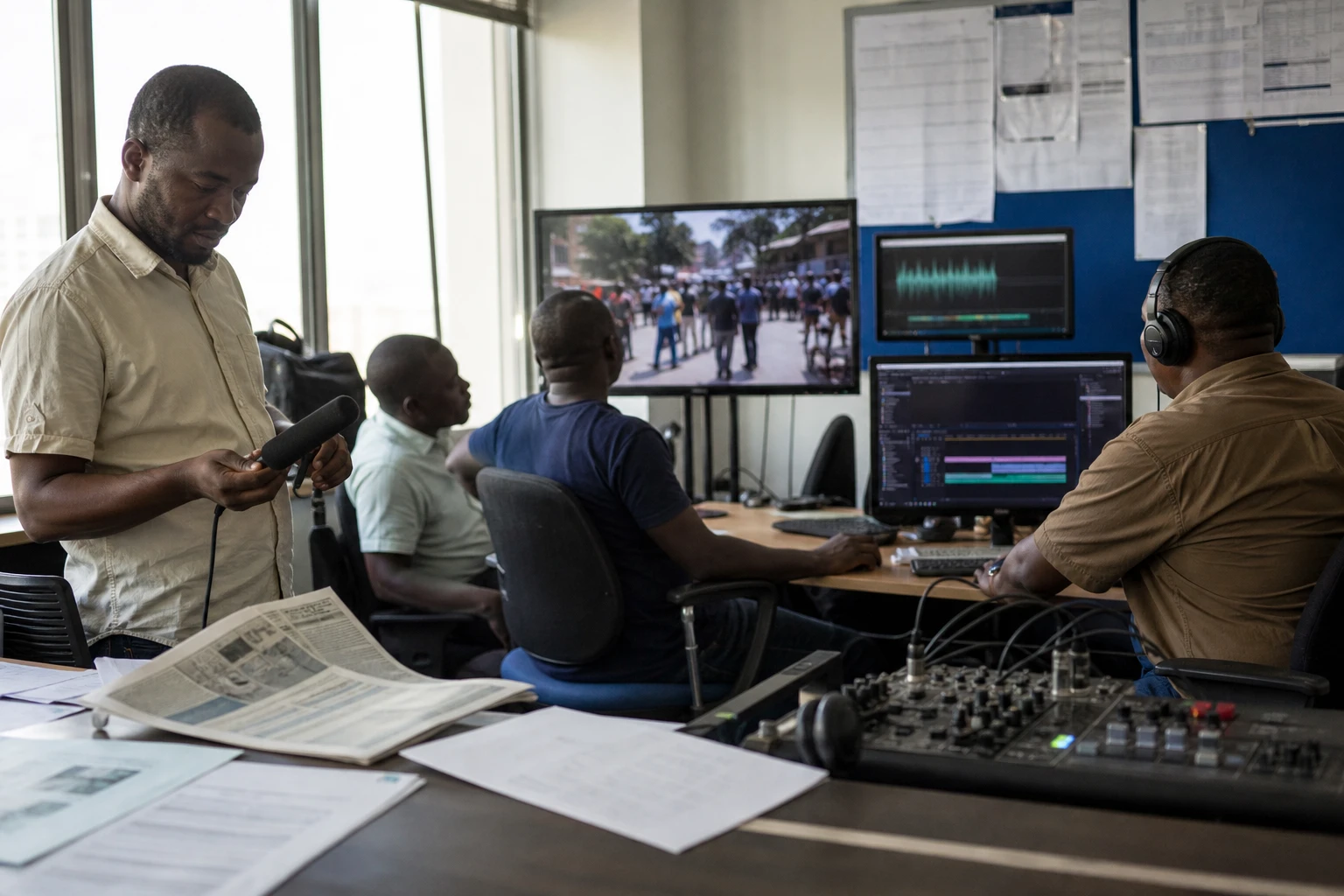
In Kinshasa, a political march became a test of strength
In Kinshasa, a demonstration is almost never just a procession. It also speaks to the mood on the streets, the strength of institutions and the authorities’ ability to let public space breathe. On 15 September, a march by the opposition coalition C64, announced as peaceful and directed against a proposed constitutional change, brought these tensions into the open.
The issue goes beyond a simple face-off between supporters and opponents of President Félix Tshisekedi. In the Democratic Republic of the Congo, constitutional revision remains a politically explosive issue because it touches on memories of blocked transfers of power and recurring suspicions of attempts to extend a leader’s time in office. The 2006 Constitution, revised in 2011, nevertheless sets strict rules for amendments and recourse to a referendum.
What the established facts show
According to several sources on the ground, the 15 September 2026 march brought opposition activists together in Kinshasa, particularly near the Limete interchange, before it was policed and then dispersed amid high tensions. Clashes broke out near the headquarters of the UDPS, the president’s party, and young people described as members of the Force du progrès, an organisation affiliated with the party, were seen carrying bladed weapons in or around the crowd.
The opposition says one of its members, Manassé Lomboto Bomengola, a security officer with ADD Congo, died after being attacked during the clashes. Articles published after the demonstration report that he died in Kinshasa on 15 September, amid attacks which the opposition attributed to supporters of the presidential camp.
UDPS secretary-general Augustin Kabuya rejects the accusations. He instead says C64 activists themselves had machetes and sticks, and says he had asked his own supporters to stay at home. The National Human Rights Commission, meanwhile, has announced a mission to establish the exact circumstances of the activist’s death and understand how the violence unfolded.
The Justice Ministry has asked the prosecutor-general to open an investigation. Provincial authorities say around 20 people were arrested in connection with the incidents. This brings the case into the immediate judicial sphere, beyond the battle of words between the presidential camp and the opposition.
An old Congolese issue: the streets, the Constitution and mistrust
The DRC has seen political crises over the institutional timetable before. A bill on the organisation of a referendum was already passed by the National Assembly in June, reviving concerns among the opposition and some civil society groups. In this climate, the 15 September march was more than a rally for activists. It was also a measure of trust between the authorities and their opponents.
The choice of Kinshasa was no accident. The capital is home to the institutions, the main routes for demonstrations and a decisive share of urban public opinion. When tensions rise in the city, they quickly reverberate through parliament, the presidency, the judiciary and the media. Conversely, a protest contained on the streets can check the momentum of an administration seeking to control the institutional narrative.
There is also a security dimension. Accounts of young people armed with machetes raise a very practical question: who protects demonstrations, and who controls the pressure groups clustered around political parties? In the DRC, the boundary between political organisation, intimidation and street violence often remains blurred, weakening the right to demonstrate and fuelling distrust of both the police and the parties themselves.
What this means for Congolese people, and beyond
For opposition activists, Manassé Lomboto’s death has become a symbol. For the authorities, the challenge is different: to prevent the case from becoming evidence of political excess being tolerated or even covered up. For the public, especially in Kinshasa, the immediate consequences are more down-to-earth: fear of gatherings, risks to small businesses along march routes, and the sense that political clashes are too often settled through physical confrontation rather than institutional debate.
The CNDH’s involvement in this case matters more than a simple statement. The institution can document alleged violations, but it will only be convincing if its work is seen as independent. In previous episodes of political violence in Kinshasa, the absence of solid evidence or undisputed findings has often left the field open to competing accounts.
Regionally, the DRC sits within several spheres of integration. It belongs to both SADC and the East African Community, two blocs keeping a close eye on Congolese political stability, particularly in a country that already carries weight in the security and trade balances of central, eastern and southern Africa. A governance crisis in Kinshasa therefore never remains purely domestic.
What happens next will depend on three developments: the credibility of the announced investigation, the course of the debate on constitutional revision and the ability of political actors to keep their supporters in check rather than turn them into armed wings. In a capital where political signals are read quickly, the next demonstration will show whether the confrontation remains contained or becomes a lasting feature of the Congolese landscape.



