Algeria
 Egypt
 Libya
 Morocco
 Sudan
 Tunisia
 Benin
 Burkina Faso
 Cabo Verde
 Côte d'Ivoire
 Ghana
 Guinea-Bissau
 Liberia
 Mali
 Mauritania
 Niger
 Nigeria
 Senegal
 Sierra Leone
 The Gambia
 Togo
 Cameroon
 Central African Republic
 Chad
 DR Congo
 Equatorial Guinea
 Gabon
 Republic of the Congo
 São Tomé and Príncipe
 Burundi
 Comoros
 Djibouti
 Eritrea
 Ethiopia
 Kenya
 Madagascar
 Malawi
 Mauritius
 Mozambique
 Rwanda
 Seychelles
 Somalia
 South Sudan
 Tanzania
 Uganda
 Angola
 Botswana
 Eswatini
 Lesotho
 Namibia
 South Africa
 Zambia
 Zimbabwe
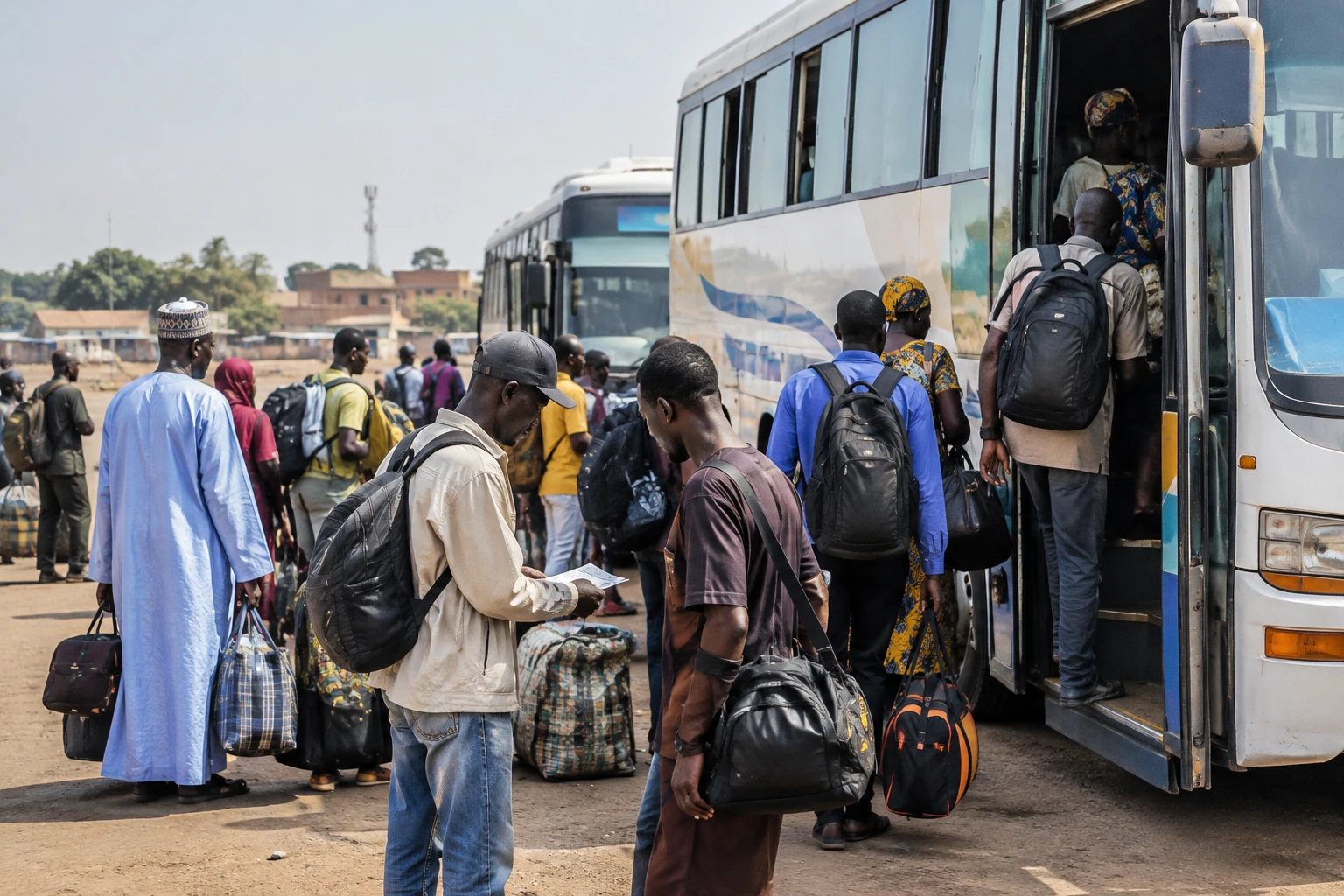
For young people leaving gold-mining sites in Guinea, the journey home does not necessarily begin at the border: it also depends on transport, reception and the chance to get back on their feet. In Mali, hundreds of miners gathered at Ouezzindougou, near Bamako, are waiting to return to their countries.
Departures organised from the outskirts of Bamako
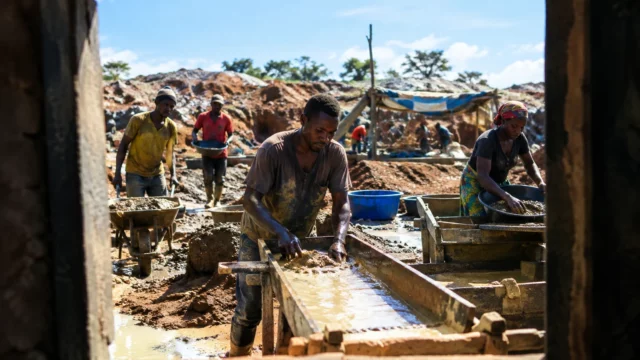
These workers, from countries including Burkina Faso and Benin, had been in Guinea looking for gold at artisanal mining sites. Their departure follows operations by the Guinean authorities against illegal gold mining, particularly in the Siguiri region in the country’s north-east. Conakry cited the ban on these activities in several areas.
Accounts from people at Ouezzindougou also shed light on recruitment conditions. Bachirou Inogui, a Beninese national, says he was recruited in Burkina Faso without knowing the journey’s final destination. He says he only discovered en route that he was being taken to a mine in Guinea. Other workers say they walked several kilometres before being assisted in Mali.
These accounts describe individual journeys and, by themselves, cannot establish the conditions experienced by all those displaced. The Burkinabe authorities, for their part, denounced a pushback without prior consultation and referred to degrading treatment. These allegations are attributed to them; they do not amount to an independent finding on each case.
The return movement involves far more people than the group at Ouezzindougou. According to figures released by the Malian authorities for 7 November, about 160,000 people from Guinea had been recorded in Mali: nearly 100,000 in the Bamako district and 60,000 at Kourémalé, on the border. Deutsche Welle also reported this official tally. It is a count announced by Bamako, not an independent estimate of the number of people who actually crossed the border.
Urgent reception and the need to return
For those gathered near the capital, the immediate question is practical: how can they get to Burkina Faso, Benin or another country of origin, and who will pay for the journey? Accounts gathered on the ground indicate that some travellers have lost their savings or no longer have the means to pay for transport. Government departments and diplomatic missions must identify their nationals, organise departures and coordinate reception on the other side of the border.
The Malian government described the situation as a humanitarian emergency. In the first few days, displaced people were directed to reception sites around Bamako. The Malian Red Cross said it was providing meals, water, hygiene items and temporary shelter. These measures meet immediate needs; they do not resolve the question of return or of income after leaving the mining sites.
Aquime Dembele, a Burkinabe gold miner, is calling for support to create economic activities to accompany the return. His request highlights a longer-term challenge: for young people whose work depends on artisanal mining, transport to their country of origin guarantees neither a job nor an income. Some may set off again for other sites if no alternative means of making a living is available.
The crisis also exposes the fragility of an activity that connects territories across national borders. Workers travel to gold-mining areas, sometimes through recruiters, while decisions to close sites can abruptly cut off their income. Measures against illegal gold mining reflect the choices of the Guinean authorities; their implementation nevertheless has human and logistical consequences in neighbouring countries.
A test of West African coordination
Mali, Guinea and Burkina Faso are linked by flows of labour, trade and family ties. This mobility is taking place in an institutional landscape that has changed. Mali and Burkina Faso left ECOWAS, the Economic Community of West African States, on 29 January 2025, along with Niger. The three countries are members of the Alliance of Sahel States, while Guinea remains a member of ECOWAS.
This realignment does not remove practical needs: sharing information, identifying people, ensuring crossings and preventing workers from being left without shelter. The Burkinabe authorities have organised returns from Mali, and the Malian authorities have announced their own reception arrangements. But the scale reported by Bamako makes coordination between government departments, consulates and humanitarian organisations crucial.
The figures should not obscure the differences in people’s circumstances. Some have already left; others are still waiting for transport in Bamako or remain near Kourémalé. Needs also vary according to family circumstances, injuries or whether workers arrived without resources. For the authorities, the challenge is to manage an exceptional influx. For those affected, the priority is to return without facing new risks, then find work.
In the immediate term, developments will depend on the pace of convoys and reception arrangements in countries of origin. In the longer term, this episode raises a regional question: how can labour migration to artisanal mines be managed and workers protected when activities are suspended? Departures from Ouezzindougou mark not only the end of a stay in Guinea. They test neighbouring states’ ability to manage together the consequences of a national decision.