Algeria
 Egypt
 Libya
 Morocco
 Sudan
 Tunisia
 Benin
 Burkina Faso
 Cabo Verde
 Côte d'Ivoire
 Ghana
 Guinea-Bissau
 Liberia
 Mali
 Mauritania
 Niger
 Nigeria
 Senegal
 Sierra Leone
 The Gambia
 Togo
 Cameroon
 Central African Republic
 Chad
 DR Congo
 Equatorial Guinea
 Gabon
 Republic of the Congo
 São Tomé and Príncipe
 Burundi
 Comoros
 Djibouti
 Eritrea
 Ethiopia
 Kenya
 Madagascar
 Malawi
 Mauritius
 Mozambique
 Rwanda
 Seychelles
 Somalia
 South Sudan
 Tanzania
 Uganda
 Angola
 Botswana
 Eswatini
 Lesotho
 Namibia
 South Africa
 Zambia
 Zimbabwe
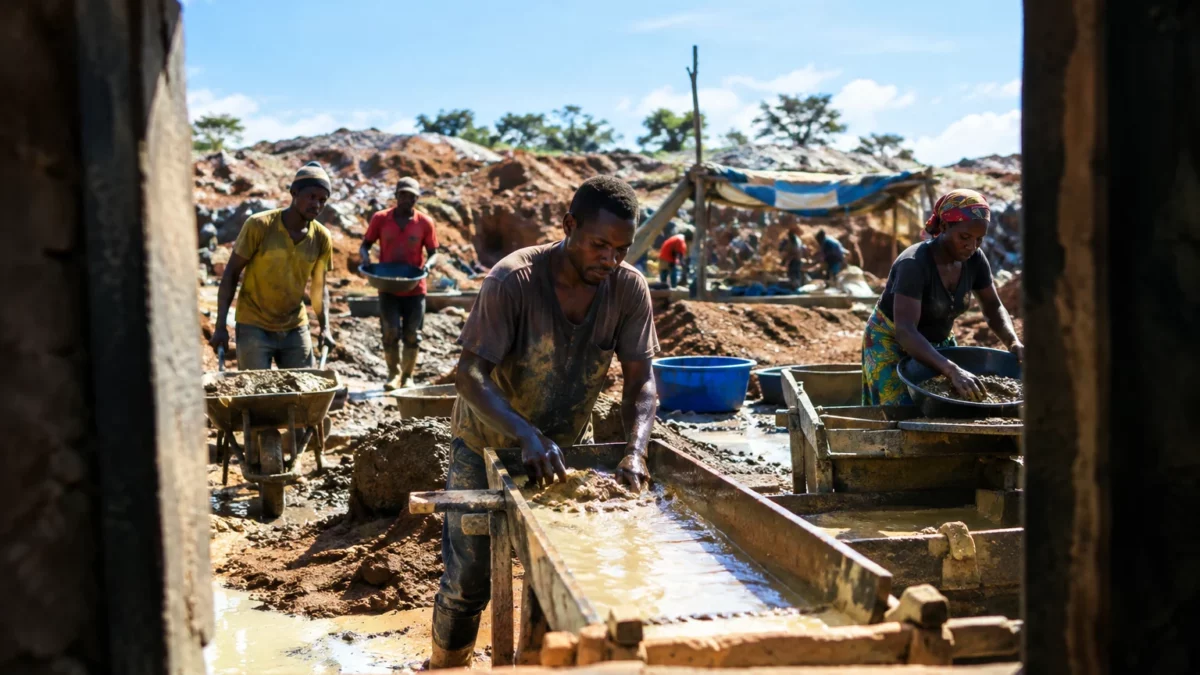
In Kouroussa, the possible opening of a large gold mine promises jobs and public revenue. But as Guinean authorities tighten controls on artisanal gold mining, the Bankan project also raises a practical question: how can the benefits of industrial mining be shared with the communities and workers concerned?
A permit granted amid tensions in the sector
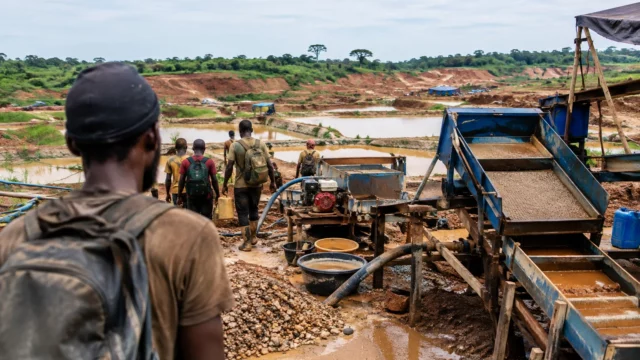
Bankan is in Kouroussa prefecture, in Upper Guinea. This gold-producing area is at the centre of a national debate over extraction rules, environmental damage and livelihoods linked to artisanal gold mining. In November 2026, deadly clashes broke out in the Siguiri region during an operation against unauthorised mining. The toll given by the authorities was ten dead and 13 injured. The events are a reminder that controls on the sector can have direct consequences for communities and the people who depend on it for their livelihoods. The Associated Press reported the toll and context of the clashes.
Guinea is a member of ECOWAS, the Economic Community of West African States. Workers and gold-trading networks cross national borders, so measures taken in Conakry can also affect nationals of neighbouring countries. The regional context matters, although the Bankan permit is primarily a matter for the Guinean authorities and the national mining code.
The government granted the Bankan mining permit by decree dated 16 November 2026. Australian company PDI Gold announced the grant the following day. The licence, held by its Guinean subsidiary Hamana Gold SA, covers 98.6 sq km and has an initial term of 15 years. These details appear in the company’s announcement, also reported by Guinean media outlet Le Lynx.
A planned construction project, not yet a producing mine
The permit marks an important regulatory milestone, but does not mean that construction is complete or extraction has begun. PDI Gold says it intends to accelerate detailed engineering, equipment procurement and compensation processes to prepare for construction. The company plans to publish an updated schedule and estimate in early 2027. Mid-2028 remains a stated target for first production, not a guarantee.
The project feasibility study estimates initial investment at about $463 million. It forecasts average production of 250,000 ounces of gold a year for 12 years, or about 7.8 tonnes annually. These volumes and costs are company projections: they will depend in particular on construction, financing, operating conditions and the actual timetable. PDI Gold’s announcement on the permits confirms the production target and regulatory milestone, while Reuters, republished by Mining Weekly, places the project in the context of delays to mining permits in Guinea.
Initial estimates point to about 2,000 jobs during construction, followed by nearly 1,000 positions once the mine is operating. These figures alone do not specify the share of jobs that will go to Guineans, how long they will last or what qualifications will be required. For local benefits, the distinction between temporary construction jobs and lasting positions will therefore be essential. Opportunities for Guinean businesses in subcontracting will also need to be monitored.
Public revenues and local benefits to watch
Under provisions of the mining code cited in project announcements, the Guinean state is to hold a 15% free stake. This gives the country a direct interest in the operation, but is not enough to measure public benefits. Revenues will also depend on actual production, taxes and royalties, declared costs and compliance with the obligations set out in the permit.
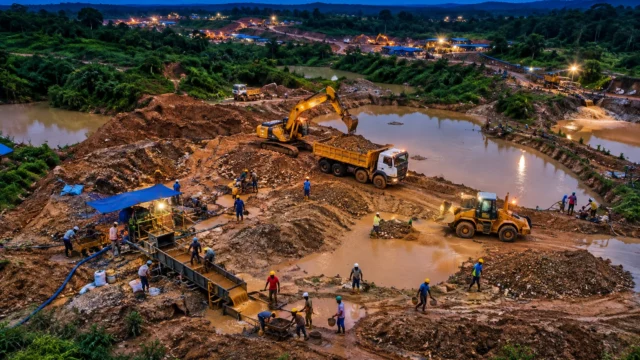
Bankan’s proximity to the Kiniéro site gives the project a broader dimension for PDI Gold. The company already operates the Kiniéro mine and plans to develop the Mansounia deposit there, which has also received a permit. It is targeting combined production of more than 400,000 ounces a year in Guinea in the longer term. This commercial ambition should not be confused with current production: it assumes that Bankan enters service and that the other operations proceed on schedule.
At national level, the challenge is to turn mineral resources into public revenue, skills and local economic activity, while managing the effects on land and water. For communities around Kouroussa, consultations, compensation and access to jobs will matter as much as the announced production volumes. For the authorities, consistent enforcement of the rules will be crucial, especially where industrial mining coexists with artisanal practices that support many workers.
A signal watched beyond Guinea
The project comes at a time when several West African governments are seeking greater control over the production and marketing of mineral resources. Guinea must reconcile attracting new investment with transparent permitting and protecting the public interest. Recent tensions around artisanal gold mining also show that a policy of control is not simply a matter of issuing industrial permits: it affects communities and workers, including those from other countries in the region.
The next steps to watch are publication of Bankan’s revised schedule, the actual preparation of the construction site and the practical arrangements for local benefits. The permit marks administrative approval. The project’s success, however, will be judged by the work completed, commitments honoured and how benefits and costs are distributed in Guinea.