Algeria
 Egypt
 Libya
 Morocco
 Sudan
 Tunisia
 Benin
 Burkina Faso
 Cabo Verde
 Côte d'Ivoire
 Ghana
 Guinea
 Guinea-Bissau
 Liberia
 Mauritania
 Niger
 Nigeria
 Senegal
 Sierra Leone
 The Gambia
 Togo
 Cameroon
 Central African Republic
 Chad
 DR Congo
 Equatorial Guinea
 Gabon
 Republic of the Congo
 São Tomé and Príncipe
 Burundi
 Comoros
 Djibouti
 Eritrea
 Ethiopia
 Kenya
 Madagascar
 Malawi
 Mauritius
 Mozambique
 Rwanda
 Seychelles
 Somalia
 South Sudan
 Tanzania
 Uganda
 Angola
 Botswana
 Eswatini
 Lesotho
 Namibia
 South Africa
 Zambia
 Zimbabwe
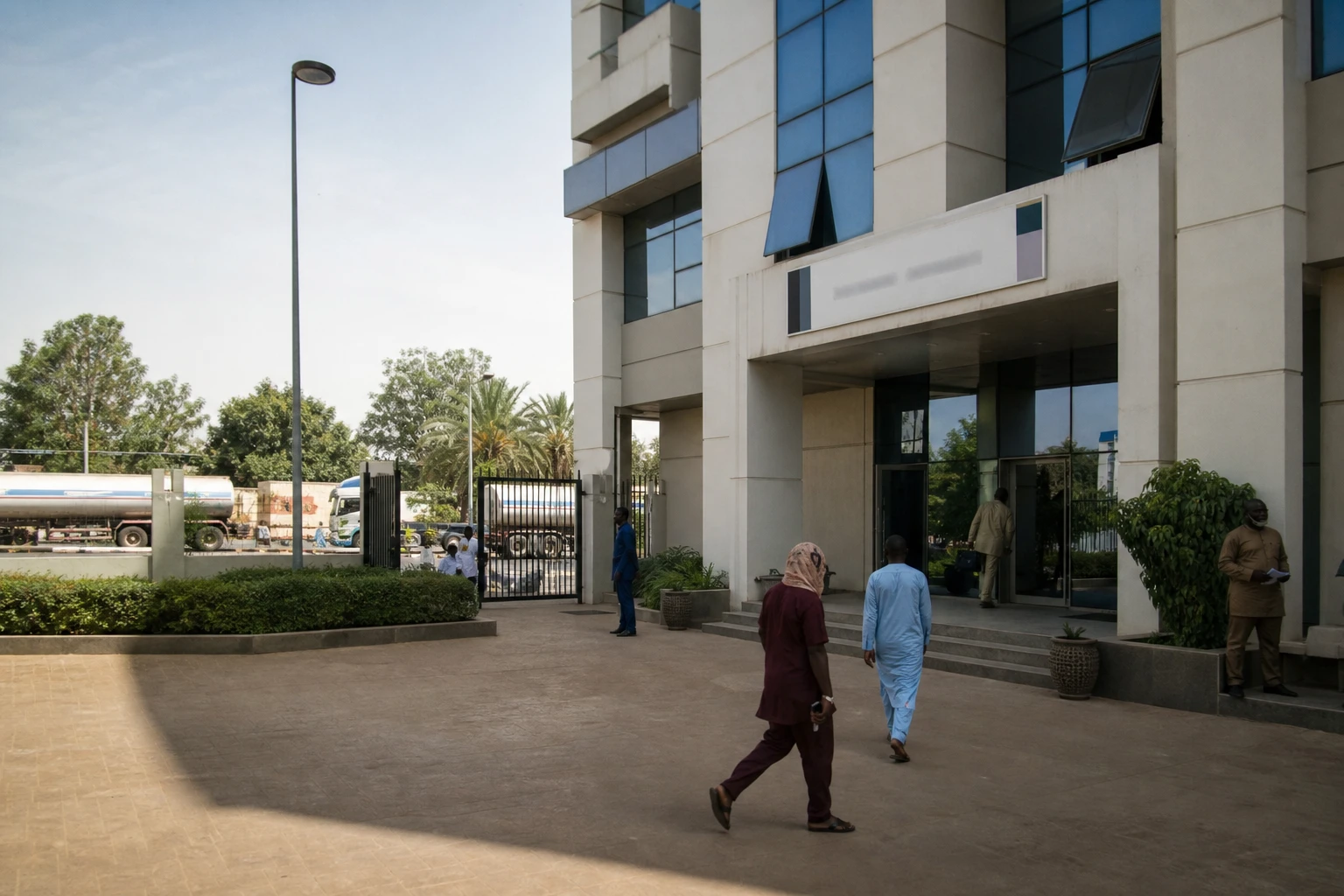
Fuel is flowing again in Bamako, but corridor security remains the real fault line
In Mali’s capital, motorists have once again seen a sight many thought had disappeared for weeks: open stations, fuel at the pumps and shorter queues. This improvement says something important about Mali in 2025-2026: when fuel flows, the city can breathe; when it runs short, everything seizes up, from urban transport to electricity.
The country nevertheless remains vulnerable. Mali depends on external sources for most of its petroleum products, which are brought in along corridors from ports in the sub-region, particularly those in Côte d’Ivoire, Senegal, Mauritania and, more recently, Guinea. Several authoritative sources note that this dependence exceeds 90% to 95%, according to available estimates.
What has changed: escorted convoys, faster customs clearance and better-coordinated stocks reaching Bamako
The most visible shift came in late August and early September 2025. More than 900 tankers under military escort were received in Bamako on Sunday 30 August, according to the Directorate-General for Trade, Consumer Affairs and Competition. The administration then highlighted measures to secure convoys and speed up customs formalities, to prevent fuel from waiting too long at borders or at unloading sites.
This recovery did not come out of nowhere. Since the beginning of September 2025, JNIM, an armed group linked to al-Qaeda, has announced a blockade on fuel imports into Mali and stepped up attacks on tanker trucks along strategic routes, notably between Kayes and Bamako. Reuters, the Associated Press and the UN have confirmed that dozens of vehicles were set on fire or destroyed and that escorted convoys remained exposed to attack.
In response to this pressure, the Malian authorities strengthened military escorts, increased the presence of forces on major routes and asked oil operators to adapt their logistics. Over the weeks, these measures helped stabilise supplies to the capital, at least partially. By November 2025, several Malian public services were already saying they were working continuously to facilitate the movement of petroleum products to Bamako and the country’s interior.
Electricity follows fuel. And the crisis is affecting the country very unevenly
In Bamako, increased fuel supply had an immediate effect on electricity. Where power cuts had lasted up to 15 hours, or even longer in some neighbourhoods, residents now say they have a more regular supply for much of the day. This change is partly due to the return of diesel and fuel oil to run thermal power stations, which remain essential in Mali’s fragile electricity system.
But the situation is not the same everywhere. Improvements have also been seen in Ségou and Koutiala. In Mopti, residents still face shorter supply hours and higher costs. In Bandiagara, the black market remains, according to accounts gathered, one of the few ways to buy fuel. This disparity is a reminder of an obvious point: in Mali, the gap between the capital and the regions is not just about distance, but also road security, the density of checkpoints and local distribution capacity.
In secondary cities, the strain affects everything else: intercity transport, small businesses, generators, workshops, mills, private schools and informal activities. The recovery in Bamako is real. But it remains dependent on a continuous flow of tankers coming along regional corridors. If those routes are closed, the capital can once again become the system’s most vulnerable point within days.
A Malian issue, but also a West African one
This crisis extends beyond Mali. It affects ECOWAS, the West African region and the trade routes linking Sahelian countries to Atlantic ports. Mali is not only a landlocked country: it is also a transit hub for goods, food and hydrocarbons that fuel urban and rural economies. When trucks are burned on the Kayes-Bamako route, the entire regional logistics balance is shaken.
The situation also sheds light on a shift in the Sahel conflict. By targeting fuel, JNIM is not only striking the army. The group is seeking to influence daily life, drive up transport costs, slow the economy and test the state’s ability to protect its vital corridors. In its recent reports, the UN has also highlighted the persistence of attacks on military installations and supply vehicles linking Mali to Côte d’Ivoire, Mauritania and Senegal.
For the Malian authorities, the challenge goes beyond an immediate security response. They must secure routes, modernise storage, better regulate distribution and reduce dependence on thermal power stations fuelled by costly imports. In 2026, Mali’s Ministry of Energy and Water also issued a series of announcements on the Northern Loop around Bamako, regional interconnections and solar projects. These initiatives point to the same goal: the country wants to escape a vulnerability that turns every supply disruption into a national crisis.
Across the continent, the case of Mali is a reminder of a simple lesson. Energy security is no longer a technical issue reserved for ministries. It has become a central factor in political stability, the movement of goods and genuine sovereignty. In Mali, the return of fuel to Bamako brings relief. But the decisive question remains open: how long will the corridors stay open, and at what cost to regions still under strain?