Algeria
 Egypt
 Libya
 Morocco
 Sudan
 Tunisia
 Benin
 Burkina Faso
 Cabo Verde
 Côte d'Ivoire
 Ghana
 Guinea
 Guinea-Bissau
 Liberia
 Mali
 Mauritania
 Nigeria
 Senegal
 Sierra Leone
 The Gambia
 Togo
 Cameroon
 Central African Republic
 Chad
 DR Congo
 Equatorial Guinea
 Gabon
 Republic of the Congo
 São Tomé and Príncipe
 Burundi
 Comoros
 Djibouti
 Eritrea
 Ethiopia
 Kenya
 Madagascar
 Malawi
 Mauritius
 Mozambique
 Rwanda
 Seychelles
 Somalia
 South Sudan
 Tanzania
 Uganda
 Angola
 Botswana
 Eswatini
 Lesotho
 Namibia
 South Africa
 Zambia
 Zimbabwe
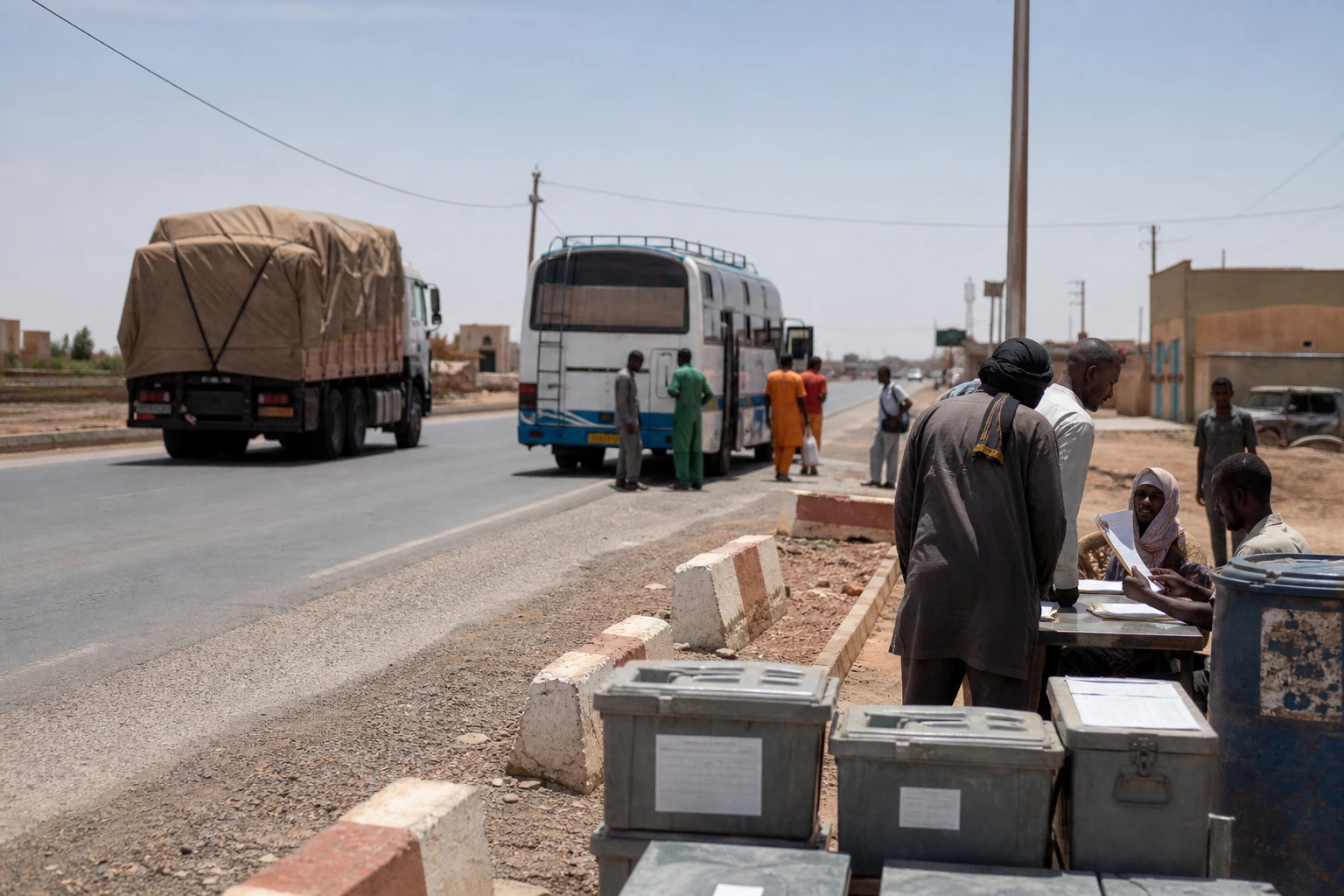
At Madaouela, in the Agadez region, Niger is not simply seeking to reopen a mining project. Niamey is trying to regain a more prominent place in a strategic industry while negotiating a larger share of its revenues and decision-making.
A project revived after a period of tension
The Madaouela uranium project reached a new milestone in September 2026. The Nigerien state now holds 40% of the future operating company. Australian group Atomic Eagle retains 60% and remains responsible for the site’s technical and commercial development.
The new ownership split ends several years of disagreement between Niamey and the project’s former owner, then known as GoviEx. The mining permit was granted in 2016. The dispute later moved into the legal and financial arena, before negotiations began to preserve the project.
The agreement provides for a new mining convention and the resumption of evaluation work. It does not, however, mean that production will start soon. Further studies will still need to confirm the site’s resources, costs and industrial feasibility.
Why the original plan is being reconsidered
A feasibility study conducted in 2022 forecast average production of 2.67 million pounds of uranium oxide a year over 19 years. Atomic Eagle is now considering a larger development than the one set out in that initial scenario.
The review will examine, in particular, a plant capable of processing more ore. It will also consider combining open-pit mines with underground workings. Some mineralised areas excluded from the previous plan could be included if mining them becomes profitable.
The Australian group justifies the new analysis by pointing to price movements. The previous model assumed a price of $55 per pound of uranium oxide. At the end of August 2026, the benchmark cited for supply contracts had reached $96.50. This difference could improve the profitability of volumes previously considered too costly to extract.
It does not, however, guarantee higher production or automatic profits. The costs of energy, water, equipment, security and transport will all directly affect the final result.
Niger’s industry in sharp decline
The reshaping of Madaouela comes as Niger’s uranium production has fallen sharply. Data from the World Nuclear Association show that 4,116 tonnes of uranium were produced in 2015, compared with 962 tonnes in 2024.
A separate statistical series, published by the BCEAO in its regional review, puts the 2024 figure at 1,031 tonnes. The difference reflects variations in compilation methods and reference periods. In both cases, the trend is the same: Nigerien production remains far below its level in the previous decade.
Niger thus lost its position as Africa’s leading uranium producer in 2016. Namibia now holds a dominant position on the continent. For Niamey, Madaouela is therefore both an industrial project and a way to diversify an industry long concentrated in a limited number of operations.
The issue goes beyond the volumes extracted. It also concerns turning resources into public revenue, skilled jobs and contracts for Nigerien businesses. State participation will generate significant income only if the mine actually begins production and the sharing of costs remains sustainable.
Financing will be the first political test
The Nigerien state’s 40% stake is not entirely free. Fifteen percentage points require no direct financial contribution. The remaining 25 points, however, require Niamey to take part in future fundraising.
Atomic Eagle has arranged a $40 million loan to cover the initial contributions expected. This mechanism gives Niger more time, but does not resolve the question of long-term financing. Building a mine and a plant requires far more capital than the initial advances.
Niamey’s ability to finance its share will therefore determine the extent of its influence over the project. Otherwise, the state could retain a stake on paper while having limited room to shape operational decisions and the investment schedule.
Local content will be another indicator. Nigerien authorities will need to specify the role of domestic companies, the training offered to workers and the contracts available to subcontractors. In the Agadez region, the challenge will be to turn mining activity into lasting benefits beyond the jobs created directly at the site.
A vulnerable logistics corridor
Madaouela is far from seaports. Uranium shipments and the delivery of equipment will therefore depend on reliable land corridors. The prolonged closure of the border between Niger and Benin has weakened the route linking Niamey to the port of Cotonou.
This corridor has historically been one of Niger’s main commercial outlets. Its disruption has forced operators to consider alternative routes, notably through Togo and Burkina Faso. These routes increase distances and can add to costs, delays and security risks.
The revival of Madaouela will therefore need to be coordinated with regional diplomacy. Relations between Niger and its neighbours, particularly within ECOWAS — the West African organisation tasked with promoting economic cooperation and free movement — remain a practical factor in mining competitiveness.
Upcoming milestones to watch
Atomic Eagle plans a new resource estimate under the Australian JORC Code in the fourth quarter of 2026. This standard governs the reporting of mining resources and reserves. A preliminary economic assessment is then expected in the first quarter of 2027.
These two steps will help establish whether the expanded scenario is based on sufficient resources and costs compatible with the market. They will also need to specify requirements for energy, water, roads and equipment.
For Niger, Madaouela offers an opportunity, but not yet a guarantee. The project could strengthen the state’s stake in a strategic resource. It could also support the Agadez economy and diversify mining revenues. However, financing, logistics, security and the ability to develop a local industrial base will determine its real impact.
At the West African level, the project is also a reminder that a mine is about more than its deposit. Its future also depends on borders, ports, regional agreements and states’ ability to negotiate greater added value for their populations.