Algeria
 Egypt
 Libya
 Morocco
 Sudan
 Tunisia
 Benin
 Burkina Faso
 Cabo Verde
 Côte d'Ivoire
 Ghana
 Guinea
 Guinea-Bissau
 Liberia
 Mali
 Mauritania
 Nigeria
 Senegal
 Sierra Leone
 The Gambia
 Togo
 Cameroon
 Central African Republic
 Chad
 DR Congo
 Equatorial Guinea
 Gabon
 Republic of the Congo
 São Tomé and Príncipe
 Burundi
 Comoros
 Djibouti
 Eritrea
 Ethiopia
 Kenya
 Madagascar
 Malawi
 Mauritius
 Mozambique
 Rwanda
 Seychelles
 Somalia
 South Sudan
 Tanzania
 Uganda
 Angola
 Botswana
 Eswatini
 Lesotho
 Namibia
 South Africa
 Zambia
 Zimbabwe
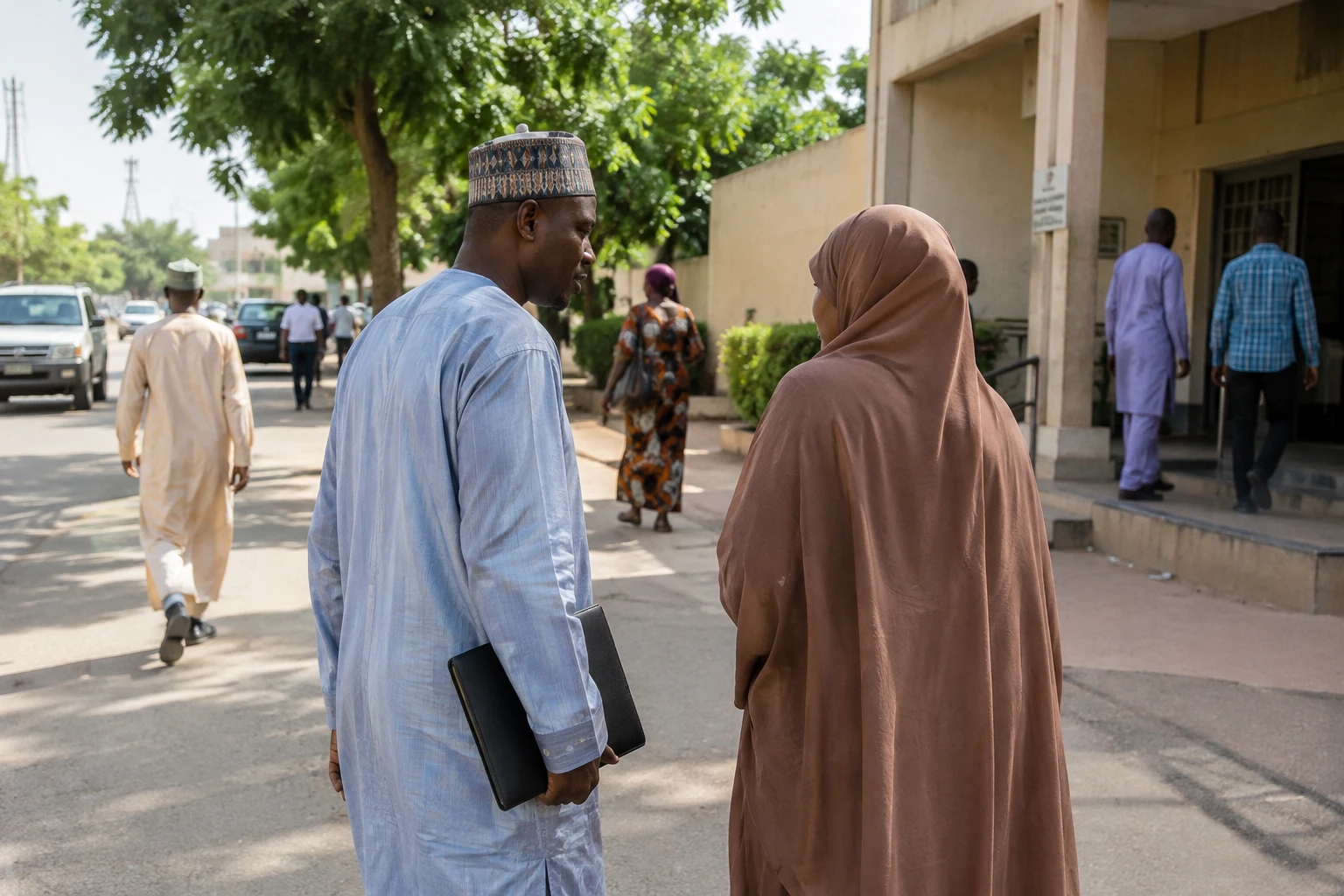
In Niger, an investigation into a military mutiny in Niamey has now expanded to include prominent civilian figures. But for Kalla Moutari, the former defence minister, one question remains unanswered publicly: on what grounds is he being held, and what is happening to his case in the justice system?
A security crisis that extends beyond the barracks
During the night of 28–29 August 2026, mutinous soldiers targeted strategic sites in Niamey, including Air Base 101. The authorities described the events as an attempt to destabilise the country. The Nigerien News Agency reports that the Council of Ministers subsequently announced that it was compiling documentation on the events and referred to possible international legal action. These statements present the official version; on their own, they do not specify individual responsibility.
The events come three years after the coup of 26 July 2023, which brought the National Council for the Safeguard of the Homeland (CNSP), led by Abdourahamane Tiani, to power. Since that rupture, the country has been under military transition — a period in which authorities from the armed forces govern without a return to the previous elected institutions.
The crisis also has a particular regional context. Niger, Mali and Burkina Faso left the Economic Community of West African States (ECOWAS), a regional integration organisation, on 29 January 2025. ECOWAS has nevertheless provisionally maintained arrangements facilitating travel and trade. At the same time, Niamey has drawn closer to Mali and Burkina Faso within the Alliance of Sahel States (AES).
Two months in detention, with no known public explanation
Kalla Moutari was arrested on 1 September in Dakoro, in the Maradi region, according to initial reports published in Niger. He was subsequently transferred to the gendarmerie in Niamey. As of 8 November, more than two months after his arrest, available information indicated that the former minister had not appeared before a judge. The authorities have not publicly disclosed the grounds for his detention.
The information about Moutari’s situation is not based solely on the initial account. On 17 September, an independent report stated that he and Kalla Ankourao, a former foreign minister and vice-president of the National Assembly, were still being held. The Nigerien press had also reported their arrests at the beginning of the month. However, these sources do not allow every element of the legal case to be publicly confirmed, nor do they establish that no confidential proceedings are under way.
Moutari, a senior figure in the Nigerien Party for Democracy and Socialism (PNDS), headed the Ministry of Defence from 2016 to 2019, under President Mahamadou Issoufou. He had already been arrested after the 2023 coup. His release in April 2025 was part of a wave involving several officials from the former government, in the context of a call for national reconciliation.
In addition to Ankourao, published reports mention Harouna Hadiza Adamou, a former adviser to the Consultative Council for Refoundation, who was also reportedly arrested. The details of her case and the grounds cited have not been independently established. It is therefore important to distinguish reported facts — the arrests and detention — from interpretations of their causes or any possible links to the military events.
Security does not answer every legal question
After the mutiny, Nigerien authorities made changes within the military establishment and carried out arrests. A report on 17 September referred to at least 200 military personnel in detention, a figure based on corroborating Nigerien sources. In this climate, identifying any perpetrators and accomplices is a security concern. But without evidence made public, it does not allow the conclusion that the former political officials who were arrested took part in the mutiny.
For those detained, the uncertainty concerns the practical possibility of learning the charges, consulting a lawyer and having their situation reviewed by a judge. For their relatives, the lack of official information fuels concern. For the authorities, a clearly explained procedure could, by contrast, help distinguish a targeted investigation from detention whose grounds remain unknown.
Supporters of Moutari say the case is “empty” and that he is keeping his spirits up. That is their assessment and has not been confirmed by any publicly available court document. At this stage, no accessible evidence allows a judgement on the substance of any possible suspicions. It would therefore be premature to present the former minister as guilty or to claim that the investigation contains no evidence.
A test for the transition and its regional relations
The handling of these arrests comes at a time when the authorities are seeking to reassert control after a serious crisis within the armed forces. The stakes are not the same for everyone: the executive emphasises state security, while those detained and their families are waiting for information about the proceedings. In the regions, particularly Maradi, the arrest in Dakoro is also a reminder that the consequences of the political crisis are not confined to the capital.
Across West Africa, the case comes as institutional relations between Niger and ECOWAS have changed, although exchanges between populations and economies have not been entirely interrupted. The AES partners are also monitoring Niger’s political and military stability. For the region’s states, the challenge is twofold: to prevent instability from spreading and to maintain channels for dialogue on judicial safeguards.
The next decisive development will be an official announcement on the status of Kalla Moutari and the other people arrested: specific grounds, any charges, access to a judge or release. Until this information is made public or corroborated, the case remains marked by a clear imbalance: the authorities say they must respond to a threat against the state, while the reasons for the detention of civilian officials remain unknown.