Algeria
 Egypt
 Libya
 Morocco
 Sudan
 Tunisia
 Benin
 Burkina Faso
 Cabo Verde
 Côte d'Ivoire
 Ghana
 Guinea
 Guinea-Bissau
 Liberia
 Mali
 Mauritania
 Niger
 Nigeria
 Senegal
 Sierra Leone
 The Gambia
 Togo
 Cameroon
 Central African Republic
 Chad
 DR Congo
 Equatorial Guinea
 Gabon
 Republic of the Congo
 São Tomé and Príncipe
 Burundi
 Comoros
 Djibouti
 Eritrea
 Ethiopia
 Kenya
 Malawi
 Mauritius
 Mozambique
 Rwanda
 Seychelles
 Somalia
 South Sudan
 Tanzania
 Uganda
 Angola
 Botswana
 Eswatini
 Lesotho
 Namibia
 South Africa
 Zambia
 Zimbabwe
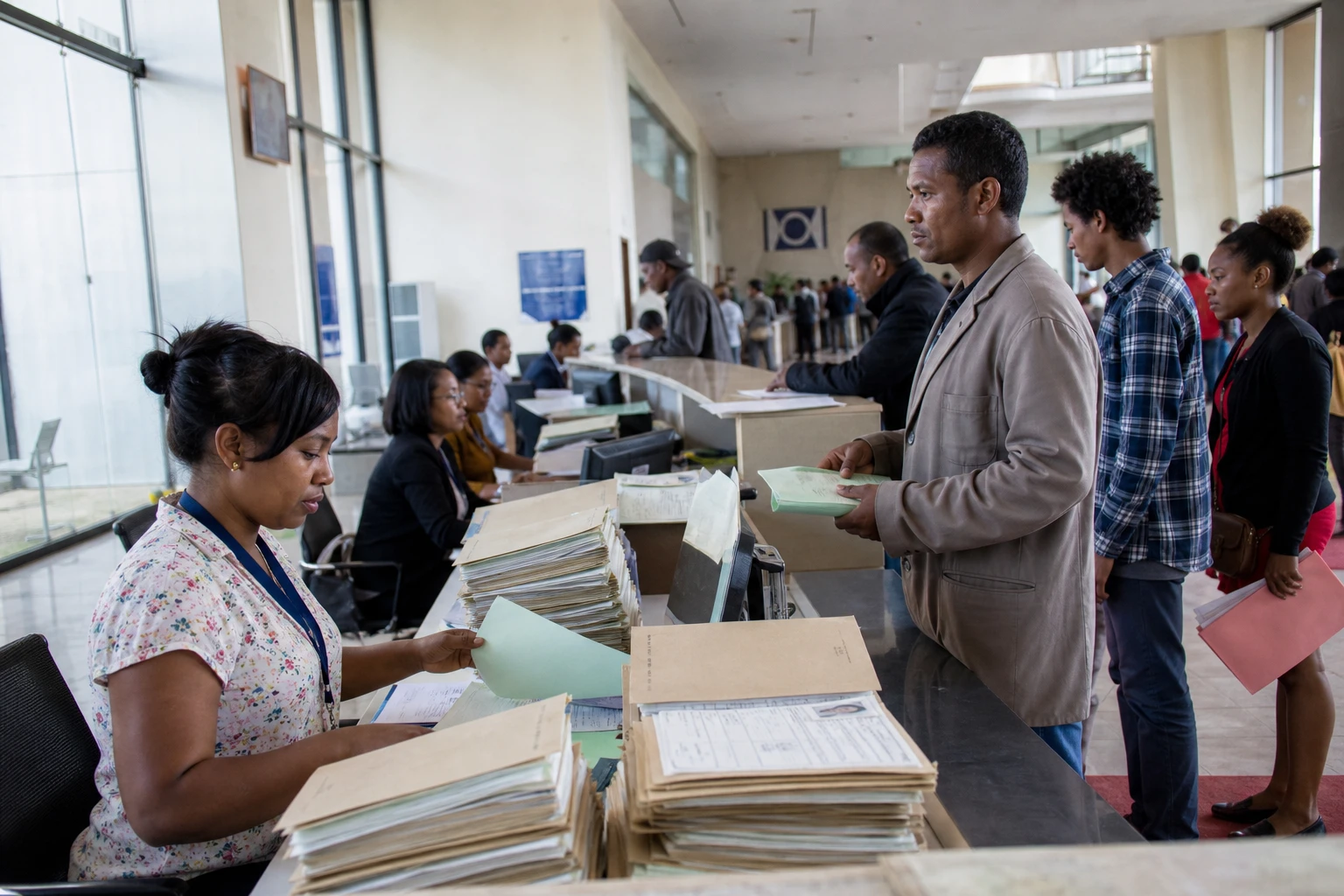
Electoral roll to be rebuilt ahead of the next political cycle
In Antananarivo, the electoral overhaul is no mere administrative exercise. It will shape the next phase of Madagascar’s political timetable, as the transition is due to lead, by 2027, to a constitutional referendum followed by a presidential election. In a country where every vote carries significant weight for national stability, the quality of the electoral roll is a matter of trust, representation and legitimacy.
The Independent National Electoral Commission, the CENI, launched a full revision of Madagascar’s electoral register on 28 July 2026. The operation is due to run until 25 April 2027, according to information released by the institution. It is part of a broader process of political renewal, already being closely monitored by the Southern African Development Community, SADC, which remains involved in Madagascar’s transition.
Why the CENI is opting for a complete overhaul
The current electoral roll has been disputed for years. The CENI considers it no longer credible, citing duplicate entries, identical national identity card numbers and ghost voters linked to the use of electoral ordinances. The new revision is therefore intended to register Malagasy citizens of voting age and establish a more robust basis for the 2027 elections.
The announced system will use several channels. Agents will visit households, registration will also take place through the fokontany, the country’s smallest administrative subdivisions, and part of the process will be available online. The CENI also plans a technical audit of the register, involving national and international stakeholders, as well as the participation of political parties and civil society in the CLRE, the local electoral revision commission.
The project has significant financial implications. The CENI cites 34.5 billion ariary, included in the 2026 finance law, and says it has what it considers a sufficient budget. This allocation is intended to cover a lengthy, demanding and politically sensitive operation in a country where even the slightest procedural flaw can quickly fuel accusations of bias.
A transition still under regional supervision
The electoral overhaul is not taking place in an institutional vacuum. SADC continues to monitor the situation in Madagascar. In December 2025, its heads of state and government welcomed the return to calm in Madagascar, took note of the launch of a national consultation and asked the transitional government to submit a draft national roadmap. They also reaffirmed their support for inclusive dialogue led by the Malagasy people themselves.
This regional framework matters. SADC has already sent a technical fact-finding mission to Madagascar and plans to support political, constitutional and electoral reforms. In other words, the overhaul of the roll is not just a public administration matter; it is part of a wider set of guarantees expected by regional partners before a lasting return to recognised electoral competition.
Institutionally, the CENI believes it still needs to become more independent. Its president, Thierry Rakotonarivo, says its financial autonomy should be strengthened, certain rules such as the deposits required of candidates should be reviewed, and it should be given greater authority over the electoral timetable. For now, the institution proposes a schedule, but the final date remains the government’s decision. This is one of the central issues in the Malagasy debate: having a credible electoral body without granting it full autonomy.
What this means for voters and political players
For voters, the issue is straightforward: to be registered without obstacles, duplicate entries or reliance on opaque procedures. For parties, the overhaul could change the balance, since a more rigorous register reduces the scope for disputes after the vote. For civil society, it is also a test: the promised transparency will be judged by access to data, the presence of observers and how quickly complaints are handled.
The timetable adds further pressure. The CENI has suggested, according to the local press, that a referendum could be held in June 2027 and a presidential election in October 2027. This sequence assumes that the overhaul will be completed in time, and that the national consultation promised by Christian churches and political actors will produce clear choices on the rules of the game. At this stage, however, no firm public date has been set for that dialogue.
In the capital and across the regions, logistics will also make a difference. In Antananarivo, access to digital platforms could make registration easier. In more remote areas, the effective presence of agents, fokontany and local structures will remain decisive. This is often where the credibility of an electoral register is quietly determined: by the state’s ability to reach citizens, rather than the other way round.
A signal for Southern Africa
Madagascar is not an isolated case. Across the SADC region, the quality of electoral rolls, the independence of commissions and the predictability of timetables remain key criteria for political stability. The Malagasy case is a reminder that a successful transition depends not just on an election date, but on a whole chain: registration, consultation, electoral rules, supervision and acceptance of the results.
The next points to watch will therefore be twofold: tangible progress in the registration process through April 2027, and how the national consultation, constitutional reform and presidential election announced for the same year fit together. If the timetable holds, it could pave the way for a clearer exit from the transition. If it stalls, the question of institutional legitimacy will immediately return to the fore.