Algeria
 Egypt
 Morocco
 Sudan
 Tunisia
 Benin
 Burkina Faso
 Cabo Verde
 Côte d'Ivoire
 Ghana
 Guinea
 Guinea-Bissau
 Liberia
 Mali
 Mauritania
 Niger
 Nigeria
 Senegal
 Sierra Leone
 The Gambia
 Togo
 Cameroon
 Central African Republic
 Chad
 DR Congo
 Equatorial Guinea
 Gabon
 Republic of the Congo
 São Tomé and Príncipe
 Burundi
 Comoros
 Djibouti
 Eritrea
 Ethiopia
 Kenya
 Madagascar
 Malawi
 Mauritius
 Mozambique
 Rwanda
 Seychelles
 Somalia
 South Sudan
 Tanzania
 Uganda
 Angola
 Botswana
 Eswatini
 Lesotho
 Namibia
 South Africa
 Zambia
 Zimbabwe
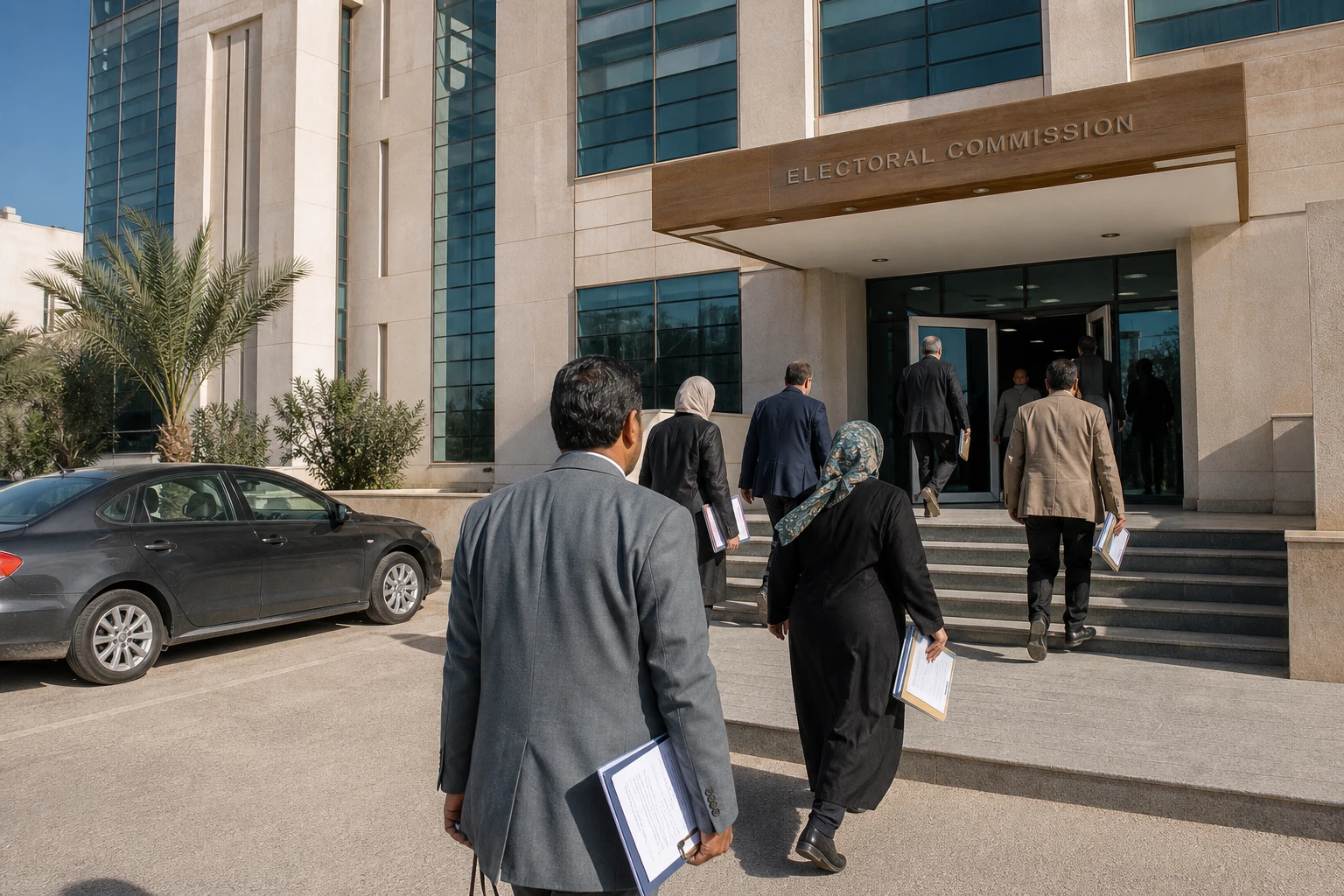
In Tripoli, a procedural compromise rather than a political victory
In Libya, an electoral agreement does not yet mean a return to normality. Above all, it shows that a country weary of transitions is finally seeking a mechanism to bypass the political deadlock that has frozen the timetable since 2021. On Sunday 30 August 2026, in Tripoli, representatives of eastern and western Libya signed a text under UN auspices to get presidential and parliamentary elections back on track, with a deadline of no more than 24 months.
The gesture matters, but it must still survive Libya’s familiar test: turning words into action. The UN mission recalled that this document is not the culmination of the process, but a step towards the next stage, with approval by the rival institutions and implementation of the electoral rules still expected. In short, the agreement opens a door; it does not yet close the room filled with vetoes, rivalries and competing agendas.
A country divided in two, with competing institutions
Since the fall of Muammar Gaddafi in 2011, Libya has lived with fragmented institutions and rival executives. The internationally recognised seat of power remains in Tripoli, while the East retains its own political and military structure. The presidential election scheduled for December 2021 failed amid disagreement over the rules of the vote and candidates’ eligibility. That date remains the starting point of the current deadlock.
The new text was drawn up after months of discussions in Rome and then Tunis, before being signed at the headquarters of the United Nations Support Mission in Libya, in Tripoli. The mechanism is familiar: a committee of eight members, with four representatives from the East and four from the West, provided a workaround after the House of Representatives and the High Council of State failed to agree on revising the electoral laws and restructuring the board of the High National Elections Commission.
The compromise is precise. It provides for a reconfiguration of the board of the High National Elections Commission, clarification of disputes over the presidential and parliamentary laws, and a commitment to hold elections within a period not exceeding 24 months. It also paves the way for a single executive authority and unified institutions, including so-called sovereign institutions and the military apparatus.
What the agreement changes, and what it does not change yet
On paper, the main innovation lies in the method. The UN sought to prevent a future text from being paralysed once again by the two rival chambers. The document provides for a monitoring mechanism and for adoption by both assemblies within one month. This looks like protection against institutional sabotage, a risk already identified during the attempts of 2021 and earlier political cycles.
But in Libya, the problem is not only legal. It is also political and security-related. State resources, particularly oil revenues, remain a source of power. The distribution of these resources, control of institutions and the existence of parallel armed forces have already derailed several compromises. Elections will be credible only if the issue of a single authority advances alongside the timetable. Otherwise, the vote risks producing a disputed winner in a country that remains divided.
For Libyans, the stakes are tangible. In western cities as well as in areas under eastern control, delays to elections prolong a state of limbo that weighs on public services, everyday security and the clarity of institutions. In Tripoli, power is exercised without unanimity. In Benghazi and the East, legitimacy also rests on competing institutions. Between the two, the population bears the brunt of slow decision-making rather than benefiting from official statements.
The announced timetable nevertheless has an immediate political effect. It sets a horizon, however distant, and puts the question of voting back at the centre of institutional discourse. That is no small matter in a country where provisional solutions have ended up becoming permanent. The Tripoli authorities hailed the text as progress towards ending the transitional phases, while the UN stressed the need to turn words into action.
Implications for Libya, North Africa and the continent
The latest developments reach beyond the Libyan scene. Libya’s stability directly affects North Africa, the central Mediterranean and security balances in Africa. Discussions about elections are also taking place in a broader diplomatic environment, where the United Nations, European partners and US diplomacy are each seeking to influence the outcome. The text signed in Tripoli comes alongside rapprochement initiatives backed by Washington, a sign that the issue remains open to several influences.
For the continent, the message is clear: a transition cannot be sustained by an election date alone. It depends on an architecture of agreements capable of withstanding internal deadlock. Libya thus shows that an electoral process without compromise on institutions, the rules of the game and executive authority remains vulnerable. This is also why the UN sought to shift the centre of gravity towards a text that could be defended at the Security Council if Libyan actors return to delaying tactics.
The next steps will therefore unfold over a short but decisive period: approval by the institutions, the possible installation of a new team at the head of the Electoral Commission, and then a political test of the promise of a unified authority. In Libya, as in many African transitions, the vote is not just an end in itself. It is a measure of whether the state itself can become common again.