Algeria
 Egypt
 Morocco
 Sudan
 Tunisia
 Benin
 Burkina Faso
 Cabo Verde
 Côte d'Ivoire
 Ghana
 Guinea
 Guinea-Bissau
 Liberia
 Mali
 Mauritania
 Niger
 Nigeria
 Senegal
 Sierra Leone
 The Gambia
 Togo
 Cameroon
 Central African Republic
 Chad
 DR Congo
 Equatorial Guinea
 Gabon
 Republic of the Congo
 São Tomé and Príncipe
 Burundi
 Comoros
 Djibouti
 Eritrea
 Ethiopia
 Kenya
 Madagascar
 Malawi
 Mauritius
 Mozambique
 Rwanda
 Seychelles
 Somalia
 South Sudan
 Tanzania
 Uganda
 Angola
 Botswana
 Eswatini
 Lesotho
 Namibia
 South Africa
 Zambia
 Zimbabwe
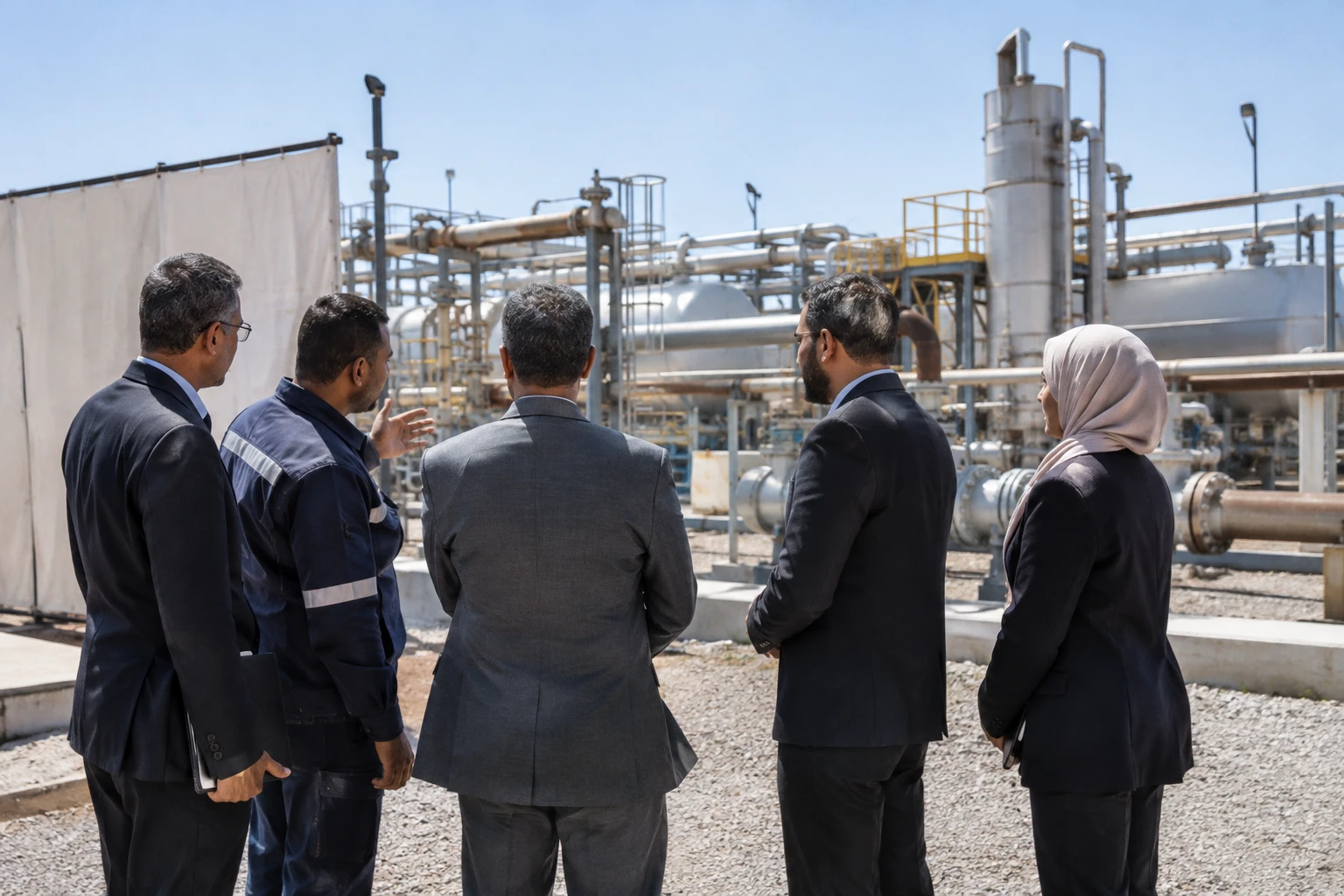
For Libyans, more gas does not simply mean higher production: it is also an essential resource for powering electricity plants and supporting industrial activity. But announcing new capacity does not yet tell us how much gas will actually reach the network, or at what pace.
A new field connected near Brega
On 25 October 2026, the National Oil Corporation (NOC), Libya’s state-owned oil company, announced the opening of the Al-Rashad gas field, south of Brega. According to the NOC, the facility can produce up to 50 million cubic feet of gas per day. The gas is to join the national network and contribute to supplies for electricity plants and industrial sites.
The announcement, reported by the Libyan News Agency, does not specify the volume actually produced since operations began. Maximum capacity is not the same as guaranteed daily output: operations, connections and demand all affect the quantities delivered. For now, the NOC has not published an actual production figure for Al-Rashad.
Brega holds an important place in the country’s energy history. The start of operations coincided with the 65th anniversary of the first export of Libyan oil from the city’s port, in 1961. Today, the challenge is also to better meet domestic needs, as electricity depends heavily on gas.
Production does not depend on a single site
Al-Rashad forms part of a broader NOC strategy: increasing available resources by developing new fields, preserving existing facilities and recovering gas that has until now been flared. This associated gas, produced alongside oil, can be processed and delivered to consumers instead of being wasted.
Off the western coast, the Bouri gas utilisation project marks another step. On 19 October, Eni announced the completion of the facilities and the start of commissioning operations, as part of its partnership with the NOC through Mellitah Oil & Gas. Eni estimates that the project could supply around 700 million cubic metres a year, notably for electricity generation, and make additional volumes available for export to Europe.
The figures cited differ between announcements. On 19 October, the NOC put the capacity of the Bouri project at around 100 million cubic feet per day. Eni, for its part, expects annual supply of around 700 million cubic metres. These figures describe capacity estimates or expected volumes, not an already recorded production total. They will need to be measured against results after operations actually begin.
The NOC is also seeking to maintain production at the offshore Bahr Essalam gas field, where natural pressure is declining. The Sabratha Compression project, developed with Eni through Mellitah Oil & Gas, is intended to support extraction using compression equipment. Meanwhile, gas discoveries announced in March south of Bahr Essalam could, according to estimates reported by the NOC, pave the way for additional production. Development has not yet begun, however.
A daily concern for residents and businesses
Prioritising the domestic market responds to a tangible need. In Libya, electricity plants are a major outlet for gas. A more regular supply could support power generation and ease competition between the needs of households, public services and industrial sites. But the announcement of a new field alone is not enough to conclude that power cuts or service will improve: the volumes actually delivered and the condition of the network will also need to be known.
The potential benefits will not automatically be distributed equally. Connected businesses and facilities close to infrastructure may be the first to benefit from an increase in supply. Households, particularly outside major urban centres, also depend on the electricity network’s ability to transmit energy and on how power plants are managed. Gas availability is therefore an important condition, but it does not by itself resolve distribution problems.
Libya’s gas strategy is unfolding in a fragmented institutional and political context. Since 2011, the country has remained marked by rival authorities and recurring tensions around institutions and oil revenues. The NOC plays a central role in managing the sector, but investment and the continuity of operations also depend on security, infrastructure and coordination between stakeholders.
Between domestic needs and regional markets
Libya’s geography also gives it a role in gas trade between North Africa and Europe. Gas intended for the domestic market and gas that could be exported may come from the same projects, making choices important when local demand rises. The Bouri project illustrates this dual destination: Eni mentions both Libyan supply and volumes that could potentially be exported via the Greenstream pipeline.
At regional level, the Arab Maghreb Union (AMU), a cooperation organisation for North African countries, provides a relevant political framework, even though the new projects described here are primarily based on national and commercial partnerships. For the African Union, the issue highlights a broader challenge: reconciling access to energy, local use of resources and export revenues, without confusing announced capacity with benefits already secured.
The next step will therefore be less symbolic than practical: monitoring the actual start-up of Al-Rashad and Bouri, the volumes fed into the network, and then these projects’ contribution to electricity and industry. These indicators will show what the new infrastructure delivers for Libyans.
Sources consulted: Libyan News Agency, announcement on the Al-Rashad field ; National Oil Corporation, stated capacity of Al-Rashad ; Eni, progress and expected volumes at Bouri ; NOC, capacity forecasts for the Bouri project ; Libyan News Agency, gas production data released in January 2026.