Algeria
 Egypt
 Libya
 Morocco
 Sudan
 Tunisia
 Benin
 Burkina Faso
 Cabo Verde
 Côte d'Ivoire
 Ghana
 Guinea
 Guinea-Bissau
 Liberia
 Mali
 Mauritania
 Niger
 Nigeria
 Senegal
 Sierra Leone
 The Gambia
 Togo
 Cameroon
 Central African Republic
 Chad
 Equatorial Guinea
 Gabon
 Republic of the Congo
 São Tomé and Príncipe
 Burundi
 Comoros
 Djibouti
 Eritrea
 Ethiopia
 Kenya
 Madagascar
 Malawi
 Mauritius
 Mozambique
 Rwanda
 Seychelles
 Somalia
 South Sudan
 Tanzania
 Uganda
 Angola
 Botswana
 Eswatini
 Lesotho
 Namibia
 South Africa
 Zambia
 Zimbabwe
A date with history
First came the silence, on 1 July in Atlanta. The silence of a stadium that had just realised that England, overwhelming favourites, could fall. Brian Cipenga had struck in the seventh minute and, for more than an hour, the Leopards had played without looking down. They defended as one, played out cleanly and attacked every space. Lionel Mpasi saved everything that came his way. Against Jude Bellingham and Harry Kane, DR Congo were not merely surviving: they were playing.
Kane eventually turned the match around, twice, as great goalscorers do when their team is wavering. England won 2-1 and DR Congo’s World Cup campaign ended in the round of 32. The defeat was cruel, but it was no thrashing. To eliminate the Leopards, one of the tournament’s most powerful sides had to call on its captain and wait until the final 15 minutes. That exit looked less like an ending than an arrival on the world stage.
Fifty-two years overturned in four matches
The 1974 World Cup had long clung to Congolese football. Zaire, the first sub-Saharan African country to compete in the tournament, came away with three defeats, no goals scored and 14 conceded. The memory had eventually become a wound passed down from generation to generation. In 2026, just a few weeks were enough to change the course of history.
From their opening match against Portugal, Sébastien Desabre’s men set the tone for their tournament. Trailing after six minutes, they neither retreated nor panicked. Just before half-time, Yoane Wissa scored DR Congo’s first-ever World Cup goal and secured a 1-1 draw against Cristiano Ronaldo and one of the tournament favourites. A point, DR Congo’s first in the competition, earned through discipline rather than miracle.
Colombia then won 1-0, in a match in which Mpasi held out for a long time. One task remained: beat Uzbekistan. The Leopards fell behind again. They refused to break again. Wissa equalised from the penalty spot, Fiston Mayele put his side ahead, then Wissa sealed the evening in stoppage time. A 3-1 victory, DR Congo’s first World Cup win, four points and a place among the final 32 teams. In 90 minutes, the country that had waited half a century had made up some of the lost ground.
A team that reflects its country
The strength of this team lies not only in its results, but in the way it plays. Chancel Mbemba as captain, Mpasi in goal, Wissa up front, Mayele, Cipenga, Tuanzebe and the others made up a compact, generous team, sure of its identity. Players born or developed across several countries chose the same shirt and gave it unity. Sébastien Desabre did the rest: clear principles, several well-drilled systems and a team that never confuses intensity with haste.
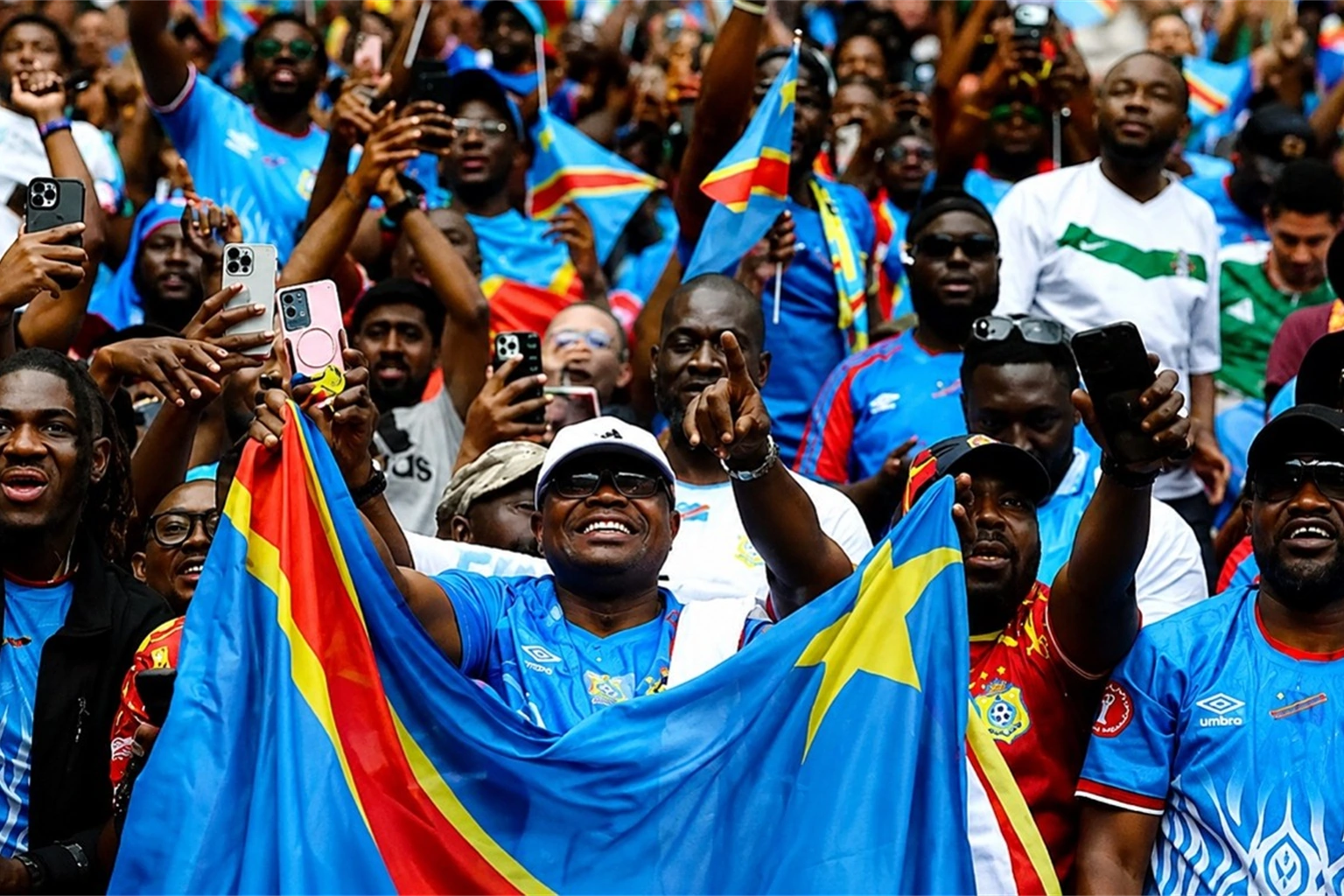
This team does DR Congo proud because it shows something other than the images to which the country is too often reduced. On North American pitches, Congo was watched for its talent, organisation and character. The blue flag appeared in stands and on screens around the world. From Kinshasa to Lubumbashi, from Goma to the diaspora, each match bridged the distances. For a few hours, local identities faded behind 11 men and a single cry.
Félix Tshisekedi, present in the stands for the opening match against Portugal, gave this return the solemnity of a national occasion. But pride needed no prompting. It rose from the streets, families, cafés and neighbourhoods. The Leopards offered a reminder: a national team can become one of the few places where a vast country looks at itself at the same moment and recognises itself.
Making the most of the American summer
The tournament was won on the pitch, under Desabre and his players. It is now up to the Congolese Football Association to build on it. Elected president of FECOFA in May, Véron Mosengo-Omba knows the workings of international football, having worked at FIFA and then led the administration of the Confederation of African Football. Alongside him, vice-president Amadou Diaby brings his experience as a senior executive, as well as extensive experience in football.
Their responsibility begins after the euphoria. A fine World Cup does not renovate a stadium, train a coach or professionalise a league. But it does provide time, credibility and drawing power. The new leadership must turn this capital into training centres, better-organised competitions, usable facilities and lasting links with the diaspora. True success will be measured by DR Congo’s ability to return, and then to return again.
Mosengo-Omba and Diaby have a rare symbol with which to launch this cycle: a national team that has regained credibility in the eyes of the world and is unreservedly loved at home. It is up to them to protect the sporting side, stabilise the institution and ensure that the achievement does not remain a brief interlude. And they have the intelligence, determination and energy !
The simple joy of seeing your country admired
Congolese people will remember Wissa’s goals, Mayele’s run, Mpasi’s saves and Cipenga’s strike that silenced England. They will also remember how they felt: the simple joy of seeing their country admired, chests swelling as the national anthem begins, streets changing colour and children choosing a Leopard’s name for the back of their shirt.
DR Congo did not win the World Cup. It won a place, respect and new memories there. It left the tournament defeated, but standing tall, having forced Portugal to share the points and England to tremble. Fifty-two years on, the Leopards did more than return to the World Cup. They gave the country back some of its pride.