
 Algeria
 Egypt
 Libya
 Morocco
 Sudan
 Tunisia
 Benin
 Burkina Faso
 Cabo Verde
 Côte d'Ivoire
 Ghana
 Guinea
 Guinea-Bissau
 Liberia
 Mali
 Mauritania
 Niger
 Nigeria
 Senegal
 Sierra Leone
 The Gambia
 Togo
 Cameroon
 Central African Republic
 Chad
 Equatorial Guinea
 Gabon
 Republic of the Congo
 São Tomé and Príncipe
 Burundi
 Comoros
 Djibouti
 Eritrea
 Ethiopia
 Kenya
 Madagascar
 Malawi
 Mauritius
 Mozambique
 Rwanda
 Seychelles
 Somalia
 South Sudan
 Tanzania
 Uganda
 Angola
 Botswana
 Eswatini
 Lesotho
 Namibia
 South Africa
 Zambia
 Zimbabwe
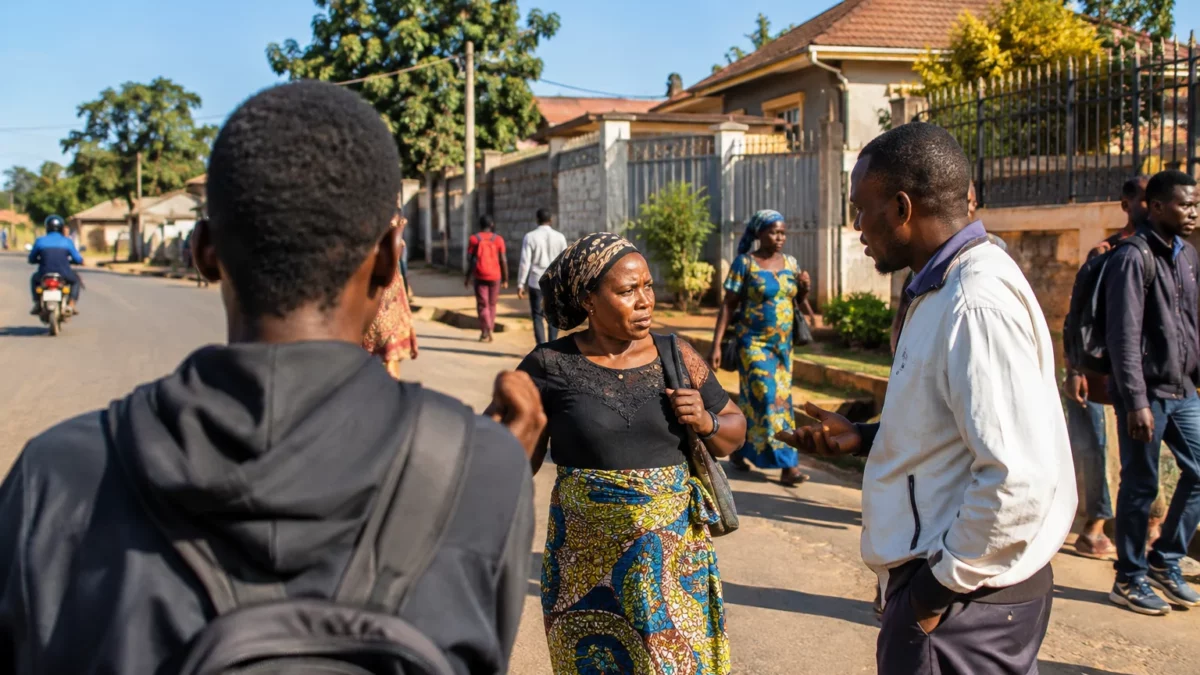
In Kashamata, near Lubumbashi, a question extends beyond the walls of a private estate: what happened during the military movements reported in the area, and who can establish it independently? For residents, the priority is to know the facts and whether civilians were affected.
Conflicting accounts after explosions
On Saturday 14 November, a helicopter flew over the area and explosions were reported. On 16 November, the Front for the Refoundation of the Nation (FRN), a politico-military movement led by former president Joseph Kabila, accused the Congolese army of striking its estate in Kashamata. Figures associated with the movement also cited a heavy death toll. These allegations have not been independently confirmed.
The following day, General Eddy Kapend Irung, commander of the 22nd military region, visited the site with journalists. He said the buildings were intact and that no civilians had been killed or captured. He acknowledged that military manoeuvres had taken place in the region, but denied that the farm had been bombed.
The command attributes the overflights and noises heard to exercises. According to the general, training was also taking place in other parts of Haut-Katanga. This is the army’s explanation; on its own, it does not make it possible to reconstruct precisely what happened on 14 November.
A backdrop of war and political rivalry
Kashamata is near Lubumbashi, the capital of Haut-Katanga, in the south-east of the Democratic Republic of the Congo. The region is far from the main fronts in the east, but the national conflict weighs on security discourse and decisions. The authorities in Kinshasa are fighting the M23 and groups brought together under the FRN banner, which was created in October 2026 and is chaired by Joseph Kabila.
A change of banner does not dispel the stakes. The FRN has announced that it is taking over the structures of the Congo River Alliance, a coalition that includes the M23. This reorganisation comes as negotiations continue and fighting in the east complicates any prospect of de-escalation. In this climate, an incident reported in Haut-Katanga can quickly be interpreted as an episode in the standoff between the former president and Félix Tshisekedi’s government.
But political proximity is not proof. The army has put forward an official account, while the FRN has made allegations that may serve its political strategy. The information available does not make it possible to independently verify either whether strikes hit the estate or the death toll cited by people close to the movement. It is therefore necessary to distinguish reported observations — overflights and explosions — from conclusions that remain contested.
Verification is an immediate concern for residents
For people living nearby, uncertainty has concrete consequences. A rumour of bombing can cause fear, disrupt travel and expose families to accusations or reprisals. Conversely, a military denial is not enough to answer questions if local accounts, images and any damage are not examined by independent actors.
The visit organised by the army provides access to part of the site, but it remains under military control. A more robust verification process would require separate interviews with residents, documentation of the site and clarification of the circumstances surrounding the announced manoeuvres. No public evidence reviewed confirms the hundreds of deaths cited by FRN supporters. That figure must therefore remain attributed and unverified.
Caution is also warranted regarding the army’s statements. General Kapend says the buildings were intact and there were no casualties on the estate. This is the command’s position, not the findings of a published independent investigation. Transparency about air movements and exercises would be crucial to reducing speculation.
A test of credibility beyond Haut-Katanga
The affair puts trust in institutions and information to the test during a conflict. In Kinshasa, the authorities must respond to the allegations without turning security communications into an instrument of political confrontation. The credibility of the FRN’s claims also depends on the availability of evidence, especially when a civilian death toll is cited.
At regional level, the war in the east is engaging the peace mechanisms of the Great Lakes countries and the African Union. The Kashamata episode does not, in itself, demonstrate that the conflict is spreading to the south-east. It does, however, show how unverified information can heighten tensions in the public sphere beyond the combat zones.
The next challenge, then, is less about repeating denials than establishing a verifiable timeline: the nature of the manoeuvres, the possible presence of aircraft, the damage found and the situation of residents. Until these details are independently documented, allegations of strikes and the military denial must continue to be presented as competing accounts.



