Algeria
 Egypt
 Libya
 Morocco
 Sudan
 Tunisia
 Benin
 Burkina Faso
 Cabo Verde
 Côte d'Ivoire
 Ghana
 Guinea
 Guinea-Bissau
 Liberia
 Mali
 Mauritania
 Niger
 Nigeria
 Senegal
 Sierra Leone
 The Gambia
 Togo
 Cameroon
 Central African Republic
 Chad
 Equatorial Guinea
 Gabon
 Republic of the Congo
 São Tomé and Príncipe
 Burundi
 Comoros
 Djibouti
 Eritrea
 Ethiopia
 Kenya
 Madagascar
 Malawi
 Mauritius
 Mozambique
 Rwanda
 Seychelles
 Somalia
 South Sudan
 Tanzania
 Uganda
 Angola
 Botswana
 Eswatini
 Lesotho
 Namibia
 South Africa
 Zambia
 Zimbabwe
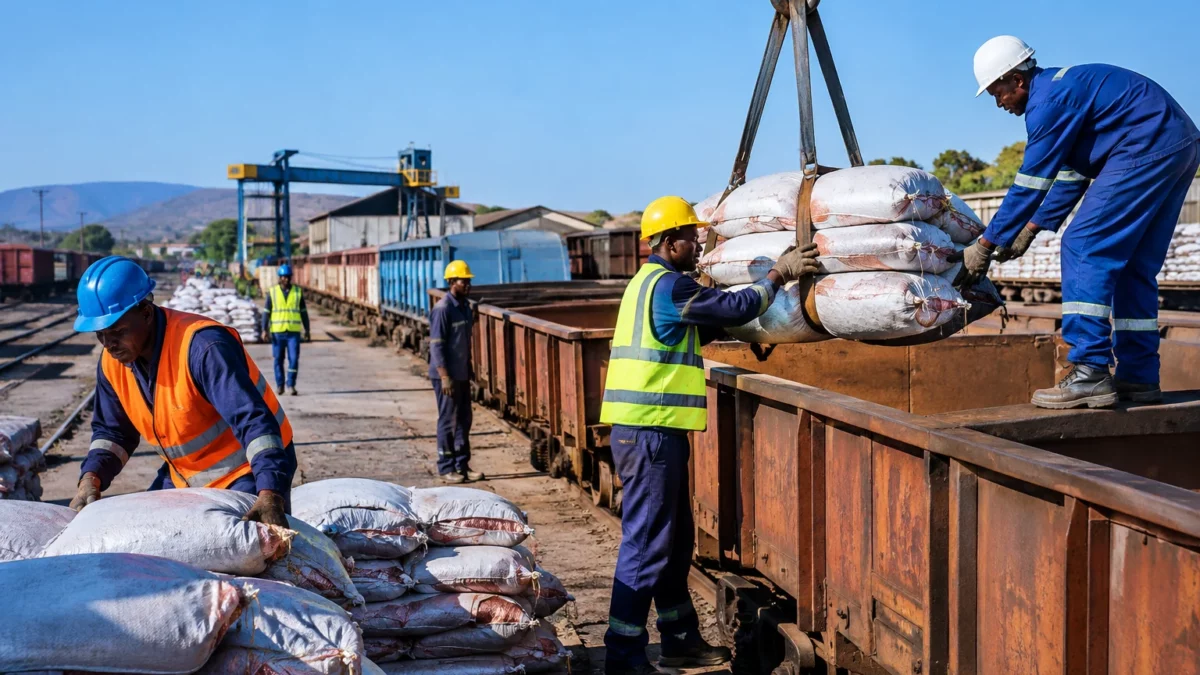
A shipment of copper has already reached a US reserve. But for the Democratic Republic of the Congo (DRC), the partnership with Washington will be judged above all by what remains to be built: railways, energy infrastructure, local processing and benefits for the Congolese people.
Nearly a year after the agreement was signed on 4 December 2025, the two governments are pointing to progress. Yet the announcements do not provide a clear picture of the investments actually committed or the jobs created. The contrast is stark: copper is moving, while several major projects are still awaiting funding or studies.
Minerals at the heart of a strategic rapprochement
The agreement serves complementary but distinct interests. Washington is seeking to diversify its supplies of critical minerals. Kinshasa wants to attract capital, make better use of its resources at home and strengthen its infrastructure. The DRC’s stake is therefore not limited to selling minerals: it also concerns how much processing and economic value will remain in the country.
The DRC lies at the centre of a mining region connected to several neighbouring countries. The Lobito Corridor is intended to link the country’s south-east to the port of Lobito in Angola, while also opening up prospects towards Zambia. The project forms part of trade in southern Africa, particularly within SADC, the regional economic community of which the DRC is a member. It complements other export routes, but does not in itself guarantee industrial processing in the DRC.
Minerals also feature in the international contest over supply chains. Kinshasa’s challenge is to turn this external interest into infrastructure, public revenue and lasting industrial capacity. That requires transparent contracts, effective oversight and benefits that extend beyond mining companies and traders.
Copper delivered, but results still hard to measure
The most tangible result is a shipment of 12 000 tonnes of Congolese copper to Project Vault, the US critical minerals stockpile scheme. Mercuria, a Swiss trading company, described the October 2026 delivery as a trial shipment. The news was also reported by specialist commodities media and the African business press. The report on the delivery to Project Vault.
In January, state-owned company Gécamines had announced its intention to exercise its right to buy 100 000 tonnes of copper from Tenke Fungurume’s 2026 output, from one of the country’s major copper and cobalt complexes. The announcement concerns a targeted volume, distinct from the 12 000 tonnes already delivered. It does not mean that the entire quantity has already been shipped. Information on Gécamines’ operation at Tenke Fungurume.
Political follow-up has also advanced. On 5 November 2026, Congolese and US representatives met in Paris for the second session of their joint steering committee. The communiqué listed several areas of cooperation, including minerals, infrastructure and energy. However, it did not provide a quantified account of capital disbursed or jobs linked to the agreement. The Congolese Press Agency’s report on the Paris meeting.
Kinshasa has also adopted a tax reform linked to cooperation agreements and projects. The change meets a deadline set out in the agreement. Its impact, however, will depend on how it is implemented: the companies concerned, government agencies and communities must be able to understand the rules and monitor their effects on public revenue.
Lobito and Inga: infrastructure yet to be delivered
On 26 August 2026, the DRC signed a railway concession in Kinshasa with Mota-Engil Africa for the Dilolo-Sakania section. The line runs through the country’s mining south and forms the Congolese part of the Lobito Corridor. The announcement was confirmed by the Congolese Press Agency and a Congolese public body responsible for monitoring partnerships. Official details of the railway agreement.
The signing does not mean that rehabilitation is complete or that trains can already run in better conditions. Studies must establish the timetable and the work required. The corridor will have economic value only if transport becomes reliable enough to carry minerals and other goods. Farmers, suppliers and small businesses along the route could also benefit, provided the infrastructure is not used solely to speed up mineral exports.
Energy is the other part of the equation. The Inga 3 project is presented as a potential means of supplying households and supporting industrial processing. But the $250 million in funding approved by the World Bank in June 2025 covers an initial phase of preparation and support for local communities, not construction of the dam. The institution says this phase is intended to benefit around 100 communities in Kongo Central, among others. An overview of the first phase of the Inga 3 programme.
The distinction matters: studies, financial structuring, governance choices and safeguards for affected populations remain crucial. A major power project will not automatically deliver affordable electricity in every province. Funding will also be needed to transmit the electricity, and it must be made clear how it will be allocated among households, industry and other users.
The test of benefits for the Congolese people
For the DRC, the next measure of progress will therefore not be simply the volume of copper shipped to the United States. It will be necessary to track the work actually begun on the railway, the funding mobilised for Inga and progress in local processing. The issue also concerns the transparency of agreements and the role given to communities living near mines, railway lines and future energy developments.
At regional level, Lobito could strengthen links between the DRC, Angola and Zambia. But the benefits will depend on coordination between these countries, genuinely operational rail connections and a diverse range of goods being carried. Competition between export routes will not take the place of a Congolese industrial policy.
The partnership is also unfolding in a national context in which security concerns remain acute, particularly in the east of the country. Economic agreements and discussions on minerals are not, in themselves, a response to the violence or its consequences for the population. As the next stages of bilateral monitoring approach, Kinshasa will therefore have to report both on the investments made and on how they address the country’s priorities.