Algeria
 Egypt
 Libya
 Morocco
 Sudan
 Tunisia
 Benin
 Burkina Faso
 Cabo Verde
 Côte d'Ivoire
 Ghana
 Guinea
 Guinea-Bissau
 Liberia
 Mali
 Mauritania
 Niger
 Nigeria
 Senegal
 Sierra Leone
 The Gambia
 Togo
 Cameroon
 Central African Republic
 Chad
 Equatorial Guinea
 Gabon
 Republic of the Congo
 São Tomé and Príncipe
 Burundi
 Comoros
 Djibouti
 Eritrea
 Ethiopia
 Kenya
 Madagascar
 Malawi
 Mauritius
 Mozambique
 Rwanda
 Seychelles
 Somalia
 South Sudan
 Tanzania
 Uganda
 Angola
 Botswana
 Eswatini
 Lesotho
 Namibia
 South Africa
 Zambia
 Zimbabwe
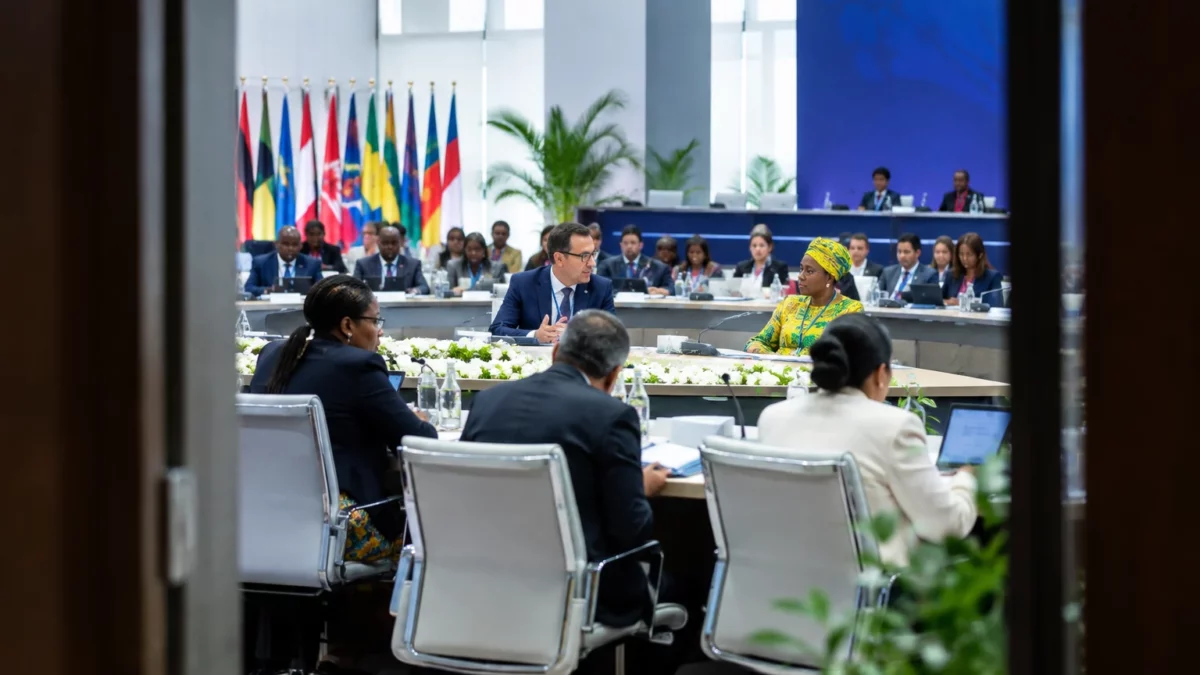
In Phnom Penh, disagreement over the leadership of the Francophonie exposed the limits of an organisation seeking to preserve unity without being able to resolve differences among its members. For the Democratic Republic of Congo, the stakes go beyond one post: they also concern Kinshasa’s place in an institution expected to speak on peace and mediation.
Succession blocked by tensions in the Great Lakes
The dispute between Kinshasa and Kigali is part of a deteriorating regional relationship, particularly over the war in eastern DR Congo and allegations of Rwandan support for M23. Rwanda rejects these allegations. The confrontation is now weighing on diplomatic forums where the two countries sit together.
The crisis is also unfolding in a changing Francophone landscape. Mali, Niger and Burkina Faso announced their withdrawal from the International Organisation of La Francophonie (OIF) in 2025, after being suspended following coups. The organisation brings together states and governments with diverse political trajectories, so its decisions depend on diplomatic balances that can be fragile.
DR Congo occupies a particular place within it. It is one of the world’s largest Francophone areas and believes the OIF should be able to hear its concerns about the east of the country. For Kinshasa, succession at the head of the organisation therefore became intertwined with a question of political trust.
Twelve months to review the rules
Meeting on 15 and 16 November 2026 in Phnom Penh, heads of state and government did not choose a successor to Louise Mushikiwabo. On 16 November, having failed to agree on a candidate or whether to hold a vote, they accepted the Cambodian presidency’s proposal to extend the secretary-general’s term by 12 months.
The decision provides for an election in 2027. During this period, members can propose changes to the electoral procedure in place since 2022. The OIF confirmed this timetable in its closing statement. An international news agency and Congolese media also reported the postponement, corroborating the central fact announced by the organisation.
The extension is therefore not equivalent to a regular new term. It keeps the incumbent in office while states seek to clarify the rules and prepare for the next election. Elected in 2018 and reappointed in 2022, Louise Mushikiwabo will remain secretary-general during this transitional period.
Accounts of the political details of the agreement differ in their nuances. Congolese media say Rwanda will not put forward a candidate in the next election and that Juliana Amato Lumumba’s candidacy remains in the running. The OIF’s official statement confirms the reform and the 2027 election, but does not specify these commitments on candidates. They should therefore be understood as details reported by the press, not as part of the published institutional decision.
The summit did not erase the disagreements. Instead, it postponed their resolution, giving members a year to change the rules and resume discussions. The secretary-general, for her part, said she respected the collective decision, according to the OIF’s account.
For Kinshasa, diplomatic respite, not a resolution
The postponement avoids an immediate confrontation over the reappointment of the Rwandan leader. It also addresses Congolese concerns that a new election could deepen divisions within the organisation. But the outcome settles neither the dispute between the two countries nor the role the OIF can play in the crisis in eastern DR Congo.
Congolese candidate Juliana Amato Lumumba had been presented as an option in the succession race. According to Kinshasa media, the Congolese authorities had considered withdrawing her candidacy to facilitate a compromise. After the postponement, her status in the next process remains an important political question, but the rules may be changed before the 2027 election.
For the Congolese population, the consequences are indirect. A diplomatic contest does not by itself change the situation of people in the east of the country. It can, however, affect Kinshasa’s ability to mobilise support, have its concerns reflected in OIF texts and make its case on the crisis to other members.
For the organisation, the issue is its credibility. In 2022, states adopted a procedure providing for a majority vote in the absence of consensus. Yet that rule was not used at the Phnom Penh summit: members chose to extend the term and review the electoral framework. The announced reform will therefore have to clarify how to prevent political deadlock from once again blocking the appointment of a leader.
The compromise also comes amid debate over the influence wielded within the OIF by major financial contributions and mediation initiatives. France took part in efforts to reach an agreement, while Congolese and Rwandan officials publicly put forward different interpretations of these initiatives. To present the outcome as the result of a single actor, however, would obscure the role of the member states, which collectively opted for a postponement.
The 2027 election under scrutiny
The next step will be a review of the electoral rules, followed by preparations for the election announced for 2027. The candidates, voting conditions and members’ ability to reach an agreement will determine whether the transitional period leads to a succession accepted by all.
The issue is also of interest to countries neighbouring the Great Lakes region, where tensions between DR Congo and Rwanda extend beyond the OIF. This is not a decision by the East African Community (EAC), a regional organisation of which both countries are members, but diplomatic balances in the region influence multilateral discussions.
In Phnom Penh, the summit adopted a resolution on crisis situations and peacebuilding. The OIF expressed particular concern about the situation in eastern DR Congo and referred to a fact-finding mission deployed following a Congolese appeal. The text provides an institutional framework for the issue but does not in itself resolve the conflict.
The postponement has therefore bought time, not resolved the rivalry. In 2027, the election will show whether the Francophonie can turn this pause into a clearer procedure and a lasting compromise, without confusing the organisation’s unity with the erasure of disagreements among its members.