Algeria
 Egypt
 Libya
 Morocco
 Sudan
 Tunisia
 Benin
 Burkina Faso
 Cabo Verde
 Côte d'Ivoire
 Ghana
 Guinea
 Guinea-Bissau
 Liberia
 Mauritania
 Niger
 Nigeria
 Senegal
 Sierra Leone
 The Gambia
 Togo
 Cameroon
 Central African Republic
 Chad
 DR Congo
 Equatorial Guinea
 Gabon
 Republic of the Congo
 São Tomé and Príncipe
 Burundi
 Comoros
 Djibouti
 Eritrea
 Ethiopia
 Kenya
 Madagascar
 Malawi
 Mauritius
 Mozambique
 Rwanda
 Seychelles
 Somalia
 South Sudan
 Tanzania
 Uganda
 Angola
 Botswana
 Eswatini
 Lesotho
 Namibia
 South Africa
 Zambia
 Zimbabwe
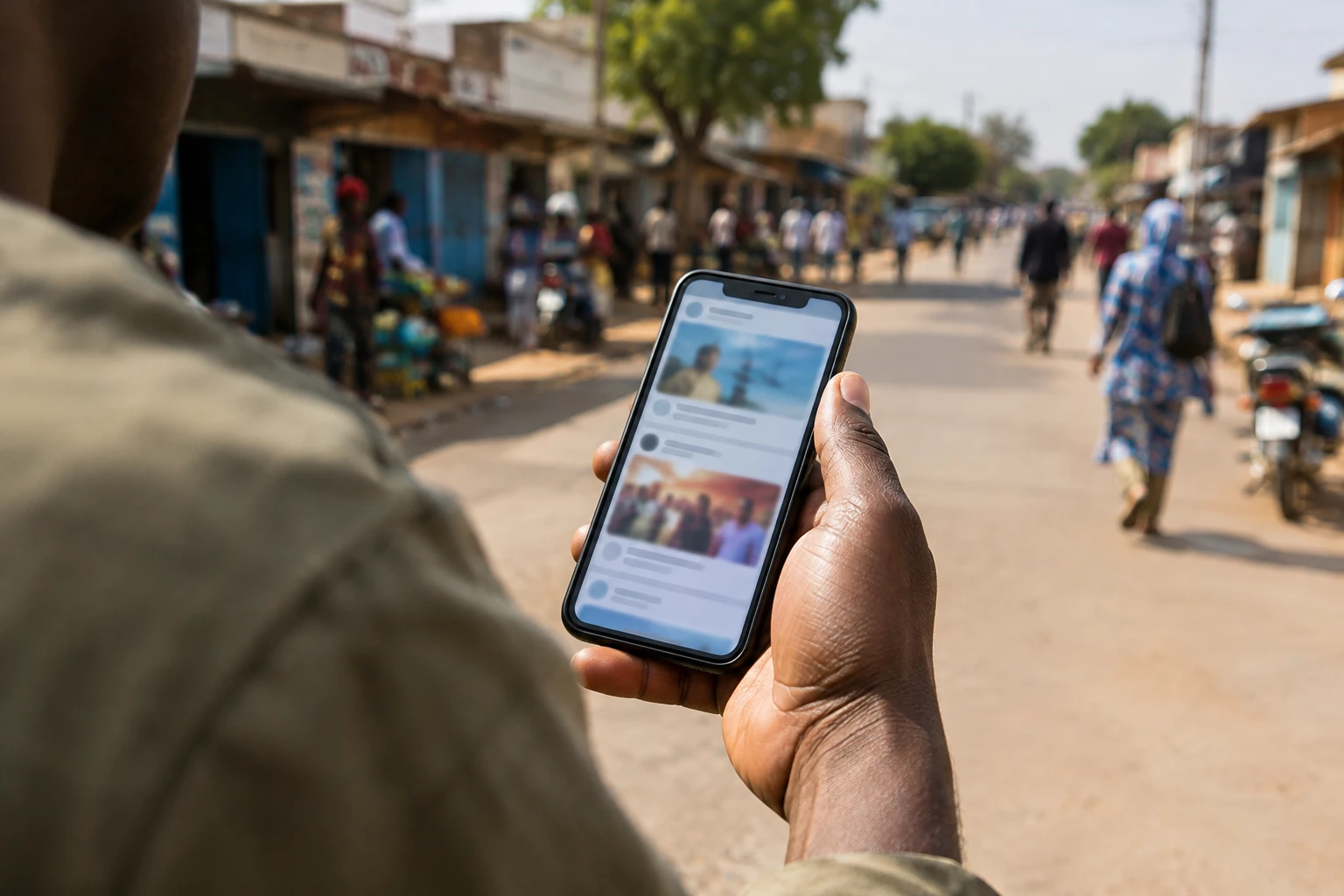
In Kourémalé, a Malian town bordering Guinea, a presumed police intervention was followed by protests and the closure of the market. The precise circumstances of a young man’s death have yet to be established. This distinction is essential: anger expressed in the streets is not, in itself, enough to determine what happened during the stop.
Reported events, still to be confirmed
According to information published on 13 October, the young man is said to have died on the evening of Sunday 11 October, after an altercation with police officers. He was travelling by motorbike to his workplace, a gold-mining site, with a passenger. Initial accounts refer to a check related to a vehicle tax sticker and a refusal to stop. The officers are said to have then opened fire. These details could not be confirmed by a second independent source.
The same publication reports that the passenger, who was injured, is said to have been taken to Bamako. The toll from the protests on Monday 12 October is equally uncertain: injuries and arrests have been mentioned, as well as a possible second death, without independent confirmation. These reports should therefore not be presented as established facts.
According to this account, residents protested in the streets, fires were lit and the weekly market could not open. Shops are said to have shut their doors. Police officers are said to have fired warning shots. No detailed official account from local authorities or police services was found in the sources consulted.
Tensions that go beyond the day’s incident
The protest echoes another reported death on 4 October in Dialakorodji, near Bamako. The Malian outlet Mali24 gathered testimonies describing the death of Salif Sidibé in an incident involving security forces. The outlet says the circumstances remain to be established and that it had not obtained the authorities’ account. Malijet also reported the death and the tensions that followed.
The two episodes are separate. They do not, in themselves, demonstrate a widespread practice or a link between the interventions. But their proximity in time may fuel distrust, particularly when residents are waiting for explanations and the circumstances of a death are not quickly clarified.
In Dialakorodji, testimonies gathered by Mali24 describe a security forces vehicle hitting the young man. This account, too, must be checked against the findings of an investigation and official explanations. The earlier incident sheds light on the climate of tension, but does not allow conclusions to be drawn about the responsibility of officers in Kourémalé.
A border town whose daily life has been disrupted
Kourémalé lies on the border route between Mali and Guinea. In a transit town, a disrupted market and closed shops directly affect traders, transport operators and families who depend on local exchanges. The immediate consequences therefore extend beyond those present at the protests.
The issue also concerns trust between residents and the services responsible for checks. A roadside stop may be required under a specific rule. But when it ends in a death, the authorities must establish the facts: how the intervention unfolded, whether a weapon was used, and the identity and condition of those injured. These matters require an investigation, not merely the accounts circulating in the town.
The border location gives the case a transnational dimension, without confusing it with an incident in Guinea. Kourémalé is the Malian town concerned here. The available sources do not establish any involvement by the Guinean authorities.
Answers awaited
At this stage, key details are missing: a confirmed toll from the protests, a statement from the Malian authorities and verifiable information on whether an investigation has been opened. The exact circumstances of the death and the passenger’s state of health also remain to be determined.
For now, the challenge is twofold: to prevent rumours from aggravating tensions and to ensure that the facts are examined independently and impartially. For residents, access to clear information matters as much as the resumption of activities. For the authorities, transparency about an investigation’s findings is a test of local trust.
ECOWAS, the regional organisation for West Africa, provides a framework for cooperation between Mali and its neighbours, including Guinea. Nothing in the verified information indicates that the matter has been referred to the regional body. What happens next will depend first on national steps: confirming the tolls, investigating the intervention and communicating the findings of the competent authorities.