Algeria
 Egypt
 Libya
 Morocco
 Sudan
 Tunisia
 Benin
 Burkina Faso
 Cabo Verde
 Côte d'Ivoire
 Ghana
 Guinea-Bissau
 Liberia
 Mali
 Mauritania
 Niger
 Nigeria
 Senegal
 Sierra Leone
 The Gambia
 Togo
 Cameroon
 Central African Republic
 Chad
 DR Congo
 Equatorial Guinea
 Gabon
 Republic of the Congo
 São Tomé and Príncipe
 Burundi
 Comoros
 Djibouti
 Eritrea
 Ethiopia
 Kenya
 Madagascar
 Malawi
 Mauritius
 Mozambique
 Rwanda
 Seychelles
 Somalia
 South Sudan
 Tanzania
 Uganda
 Angola
 Botswana
 Eswatini
 Lesotho
 Namibia
 South Africa
 Zambia
 Zimbabwe
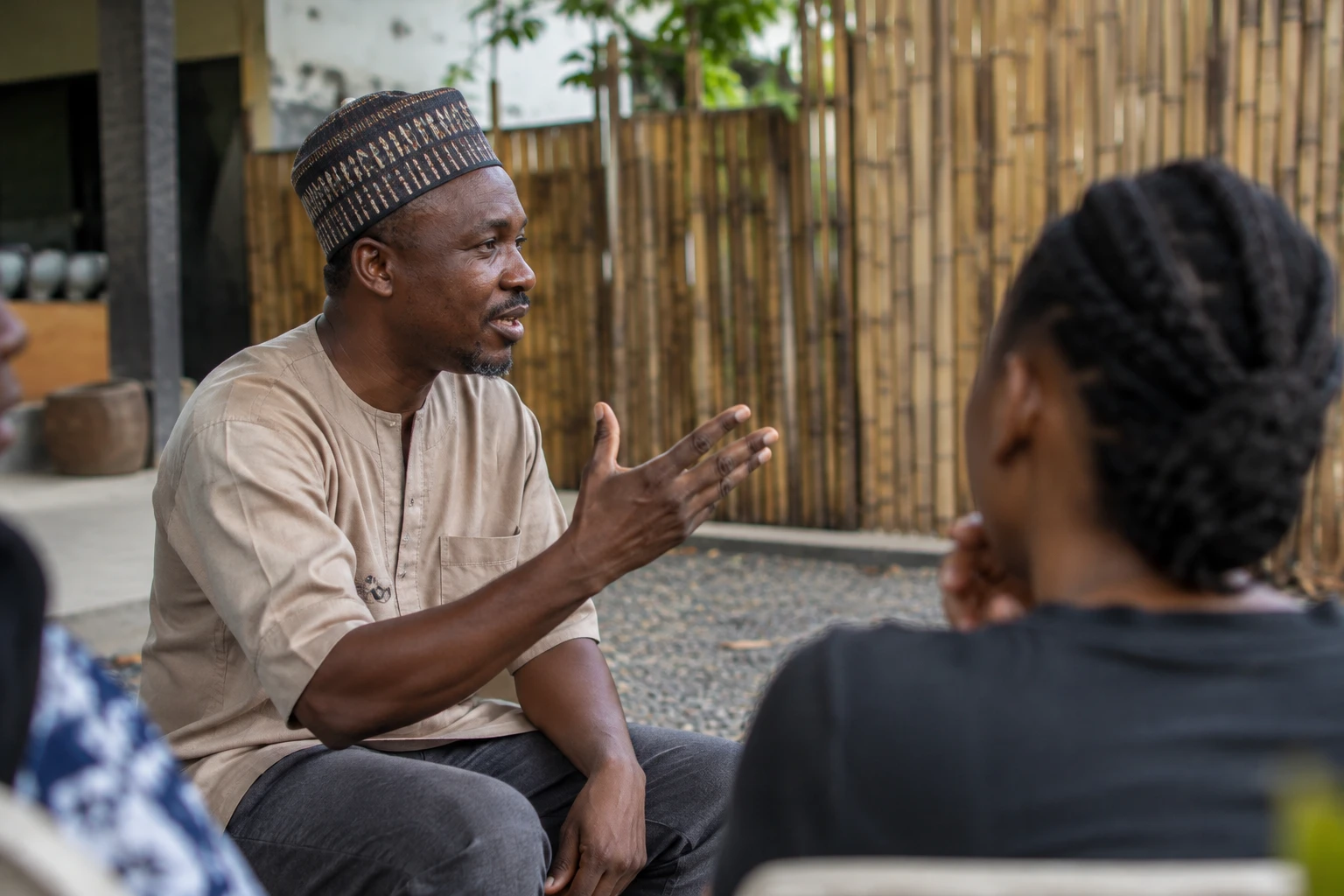
In Conakry, a story told aloud also becomes a meeting place. At the Koumakan house, storytelling is not just entertainment: it passes on values, circulates memory and creates a space where young and old can come together.
Making room for the spoken word in Conakry
Sitting on the gravel among water calabashes and a bamboo fence, visitors to Koumakan listen to Moussa Doumbouya, known as “Petit Tonton”. The storyteller runs a space dedicated to oral tradition and heritage. Stories, proverbs and family histories have found a place here in an urban setting, far from the notion that this kind of transmission can only take place in a village.
The house organises storytelling evenings, all-night storytelling events and gatherings focused on genealogies. These formats give the audience a role: stories are shared, discussed and passed on through exchange. In a report broadcast on 7 November, Doumbouya says he wants to prevent part of Guinea’s history and heritage from being lost.
Koumakan is also an arts association bringing together storytellers, slam poets, writers and artists from other disciplines. Activities explore the educational use of storytelling, as well as the collection of lullabies and songs. This work shows that tradition is not necessarily at odds with contemporary forms: it can find new audiences and new venues.
A fragile, but not frozen, tradition
Sociologist Sonah Mady Camara, a lecturer and researcher at the General Lansana Conté University of Sonfonia, links the decline of oral tradition to a breakdown in ties between generations. This observation, reported in the programme, points to a practical challenge: when opportunities for older and younger people to meet become less frequent, there are fewer spaces for knowledge passed on by word of mouth to circulate.
But it would be simplistic to explain this change as a uniform lack of interest among young people. Urbanisation, migration and changing ways of life are altering when and where transmission takes place. The media and digital tools can compete with storytelling evenings; they can also record stories, share performances and connect listeners who are far apart. The challenge, then, is less to freeze these practices than to preserve the conditions for their renewal.
Stories can pass on values, knowledge and ways of speaking. They also carry different versions of history, depending on families, languages and performers. Documenting these variations, with the agreement of the communities concerned, preserves more than just words: gestures, intonation and the relationship with the audience matter too.
Guinean heritage rooted in regional history
Guinea shares cultural heritage with its West African neighbours that crosses today’s borders. The Manden Charter, transmitted primarily orally and associated with the history of the Mali Empire, is one regional example. UNESCO says its stories and associated practices continue to be passed on in Manding communities, particularly in Guinea and Mali.
Guinea also has living heritage recognised internationally: the cultural space of the Sosso-Bala, centred on a balafon linked to Manding history and identity. A UNESCO-supported safeguarding programme brought together documentation of practices, training for tradition-bearers and audiovisual recordings. This experience is a reminder that oral tradition can draw on archives without being reduced to a museum object.
The 2003 UNESCO Convention on Intangible Cultural Heritage is based on an idea that is relevant here: the communities that uphold a practice must take part in safeguarding it. The aim is not to preserve a single, immutable version. A tradition remains alive when its bearers can develop it and pass it on in suitable contexts.
Preserving stories without confining them
For Koumakan, storytelling evenings offer a local response to the dwindling number of spaces for transmission. They bring the practice closer to Conakry residents and can encourage dialogue between emerging artists and more experienced figures. Their impact, however, depends on continuity, public access and the ability to pass on stories in the languages that give them meaning.
Cultural institutions, schools and associations can complement this work through collection projects, accessible archives and workshops. These efforts require respect for the rights and choices of those who pass on the stories. Some are tied to family contexts or specific rules; recording and sharing them cannot be taken for granted.
The issue extends beyond Guinea’s borders. Across West Africa, languages, stories and practices connect communities separated by states, while mobility and digital tools are changing how they are passed on. In Conakry, Koumakan’s experience points to one approach among many: making the spoken word a living appointment, without cutting it off from its roots or taking it away from those who carry it.