
 Algeria
 Egypt
 Libya
 Morocco
 Sudan
 Tunisia
 Benin
 Burkina Faso
 Cabo Verde
 Côte d'Ivoire
 Ghana
 Guinea
 Guinea-Bissau
 Liberia
 Mali
 Mauritania
 Niger
 Nigeria
 Senegal
 Sierra Leone
 The Gambia
 Togo
 Cameroon
 Central African Republic
 Chad
 Equatorial Guinea
 Gabon
 Republic of the Congo
 São Tomé and Príncipe
 Burundi
 Comoros
 Djibouti
 Eritrea
 Ethiopia
 Kenya
 Madagascar
 Malawi
 Mauritius
 Mozambique
 Rwanda
 Seychelles
 Somalia
 South Sudan
 Tanzania
 Uganda
 Angola
 Botswana
 Eswatini
 Lesotho
 Namibia
 South Africa
 Zambia
 Zimbabwe
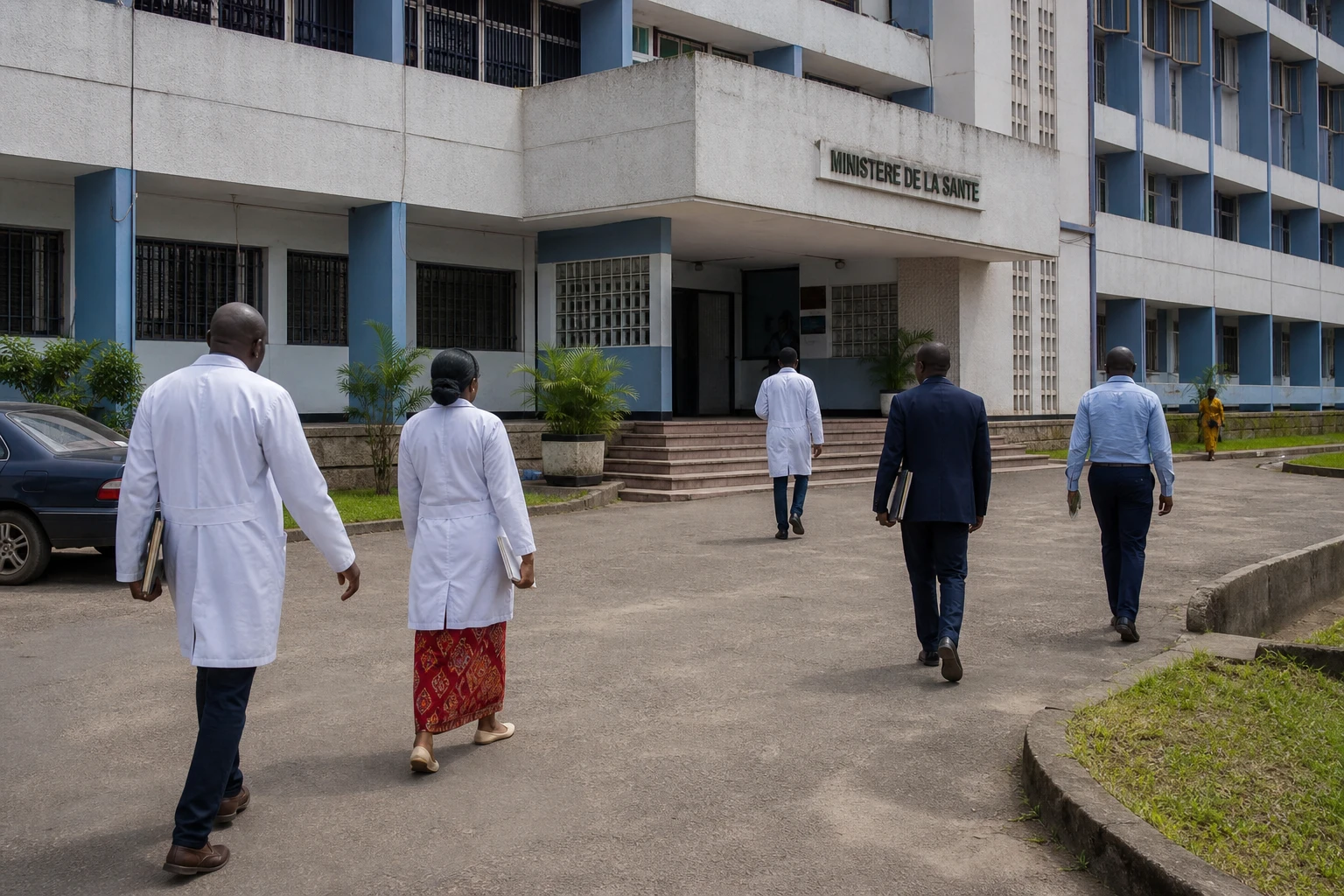
In Kisangani, a response that reaches beyond the city
In Kisangani, vaccination centres have become a strategic hub in the response to Ebola. The scene says much more than a simple medical launch. It shows a crossroads city in eastern Democratic Republic of the Congo (DR Congo), linked to the Congo River, the movement of people and commercial exchanges, at a time when a viral outbreak is forcing the state to act swiftly and focus first on those providing care.
The context is grave. Since the outbreak was declared on 15 May 2026, DR Congo has been battling an outbreak caused by the Bundibugyo strain, an Ebola variant for which no approved vaccine is yet available. The World Health Organization (WHO) says it is spreading rapidly, with more than 5,200 cases recorded by 24 August and an advance that has exceeded the pace seen in previous major crises.
Launching vaccination and choosing the frontline
On 27 August 2026, vaccination of health workers began in several areas, including Kisangani, the capital of Tshopo province. The Congolese health ministry gave the go-ahead and prioritised healthcare workers, surveillance teams and frontline staff exposed to the virus. The strategy aims to break chains of transmission where they are most dangerous: in healthcare facilities and among those in contact with patients.
The vaccine being used is Ervebo. It is recognised as safe and effective against Ebola-Zaire, the most common form of the virus, but its effectiveness against Bundibugyo is still being studied. That is precisely why a clinical trial has been launched alongside the wider vaccination campaign. WHO says this approach should provide new evidence to guide future responses in Africa.
The figures announced show the scale of the effort. WHO and its partners have supported the delivery of 70,000 doses of Ervebo to DR Congo. According to the AP, around 50,000 doses are reserved for healthcare workers and frontline workers, while a further 20,000 are being used in a clinical trial on Bundibugyo. The Congolese news agency ACP has also confirmed the launch in Kisangani and the priority given to healthcare providers.
Why Kisangani matters to the whole region
The choice of Kisangani is no coincidence. The city lies on a river and road corridor linking several provinces and carrying a significant share of domestic trade. WHO and partner agencies have also launched the “River Without Ebola” initiative to limit the risk of the disease spreading to Mbandaka, Kinshasa and neighbouring countries, notably the Republic of the Congo and the Central African Republic. At this scale, the response extends beyond Tshopo. It becomes a matter of regional movement, health surveillance and border coordination.
The African dimension is just as clear. WHO and Africa CDC are supporting a community-based approach, with local authorities and field teams playing a central role. The aim is not only to contain the current outbreak. It is also to produce data that will help prepare the continent for future epidemics. The African continent remains on the frontline of haemorrhagic fevers, and DR Congo often serves as a testing ground for responses, for better or for worse, in an emergency.
On the ground, the figures convey the scale of the challenge. As of 24 August, WHO had reported more than 5,200 cases and said the outbreak had become the fastest-spreading in the country’s recent history. The agency added that Ituri province accounted for around 85% of cases and 79% of deaths, while deaths outside treatment centres remained numerous, pointing to persistent difficulties in early detection, referring patients and accessing care.
DR Congo’s response is therefore adapting to an epidemic that is not solely a medical issue. It also hinges on community trust, population movements, security in affected areas and the ability of local facilities to withstand the pressure. WHO has deployed experts, strengthened laboratories and supported clinical care. But it also stresses that an end to violence and restrictions on humanitarian access remains crucial if teams are to reach transmission hotspots.
Across DR Congo, the Kisangani campaign therefore marks a practical turning point. It shows that the response now rests on a broader combination of targeted vaccination, clinical trials, community surveillance and protection of transport corridors. Across Central Africa, it is a reminder that an outbreak in eastern DR Congo can quickly take on a cross-border dimension. The real test in the coming weeks will be the ability to maintain vaccination coverage, reduce new cases and prevent the disease from taking hold along the Congo River.



