
 Algeria
 Egypt
 Libya
 Morocco
 Sudan
 Tunisia
 Benin
 Burkina Faso
 Cabo Verde
 Côte d'Ivoire
 Ghana
 Guinea
 Guinea-Bissau
 Liberia
 Mali
 Mauritania
 Niger
 Nigeria
 Senegal
 Sierra Leone
 The Gambia
 Togo
 Cameroon
 Central African Republic
 Chad
 Equatorial Guinea
 Gabon
 Republic of the Congo
 São Tomé and Príncipe
 Burundi
 Comoros
 Djibouti
 Eritrea
 Ethiopia
 Kenya
 Madagascar
 Malawi
 Mauritius
 Mozambique
 Rwanda
 Seychelles
 Somalia
 South Sudan
 Tanzania
 Uganda
 Angola
 Botswana
 Eswatini
 Lesotho
 Namibia
 South Africa
 Zambia
 Zimbabwe
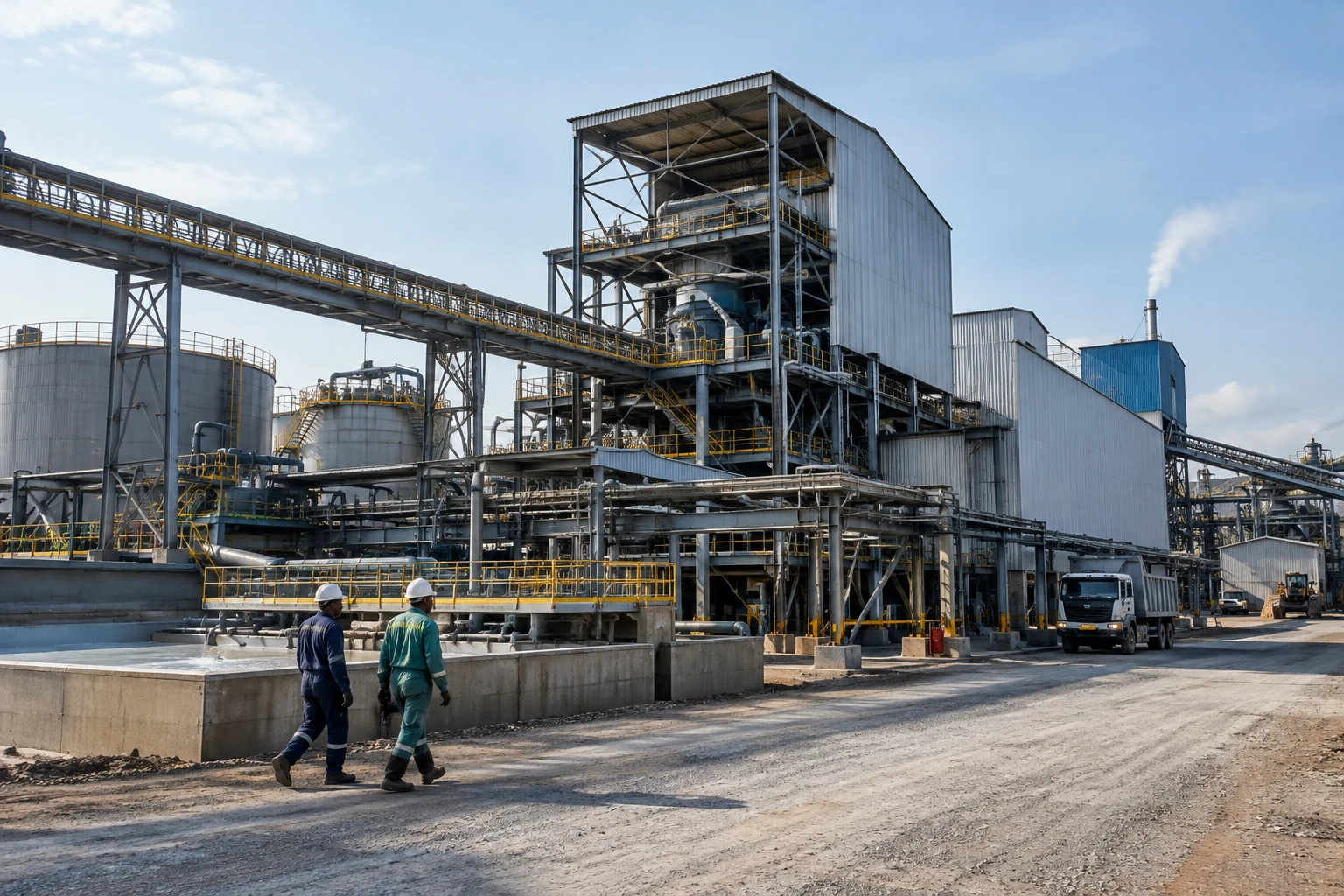
At Kipushi, in Haut-Katanga, zinc is now being produced at a rate that places the mine among the world’s major operations. For the Democratic Republic of the Congo, the challenge goes beyond the quarterly record: it is about turning a rapid rise in volumes into lasting benefits for the national economy.
A sector moving up a gear
On 8 October 2026, Ivanhoe Mines announced that its Kipushi concentrator had produced 77,147 tonnes of zinc in concentrate in the third quarter. That was a record for the site and a 10% increase on the previous quarter. The performance was due in particular to the high grade of the ore processed and a record recovery rate of 96%, according to company data.
The result continues a steady increase since production resumed at Kipushi in 2024. In 2025, the DRC produced 209,306.58 tonnes of zinc, compared with 15,305 tonnes in 2020, according to statistics from the Ministry of Mines. The Kipushi mine supplied 203,168 tonnes. The Lubumbashi Slag Heap Company, which is linked to state-owned Gécamines, contributes to output by recovering metals from metallurgical residues, among other activities.
Ore extracted must be distinguished from refined metal. Kipushi’s figures refer to the zinc contained in concentrate, an intermediate product intended for further processing. They therefore do not automatically correspond to the quantity of refined zinc available to industries. This distinction matters when comparing Congolese output with global statistics.
Zinc is used mainly to protect steel against corrosion. It is used in construction, vehicles and various industrial equipment. It is also used in certain alloys and chemicals. Demand therefore depends on very different sectors, from infrastructure to manufacturing supply chains.
A still modest share of global supply
Internationally, mine production is still dominated by Asia and the Americas. The 2026 edition of the US Geological Survey’s global statistics estimates 2025 production at about 13 million tonnes. China is estimated to have produced 4.1 million tonnes, Peru 1.5 million and Australia 1.1 million. Estimates vary according to countries and reporting methods.
At just over 209,000 tonnes, the DRC remains well behind the leading national producers. But its output is approaching the 230,000 tonnes estimated for Sweden by the USGS. The comparison gives a sense of how quickly Congolese production is growing; it does not mean that the DRC is already among the world’s top ten producers in every international dataset.
Growth currently relies chiefly on a single large site. This concentration makes national figures sensitive to Kipushi’s performance, electricity availability and equipment operations. Rapid growth can therefore coexist with significant operational risks. Ivanhoe says Kipushi remains exposed to instability in the power grid, although the company has strengthened its backup capacity.
The mine is operated under a partnership between Ivanhoe Mines and Gécamines, the Congolese state-owned company. For the state, the stakes include tax revenues and income linked to its ownership interest. For workers, suppliers and regional businesses, the activity can support jobs and local contracts. But these effects depend, among other things, on the share of goods and services purchased in the DRC, the training provided, and compliance with social and environmental obligations.
Next tests: production, data and local benefits
Ivanhoe is targeting 240,000 to 290,000 tonnes of zinc in concentrate at Kipushi in 2026. If maintained throughout the year, the third-quarter record would equate to an annualised rate of about 309,000 tonnes. This is a projection, not a forecast of annual production: volumes can vary from one quarter to another. The company nevertheless believes the mine is on track to reach the upper end of its annual range.
To confirm that the sector is diversifying, the DRC will also need to develop other activities and improve its knowledge of its subsoil. On 5 October 2026, the government launched the National Airborne Geophysical and Geological Mapping Programme, or PC2G-RDC, in Kinshasa. Technically coordinated by the National Geological Survey of the Congo and funded by the Mining Fund for Future Generations, the programme aims to improve the information available for exploration. Its launch was reported by Congolese news agency ACP and Congolese media outlet Actualite.cd.
The initiative could help identify new targets, but a geological map guarantees neither the discovery of an economically viable deposit nor its development. Investment, studies, infrastructure and clear governance rules will be needed. The question is also whether new activities will strengthen Congolese skills and businesses, rather than being limited to extracting and exporting concentrates.
The issue also concerns southern Africa. The DRC is a member of the Southern African Development Community (SADC), a regional cooperation framework in which infrastructure, energy and mining trade affect producers’ competitiveness. For communities near the sites, results will be judged in practical terms: jobs, local procurement, public services and management of impacts. At national level, the next indicator will be actual 2026 production, measured against announced targets and official statistics.



