
 Algeria
 Egypt
 Libya
 Morocco
 Sudan
 Tunisia
 Benin
 Burkina Faso
 Cabo Verde
 Côte d'Ivoire
 Ghana
 Guinea
 Guinea-Bissau
 Liberia
 Mali
 Mauritania
 Niger
 Nigeria
 Senegal
 Sierra Leone
 The Gambia
 Togo
 Cameroon
 Central African Republic
 Chad
 Equatorial Guinea
 Gabon
 Republic of the Congo
 São Tomé and Príncipe
 Burundi
 Comoros
 Djibouti
 Eritrea
 Ethiopia
 Kenya
 Madagascar
 Malawi
 Mauritius
 Mozambique
 Rwanda
 Seychelles
 Somalia
 South Sudan
 Tanzania
 Uganda
 Angola
 Botswana
 Eswatini
 Lesotho
 Namibia
 South Africa
 Zambia
 Zimbabwe
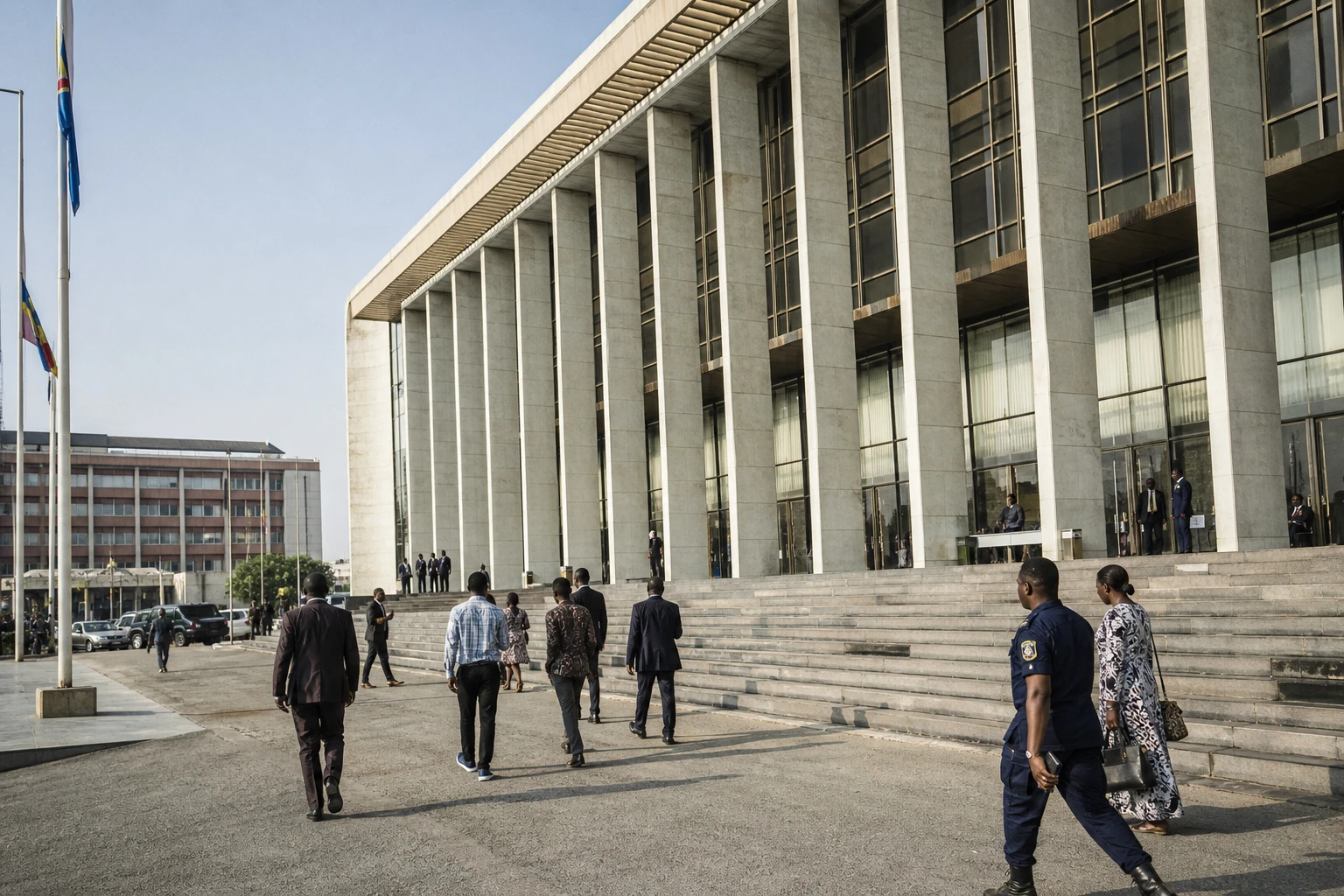
In Kinshasa, the streets have once again entered the constitutional debate
In Kinshasa, a political march can quickly become about more than the issue of the day. It becomes a test of strength between supporters of the status quo, opponents determined to defend the Constitution, and authorities under pressure to maintain order without stifling dissent. On Tuesday 15 September 2026, tensions came into the open in the Congolese capital, just as MPs were returning to the People’s Palace for the start of the parliamentary session.
The backdrop is familiar to Congolese people: the Democratic Republic of the Congo is moving forward amid a political climate in which the prospect of constitutional change is fuelling mistrust. The Coalition Article 64, or C64, brings together several opposition figures, including Martin Fayulu, Jean-Marc Kabund, Moïse Katumbi, Augustin Matata and Delly Sesanga. It opposes any reform deemed likely to pave the way for a third term or circumvent the safeguards in the 2006 Constitution, which turns 20 this year.
March announced and authorised, then blocked in Limete
The demonstration had been declared peaceful and was to be overseen by the Kinshasa authorities. The opposition and city hall had agreed on a route, starting at the Limete interchange and ending near Triomphal Boulevard, not far from the People’s Palace. Radio Okapi confirmed that morning that a significant security presence was in place in the capital and in several cities across the country.
On the ground, the procession moved peacefully at times before encountering roadblocks near 10th Street and then 12th Street, on Lumumba Boulevard in the commune of Limete. Several Congolese media outlets reported barricades erected by UDPS activists, described as members of the “Force du progrès”, a group that opponents consider close to the governing party. Police later used tear gas to disperse the crowd.
The leaders present denounced what they called an organised attack. Martin Fayulu accused the authorities of having laid an “ambush” and of having mixed members of the Force du progrès with police officers who were supposed to provide security for the procession. Other coalition officials spoke of a deliberate blocking of the march and called for those responsible to be identified. For now, these remain allegations by the opposition; they have not been publicly confirmed by an independent investigation.
What the episode reveals: the battle over public space
The incident in Limete was more than a street altercation. It exposed the fragility of the mechanisms for managing political disputes in Kinshasa. On the one hand, local authorities can authorise a march. On the other, the streets remain vulnerable to counter-mobilisations, interventions by partisan groups and contested uses of public force. In a densely populated capital, where major boulevards shape both traffic and political life, control of the route itself becomes an issue of power.
The choice of route was no accident. The planned destination was just a few hundred metres from the People’s Palace, the seat of Parliament. Coinciding with the start of the parliamentary session gave the march strong symbolic weight. The opposition wanted to deliver a simple message: no third term, no constitutional change seen as a fait accompli. The authorities, for their part, are seeking to retain control of a debate that has become explosive in a country where the memory of disputed amendments remains vivid.
The issue also points to a broader question: the place of civic mobilisation in public life in the DRC. In June 2026, Human Rights Watch had already reported excessive force against demonstrators opposed to a referendum-related bill, with members of the C64 and activists from the Force du progrès among those injured. That precedent sheds light on the events of 15 September: in practice, the streets remain contested, and the lines between security, intimidation and counter-pressure remain blurred.
Significance for the DRC and the region
For the DRC, the stakes extend beyond the capital. The country is a central player in Central Africa and a strategic neighbour in the Great Lakes region. Tensions over the Constitution and civil liberties could affect domestic stability, as well as the country’s credibility in its relations with regional and continental organisations, notably SADC and the African Union. The C64 has framed its message in national and institutional terms, speaking of the defence of constitutional order.
The events of 15 September also underscore a political reality in the DRC: the opposition does not speak with one voice, but can unite when the rules of the institutional game are at stake. The authorities, meanwhile, must contend with a parliamentary majority, local administration and partisan groups that sometimes blur the line between political mobilisation and street pressure. This balance of forces will have much to say about the next stage of the debate on constitutional revision, the authorities’ ability to manage future marches and whether a genuinely peaceful democratic space can emerge in Kinshasa.



