Algeria
 Egypt
 Libya
 Morocco
 Sudan
 Tunisia
 Benin
 Burkina Faso
 Cabo Verde
 Côte d'Ivoire
 Ghana
 Guinea
 Guinea-Bissau
 Liberia
 Mali
 Mauritania
 Niger
 Nigeria
 Senegal
 Sierra Leone
 The Gambia
 Togo
 Cameroon
 Central African Republic
 Chad
 Equatorial Guinea
 Gabon
 Republic of the Congo
 São Tomé and Príncipe
 Burundi
 Comoros
 Djibouti
 Eritrea
 Ethiopia
 Kenya
 Madagascar
 Malawi
 Mauritius
 Mozambique
 Rwanda
 Seychelles
 Somalia
 South Sudan
 Tanzania
 Uganda
 Angola
 Botswana
 Eswatini
 Lesotho
 Namibia
 South Africa
 Zambia
 Zimbabwe
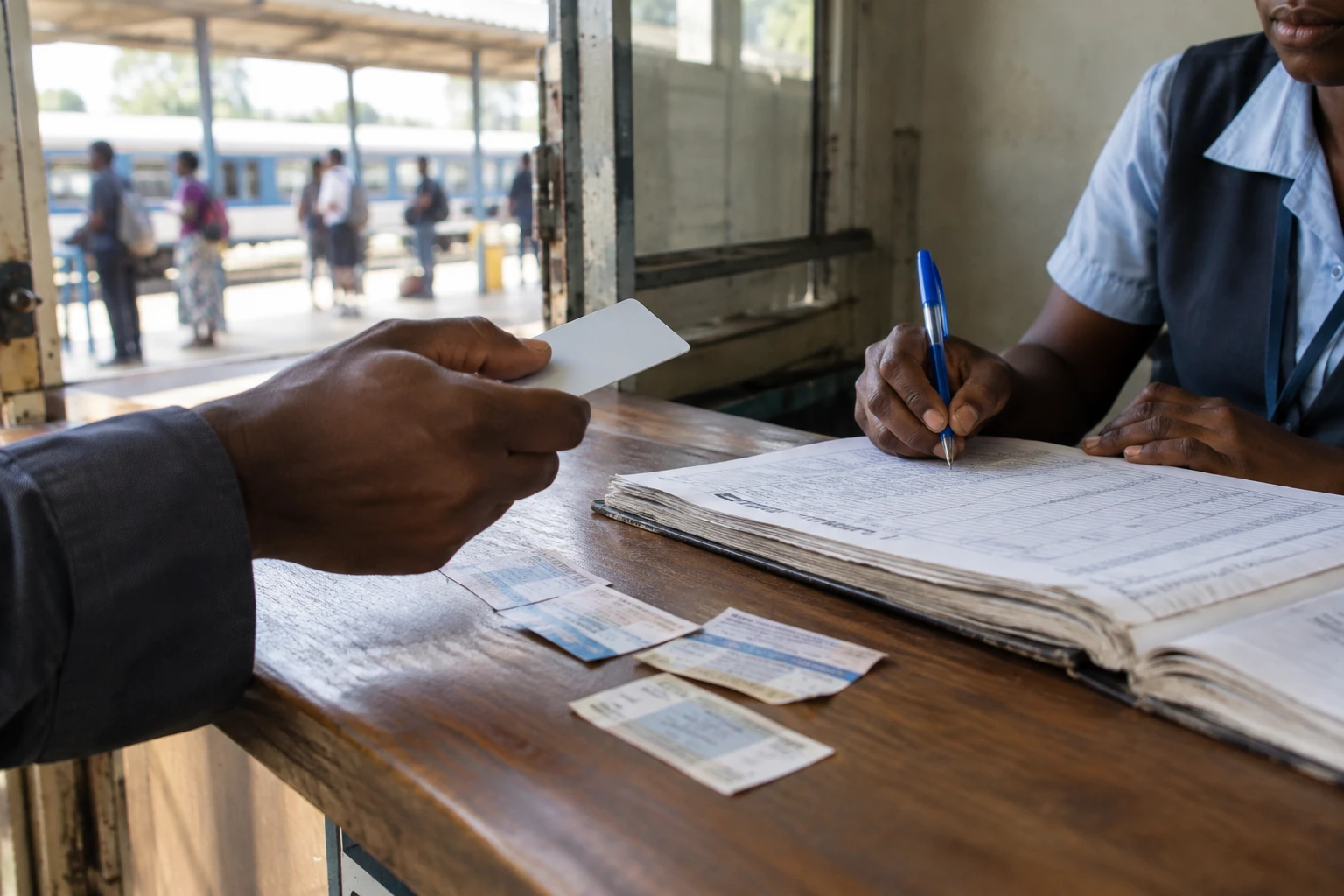
In Kinshasa, reaching N’Djili Airport from the city centre can depend as much on traffic jams as on distance. The MetroKin project promises another option. But several steps remain between announced funding and a regular, affordable train actually in service.
A rail project in a capital under pressure
The capital of the Democratic Republic of the Congo is home to a large population and economic activity that extends well beyond its centre. Daily travel relies heavily on roads. This dependence weighs on the journeys of workers, traders and travellers, while outlying neighbourhoods are often far from major employment and service hubs.
MetroKin forms part of a broader plan for an urban rail network of around 300 kilometres, to be developed in several stages. The first would link the central station to N’Djili International Airport. Africa Finance Corporation (AFC), a pan-African financial institution specialising in infrastructure, is working on the project with the Congolese authorities and relevant partners. In 2024, AFC and Alstom announced a cooperation agreement to advance this first link. The AFC-Alstom partnership on Kinshasa’s urban train
The project also involves national institutions, including the Ministry of Transport, the National Transport Office (ONATRA) and the Airports Authority (RVA). Their coordination will be crucial: the line is intended to connect rail and airport infrastructure that is not run by a single operator.
$877 million announced for the first phase
The Congolese Ministry of Transport announced on 8 October 2026 that contracts governing the implementation of MetroKin had been signed in Kinshasa. These include interface agreements between MetroKin, ONATRA and the RVA, as well as a state support and guarantee agreement. The documents are intended to organise cooperation among the parties involved. The Congolese Ministry of Transport’s statement on MetroKin
Funding of $877 million for the first phase was reported following agreements reached with AFC in Dubai on 12 October. This figure is attributed to announcements made about the agreement; public details of the financial commitments, their disbursement schedule and their conditions remain to be clarified. It is therefore important to distinguish announced funding from money already paid out or completed works.
The first section is described as an electrified double-track railway linking the central station and N’Djili Airport. The published programme includes eight stations, footbridges, bridges and drainage works. However, project documents specify a technical track length of 22.282 kilometres, while public communications often round the route up to 25 kilometres. The two figures should not be conflated without clarification of the scope being used. Specifications published by the MetroKin project
The authorities cite a capacity of up to 520,000 passengers a day. This is a stated target, not recorded ridership. Reaching it will require details on the number of trains, their frequency, timetables, connections and fares.
Funding does not resolve the challenges of running the service
A railway can reduce dependence on roads along a particular route. Its impact on travel across the city, however, will depend on how well it fits into the urban network. From the stations, passengers will need reliable connections to neighbourhoods, markets and workplaces. Without this continuity, the train risks being useful mainly to travellers whose journeys start or end near the line.
Fares will also affect its usefulness for daily travel. Residents with regular incomes and airport travellers do not face the same constraints as workers in the informal economy, for whom every transport expense matters. A frequent service that is too expensive for some users would only partly change travel habits.
Energy is another challenge. The project envisages an electrified line, which requires a sufficiently stable power supply, maintained equipment and trained teams. Operating costs and maintenance will need to be planned from the outset. Otherwise, delays, service interruptions or fare increases could undermine passengers’ confidence.
Finally, construction will have to be coordinated with existing roads, bridges and occupied spaces. Past experience is a reminder that MetroKin is not a project without earlier groundwork: in 2022, the Congolese Press Agency reported that the state had set aside an initial $20 million to prepare the project, which was then planned in four phases. The shift from these planning announcements to announced funding of $877 million marks a new stage, but does not in itself provide the full timetable or final cost. The ACP report on MetroKin’s early stages
A test for urban transport in Central Africa
For the DRC, the project will test the ability of the state, public operators and financial partners to deliver major infrastructure together. Kinshasa’s residents will be most directly affected, but the stakes go beyond the capital: major cities in Central Africa are also seeking to better connect their neighbourhoods and economic hubs, despite very different resources and networks.
The next step will be to track how the agreements are put into practice: the funding timetable, the start of construction, the cost to users and the arrangements for management. The project ultimately envisages a network far more extensive than the link to N’Djili. Its real impact, however, will first be measured on this initial line: by the regularity of the service, the time saved and whether people on different incomes can use it every day.