Algeria
 Egypt
 Libya
 Morocco
 Sudan
 Tunisia
 Benin
 Burkina Faso
 Cabo Verde
 Côte d'Ivoire
 Ghana
 Guinea
 Guinea-Bissau
 Liberia
 Mali
 Mauritania
 Niger
 Nigeria
 Senegal
 Sierra Leone
 The Gambia
 Togo
 Cameroon
 Central African Republic
 Chad
 Equatorial Guinea
 Gabon
 Republic of the Congo
 São Tomé and Príncipe
 Burundi
 Comoros
 Djibouti
 Eritrea
 Ethiopia
 Kenya
 Madagascar
 Malawi
 Mauritius
 Mozambique
 Rwanda
 Seychelles
 Somalia
 South Sudan
 Tanzania
 Uganda
 Angola
 Botswana
 Eswatini
 Lesotho
 Namibia
 South Africa
 Zambia
 Zimbabwe
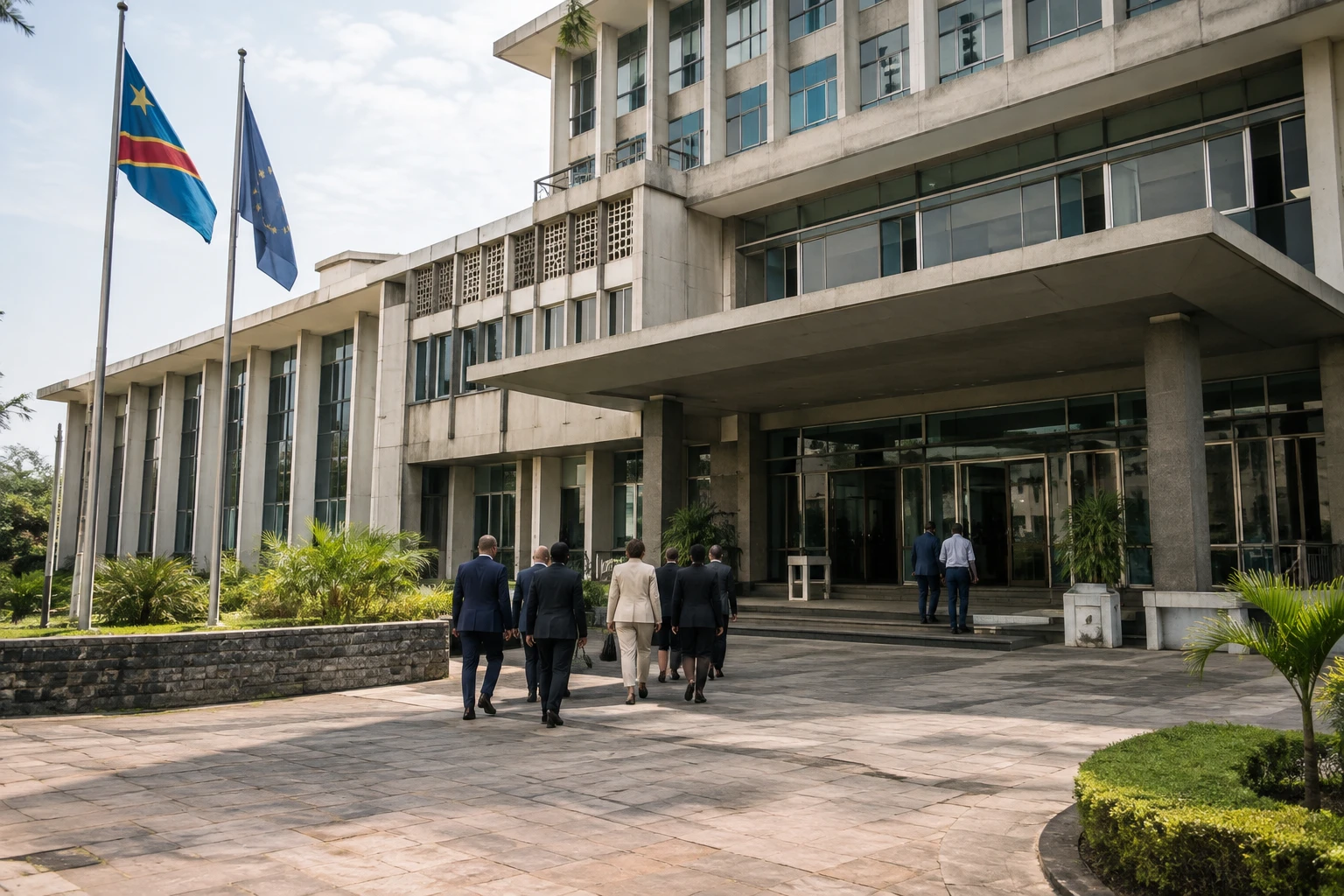
A judicial investigation in Belgium into suspicions linked to mining activities has revived a sensitive question in the Democratic Republic of the Congo: how can the country defend its sovereignty without obstructing the independent work of the courts? In Kinshasa, the presidency’s immediate response was to tighten contacts with the Belgian embassy.
A judicial investigation, followed by restricted diplomatic channels
On 14 October 2026, searches took place in Brussels and several municipalities in Flemish Brabant and Walloon Brabant. Belgium’s federal prosecutor’s office confirmed the operations as part of a money-laundering investigation, without naming those concerned. Searches do not amount to an indictment or a finding of guilt.
The investigation follows complaints filed in July 2025 by civil society organisations and former officials of Gécamines, the Congolese state-owned mining company. The complainants allege acts of corruption and embezzlement linked to mining activities and subcontracting in Haut-Katanga and Lualaba. These allegations remain to be established by the courts. An overview of the searches and complaints that gave rise to the investigation distinguishes confirmed facts from allegations.
The following day, a circular signed by Anthony Nkinzo, chief of staff to President Félix Tshisekedi, instructed members of the presidential staff to suspend, until further notice, all direct or indirect contact with the Belgian embassy and its personnel. Any necessary communications must go through the Congolese Ministry of Foreign Affairs. The measure applies to the presidency’s services; it does not announce a severing of diplomatic relations between the two states.
Also on 14 October, Minister of State for Foreign Affairs Thérèse Kayikwamba Wagner received Belgian ambassador Roxane de Bilderling. Congolese authorities described the meeting as an exchange on bilateral relations. The timing links the meeting, the searches and the circular, but is not enough to prove that one directly caused another.
Allegations touching on mineral resources
The judicial case concerns allegations involving people close to the head of state and mining activities in the country’s south-east. The proceedings began with complaints filed in Belgium by Congolese actors, including organisations from the Katanga region. This local origin matters: the case is not simply the result of a foreign initiative, even though the investigative steps are being carried out by the Belgian courts.
According to information published about the investigation, the complainants cite suspicions of corruption and money laundering linked to resources from Haut-Katanga and Lualaba. Not all those targeted have been publicly identified, and the prosecutor’s office has not detailed the properties searched. It is therefore important to distinguish the complaints, which set out their authors’ accusations, from judicial findings, which are not yet known.
Denise Nyakeru Tshisekedi has said she was surprised by the operations and intended to co-operate with the Belgian judicial authorities. This statement does not prejudge the course of the investigation. It also makes clear that the presidential family’s response is playing out on a judicial track distinct from the political decision taken in Kinshasa.
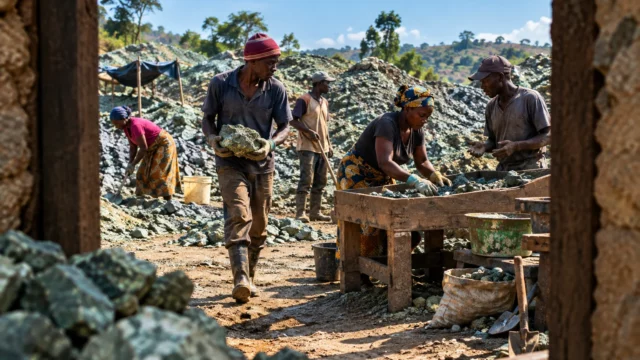
Mineral resources are central to public finances, employment and debates over the redistribution of revenue in the DRC. In producing provinces, disputes over contracts, subcontractors and revenue oversight have consequences extending beyond the circles of power: they also affect workers, local businesses and communities living near mining sites.
Brussels and Kinshasa face the risk of escalation
Belgian Foreign Minister Maxime Prévot said Brussels took note of the restriction and deplored it. He hoped it would be temporary and said other diplomatic channels remained active. Belgium has therefore announced no retaliatory measure, according to the information available. Belgium’s response and the stated scope of the circular shed light on the immediate significance of the episode.
The presidential measure appears to centralise contacts rather than close all channels between the two countries. But that distinction does not remove the possible effects of more limited access to senior presidential officials. Political dialogue, co-operation and the handling of consular matters could become more dependent on official channels. The Belgian embassy in Kinshasa has jurisdiction across all provinces, with particular consular responsibilities in Lubumbashi for some south-eastern provinces.
For Congolese and Belgian people, the bilateral relationship is not limited to heads of state. It includes consular services, economic exchanges and personal ties maintained between the two countries. A restriction targeting the presidential staff does not automatically mean those services will be interrupted. How the authorities implement the circular will therefore matter as much as its announcement.
Belgium and the DRC have a closely intertwined political history, but this closeness does not exempt either government from accounting for its decisions. Kinshasa can defend national sovereignty and seek explanations about a foreign proceeding. Brussels, for its part, must allow the investigation to run its course and respect the presumption of innocence. The credibility of both positions will depend on the transparency and restraint of their authorities.
The next steps will unfold on two fronts
In the short term, two developments are worth watching: any clarification from the Congolese presidency on the circular’s duration and terms, and the Belgian courts’ next steps in an investigation that is still under way. The meeting between the Congolese minister and the ambassador shows that official exchanges took place; the subsequent restriction could, however, complicate their continuation at presidential level.
At regional and continental level, the case raises a concrete question for producer countries: how should allegations concerning mining revenues be handled when the actors, companies and assets involved cross several borders? Judicial co-operation between states can help establish the facts, provided procedural safeguards are preserved and an investigation is not turned into an instrument of diplomatic pressure.
For now, no public information allows us to conclude that the searches established an offence or that the circular amounts to a diplomatic break. The courts must determine the alleged facts; the Congolese and Belgian authorities, for their part, will have to prevent the case from blocking institutional relations beyond what the proceedings require.