Algeria
 Egypt
 Libya
 Morocco
 Sudan
 Tunisia
 Benin
 Burkina Faso
 Cabo Verde
 Côte d'Ivoire
 Ghana
 Guinea
 Guinea-Bissau
 Liberia
 Mali
 Mauritania
 Niger
 Nigeria
 Sierra Leone
 The Gambia
 Togo
 Cameroon
 Central African Republic
 Chad
 DR Congo
 Equatorial Guinea
 Gabon
 Republic of the Congo
 São Tomé and Príncipe
 Burundi
 Comoros
 Djibouti
 Eritrea
 Ethiopia
 Kenya
 Madagascar
 Malawi
 Mauritius
 Mozambique
 Rwanda
 Seychelles
 Somalia
 South Sudan
 Tanzania
 Uganda
 Angola
 Botswana
 Eswatini
 Lesotho
 Namibia
 South Africa
 Zambia
 Zimbabwe
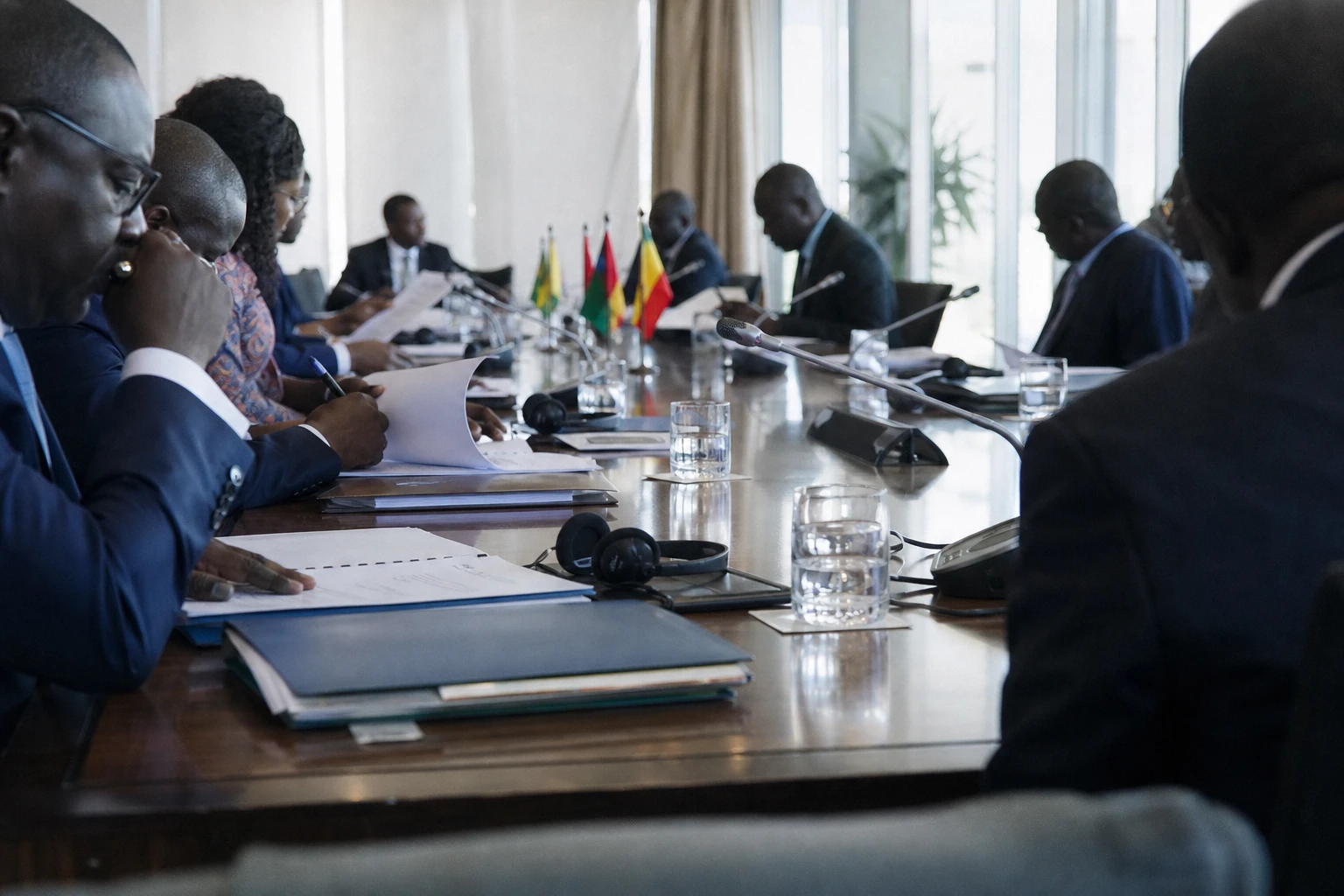
In Fatick and Kaffrine, local networks have taken precedence over yesterday’s loyalties
In Senegal, politics is not played out only within parties. It is also measured in town halls, departmental councils and neighbourhood strongholds. That is where real majorities are built, especially when a government seeks to consolidate its base beyond the presidential election. The developments around Kiiraay, the new formation launched by Bassirou Diomaye Faye, illustrate precisely this logic of realignment on the ground.
On 25 July 2026, the Senegalese president launched Kiiraay – Les Patriotes Républicains in Dakar, presenting it as the vehicle for organising his majority. A few weeks later, several local elected officials began joining the new structure. Pressure is all the greater in the centre of the country, where Fatick remains a symbolic stronghold: the region is associated with Macky Sall, the former president, and remains an important marker for the Alliance for the Republic, his party.
What the facts show: seven mayors from Fatick, followed by a political figure from Kaffrine
The latest signal from the ground concerns seven mayors in the department of Fatick, who were reported to have joined Kiiraay in a collective move last weekend. The news was carried by several Senegalese media outlets, including Senego, which said the elected officials came from the former head of state’s political heartland. This is consistent with the forceful statement issued by the APR in late July, which had already denounced the “poaching” of local elected officials in favour of the new presidential movement.
Before this group of mayors, Abdoulaye Seydou Sow also left the APR. The mayor of Kaffrine, former Minister of Urban Planning and vice-president of the Senegalese Football Federation announced in mid-September that he was creating his own movement, the Pacte républicain. Several Senegalese media outlets confirmed his departure, noting that it comes at a time when the former ruling party is visibly weakening.
The APR’s response has been defensive. Oumar Youm, a party figure and former minister, played down the departures, pointing out that joining a party is a matter of choice, and so is leaving one. But he also acknowledged, according to reports in several media outlets, that more than half of the approximately 400 mayors linked to the APR had joined the Kiiraay presidential movement in recent months. This figure should be treated as a political estimate, not as a verified administrative tally.
A realignment that goes beyond party infighting
This series of departures first says something about Senegal’s current political moment. Since the 2024 transfer of power, the government has sought to turn electoral momentum into a lasting structure. The launch of Kiiraay meets that need: to organise the majority, bring its supporters into line and prevent it from remaining a mere grouping of different tendencies. President Bassirou Diomaye Faye, now also the serving chair of ECOWAS, has an interest in demonstrating a solid domestic base as he takes on major regional issues, from West African security to institutional cohesion.
For the APR, the challenge is the opposite: to prevent further erosion. A party that loses its mayors loses more than a label. It loses intermediaries, mobilisation networks, grassroots resources and the ability to wield influence in the next local contests. In a country where decentralisation gives local authorities a central role in the provision of services and political mediation, a mayor’s departure often amounts to more than a simple change of allegiance. In Fatick and Kaffrine alike, the shift by local elected officials therefore has a tangible impact on municipal balances of power, far beyond Dakar’s political salons.
This development should also be viewed through the lens of Senegal’s political geography. The centre of the country has long been shaped by overlapping loyalties among local notables, the territorial administration and major national parties. When a new majority takes root there, it does more than add members. It redraws channels of power, from access to public projects to alliances ahead of future elections. This is particularly visible in departments where municipal officials remain the main intermediaries between the state and the population.
A national question with regional implications
Senegal is not alone. In West Africa, several recent transfers of power have shown that consolidating government authority often means gaining control of local authorities and reshaping dominant parties. But the equation is even more delicate in Dakar: the country faces strong expectations around institutional stability while also shouldering regional responsibilities within ECOWAS. The strength of the majority therefore matters both for domestic politics and for external credibility.
What happens next will depend on two timelines. On the one hand, Kiiraay’s ability to turn defections into a lasting presence, rather than relying on opportunistic support. On the other, the APR’s capacity to rebuild a credible opposition narrative after losing elected officials who had underpinned its local influence. In the coming weeks, major political events in the centre of the country, mayors’ public statements and any further defections will show whether this wave is merely a transitional episode or the beginning of a deeper realignment in Senegalese politics.