Algeria
 Egypt
 Libya
 Morocco
 Tunisia
 Benin
 Burkina Faso
 Cabo Verde
 Côte d'Ivoire
 Ghana
 Guinea
 Guinea-Bissau
 Liberia
 Mali
 Mauritania
 Niger
 Nigeria
 Senegal
 Sierra Leone
 The Gambia
 Togo
 Cameroon
 Central African Republic
 Chad
 DR Congo
 Equatorial Guinea
 Gabon
 Republic of the Congo
 São Tomé and Príncipe
 Burundi
 Comoros
 Djibouti
 Eritrea
 Ethiopia
 Kenya
 Madagascar
 Malawi
 Mauritius
 Mozambique
 Rwanda
 Seychelles
 Somalia
 South Sudan
 Tanzania
 Uganda
 Angola
 Botswana
 Eswatini
 Lesotho
 Namibia
 South Africa
 Zambia
 Zimbabwe
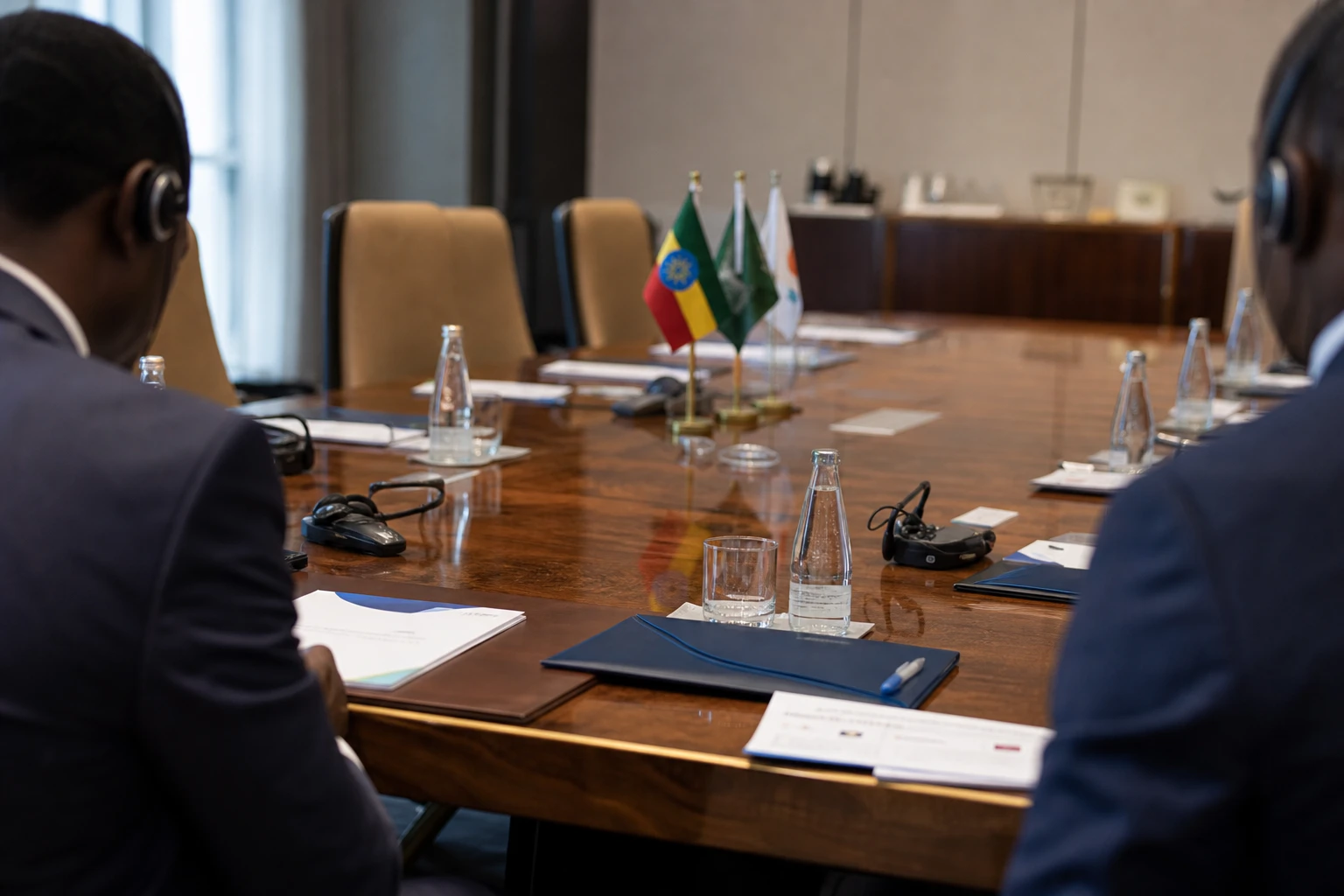
Khartoum seeks to breathe, but the city remains under surveillance
In Khartoum, the lifting of the curfew does not mark a return to normality. It is above all an attempt to reopen the city, street by street, after a war that has disrupted daily life, transport and basic services. Since 27 August, residents have been able to travel and work at any time, but checks remain in place and people must still carry their identity documents.
The decision comes as Sudan remains gripped by conflict between the Sudanese Armed Forces and the Rapid Support Forces, a confrontation that has displaced millions of people and made Sudan’s crisis the world’s largest displacement crisis. In 2025, the UN was still reporting 12 million people displaced within the country and across borders, while the IOM estimated in 2026 that nearly a third of the population had been uprooted at some point.
Gradual normalisation since the authorities returned to Khartoum
The lifting of the curfew did not come out of nowhere. It is part of a series of measures taken since institutions gradually returned to Khartoum. In January 2026, the Sudanese government presented its resumption of work from the capital as a signal of stabilisation, after which the authorities made a series of announcements on restarting the administration and securing the city.
On the ground, however, security remains fragmented. In June and July 2026, the committee tasked with enforcing state authority in Khartoum ordered an increase in patrols and checkpoints, as well as a crackdown on visible weapons in the city. At the same time, the authorities carried out police operations, with thousands of cases opened and several thousand suspects arrested — a sign that they are seeking to reassert control over urban space rather than announce a complete easing of tensions.
What the end of the curfew means for residents
For Sudanese people in Khartoum, the most tangible change concerns time. Being able to travel and work without time restrictions makes it easier to run small businesses, use informal transport, make deliveries and travel late — all essential in a city where the everyday economy has been deeply damaged. But this freedom remains subject to restrictions. Checks have not disappeared, and the authorities have maintained restrictions on foreigners entering by bus, train or private vehicle, unless they have authorisation.
The contrast between the administrative announcement and material reality is stark. In July 2026, Sudan’s Ministry of Energy acknowledged power cuts that could exceed 18 hours a day in some neighbourhoods, even as people continued to return. The IOM recorded nearly 4 million returns across the country in spring 2026, with Khartoum among the main areas of return, but people are coming back to damaged homes, with highly fragile water and electricity networks.
The testimony of the resistance committees, reported from the capital, sums up this gap: streets can be reopened, but bridges, hospitals, schools and markets destroyed cannot be repaired in a few weeks. Returning families must contend with rubble, shortages and residual security risks, while residents who stayed continue to live with reduced public services.
A political as well as administrative issue
The lifting of the state of emergency in the capital also has political significance. Khartoum is not just any city. It is Sudan’s institutional heart, where the credibility of central government is at stake, and a symbol of a country trying to restore administrative continuity after more than three years of war. By gradually reopening the capital, the authorities are seeking to show that they have regained control of the territory, movement and services.
This reading must, however, be qualified. Control of Khartoum will resolve neither the war, nor regional divisions, nor tensions between the army, allied groups and civilians. The African Union continues to closely monitor the situation in Sudan through its Peace and Security Council, which reaffirmed in February 2026 the need for a return to civilian government and an end to the crisis based on the interests of Sudanese citizens. The resumption of activity in Khartoum therefore matters to the AU too, as it tests its ability to support a transition that remains incomplete.
What to watch in the coming weeks
What happens next will depend on three areas of work. First, security in the capital in practice, since lifting a curfew is not enough to eliminate the movement of weapons or predatory networks. Second, the restoration of services, especially electricity, water, healthcare and transport. Finally, the authorities’ ability to turn returns into lasting resettlement, without forcing families to return to neighbourhoods that remain uninhabitable.
Across Africa, Khartoum remains a test. A test for the Sudanese state, which wants to prove it can restore order without closing down civic space. A test for regional organisations, particularly the AU, which must reconcile political mediation, humanitarian aid and pressure for a negotiated settlement. And, finally, a test for African cities emerging from war: the end of the sirens is not the end of conflict, but often the beginning of a long, uneven and decisive reconstruction.