Egypt
 Libya
 Morocco
 Sudan
 Tunisia
 Benin
 Burkina Faso
 Cabo Verde
 Côte d'Ivoire
 Ghana
 Guinea
 Guinea-Bissau
 Liberia
 Mali
 Mauritania
 Niger
 Nigeria
 Senegal
 Sierra Leone
 The Gambia
 Togo
 Cameroon
 Central African Republic
 Chad
 DR Congo
 Equatorial Guinea
 Gabon
 Republic of the Congo
 São Tomé and Príncipe
 Burundi
 Comoros
 Djibouti
 Eritrea
 Ethiopia
 Kenya
 Madagascar
 Malawi
 Mauritius
 Mozambique
 Rwanda
 Seychelles
 Somalia
 South Sudan
 Tanzania
 Uganda
 Angola
 Botswana
 Eswatini
 Lesotho
 Namibia
 South Africa
 Zambia
 Zimbabwe
A speakership that goes beyond symbolism
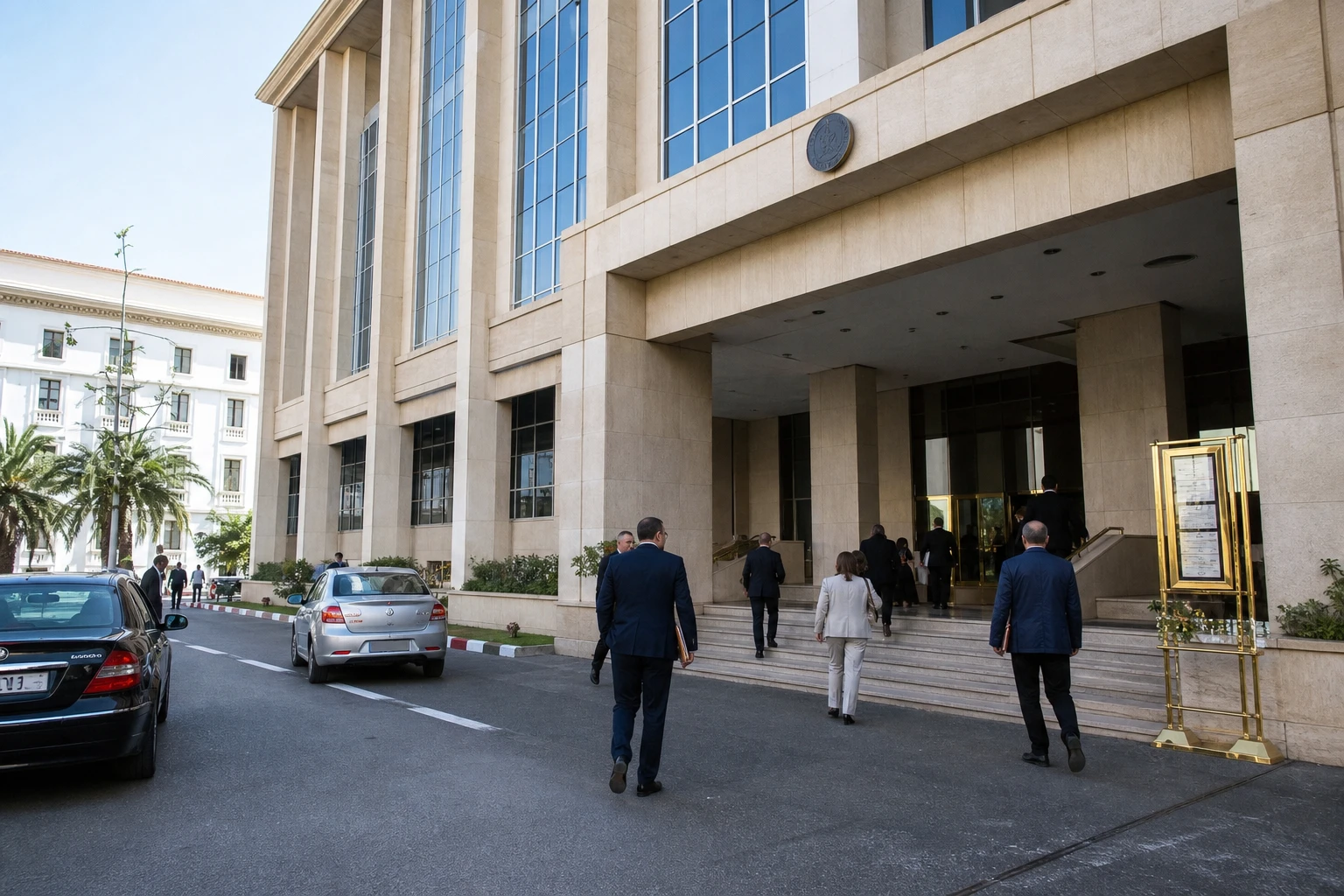
In Algiers, the tenth legislature of the National People’s Assembly has opened a new chapter. For the first time, a woman has taken the helm of the lower house of Algeria’s parliament. The move matters beyond the wording. In a country where women remain under-represented in national assemblies, the appointment sends a clear political signal.
Algeria is not starting from scratch when it comes to women’s presence in public life. Laws, election campaigns and official speeches have often highlighted the place of Algerian women in the state and society. But access to the highest parliamentary offices remained a visible glass ceiling. The novelty of this moment is therefore both institutional and symbolic: it concerns the pinnacle of political representation, at the heart of the capital, Algiers.
Algeria’s institutional context
The election comes just after the parliamentary elections of 2 July 2026, which renewed the National People’s Assembly for a new legislature. More than 24 million voters were called to the polls, and the new parliamentary session opened on 28 July at 10am, according to the institution’s official timetable. The lower house is thus entering a period in which its leadership bodies and committees are being set up.
The choice of a woman as president of the NPA also comes at a time when Algeria’s institutions are seeking to project stability, continuity and a capacity for reform. For several months, parliament has been working on sensitive legislation, notably on territorial organisation, political parties and other institutional adjustments. In this context, leading the NPA is not merely an honorary position. The role carries weight in setting the legislative pace and agenda, and in shaping relations between the government and MPs.
Khalida Boufedeche’s career
The new president of the Assembly, Khalida Boufedeche, comes from the wilaya of Algiers and the National Liberation Front, the party that still dominates much of Algeria’s political architecture. Her profile combines grassroots experience, local roots and a career in the health sector. She first served in a municipal assembly, then in a wilaya assembly, before entering the lower house in 2026. This trajectory makes her appointment look more like continuity than rupture.
The details also matter: in a parliament where legitimacy often rests on party affiliation, managing electoral ground campaigns and close ties with local administration, her rise demonstrates the continuing importance of traditional political networks. This is therefore not simply a victory for women’s representation. It also confirms that institutional career paths remain central to securing the state’s most prominent positions.
A signal for women and for political life
The significance of this election is first and foremost national. In Algeria, women remain under-represented in parliaments, although their presence has gradually become more established across several areas of the public sector. According to UN Women’s database, the share of seats held by women in the Algerian parliament remained low in February 2024. The election of a woman as president of the NPA will not, on its own, correct this imbalance, but it shifts the symbolic centre of gravity.
For MPs, the immediate question is how the institution will function. A parliamentary president organises debates, arbitrates the schedule of proceedings and represents the chamber in its dealings with the executive. For citizens, the issue is more concrete: whether the new legislature will produce clear legislation, stronger scrutiny of government action and closer links with everyday concerns, from purchasing power and employment to public services. The image matters. But practice will matter more.
Regional and continental resonance
Across North Africa and the Arab world, Algeria is sending a signal beyond its borders. African and international institutions are closely monitoring the place of women in decision-making bodies, as it remains a straightforward indicator of democratic vitality. At continental level, the African Union’s Agenda 2063 stresses women’s full participation in political life. A woman’s presidency of Algeria’s NPA therefore forms part of this wider effort, without erasing the deeper shortfalls in representation.
What follows will show whether this moment remains a symbol or opens a broader phase. The real question, for Algiers and the rest of the continent, is this: will this change at the top of parliament be followed by wider access to positions of responsibility in committees, debates and the laws passed? That is where the political significance of an institutional choice is measured in practice.