Algeria
 Egypt
 Libya
 Morocco
 Sudan
 Tunisia
 Benin
 Burkina Faso
 Cabo Verde
 Côte d'Ivoire
 Ghana
 Guinea
 Guinea-Bissau
 Liberia
 Mali
 Mauritania
 Niger
 Nigeria
 Senegal
 Sierra Leone
 The Gambia
 Togo
 Cameroon
 Central African Republic
 Chad
 Equatorial Guinea
 Gabon
 Republic of the Congo
 São Tomé and Príncipe
 Burundi
 Comoros
 Djibouti
 Eritrea
 Ethiopia
 Kenya
 Madagascar
 Malawi
 Mauritius
 Mozambique
 Rwanda
 Seychelles
 Somalia
 South Sudan
 Tanzania
 Uganda
 Angola
 Botswana
 Eswatini
 Lesotho
 Namibia
 South Africa
 Zambia
 Zimbabwe
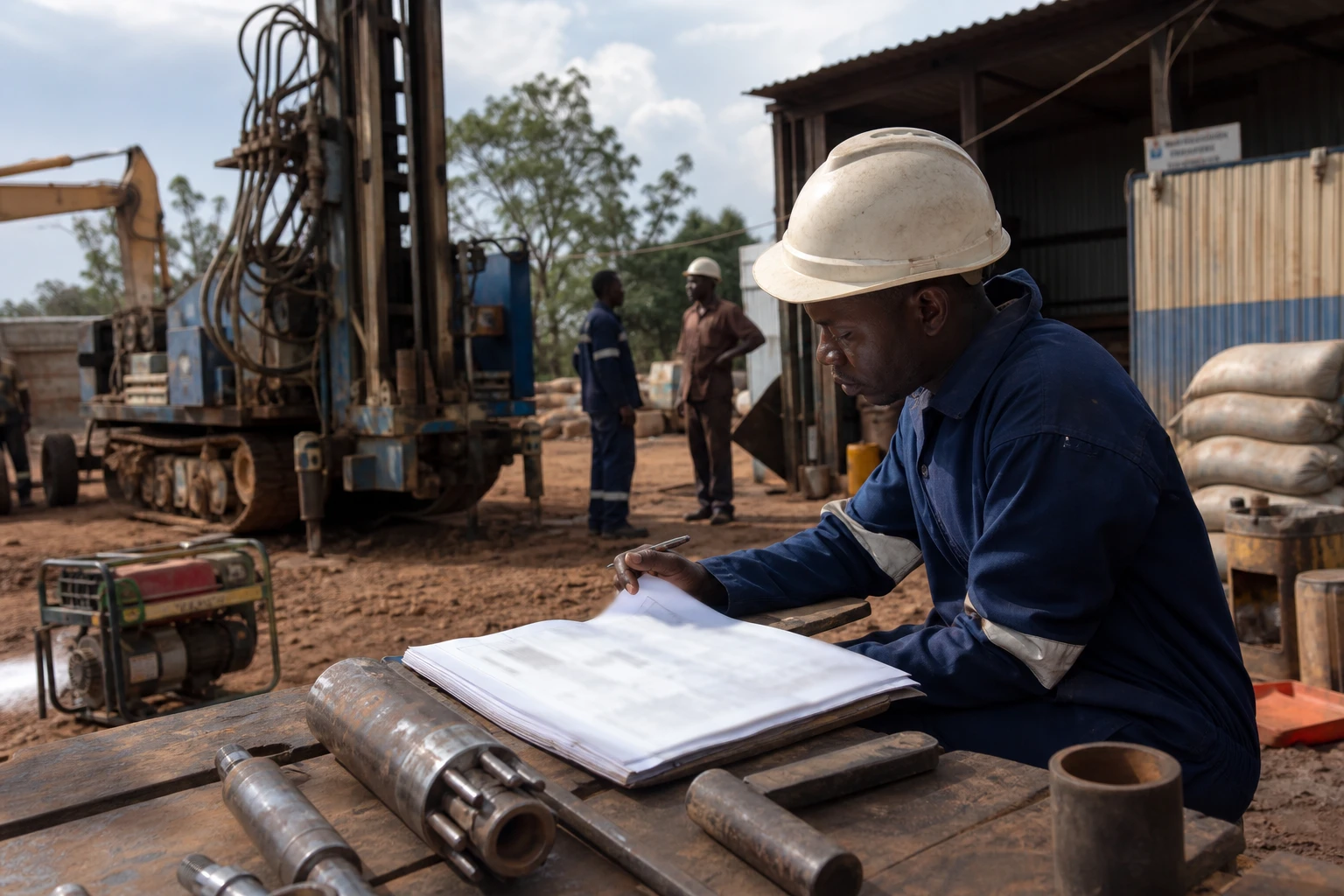
Small-scale mining: formalisation promised, resources lacking
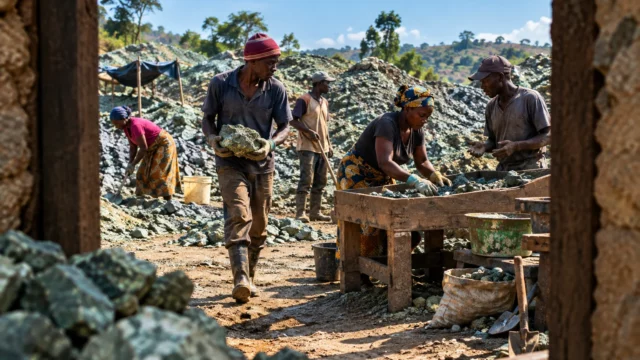
In Kasai Oriental, mining is not just about deposits. It also affects local employment, site safety and the state’s ability to turn a subsistence activity into an organised economy. That is the central issue in the debate over moving from artisanal mining to mechanised small-scale mining, a more regulated and capital-intensive model that should, in theory, be subject to better oversight.
The Democratic Republic of the Congo has already established the framework. The Mining Code and its 2018 reform reserve artisanal mining for adult Congolese organised in approved cooperatives, while the SAEMAPE is responsible for overseeing the sector. Separately, the 2023 decree on mining royalties allocates 8% to the Mining Fund for Future Generations, reflecting the view that mining governance should serve as a long-term lever.
What SAEMAPE is calling for
SAEMAPE director general Jean-Paul Kapongo Kadiobo is calling for financial support to mechanise cooperatives and help them move from artisanal to small-scale mining. His argument is simple: without capital, it is difficult to develop deposits beneath the surface layer, carry out mechanised overburden removal and build local processing facilities. However, the official did not specify the amount sought, the timetable or the precise funding model.
In his appeal, he also invokes the spirit of the Mining Code, which regulates surface rights and provides for payments to the mining administration. The debate is not new, but it is taking on a more practical dimension as artisanal mining remains widespread, while too often escaping traceability, taxation and safety standards.
Jean-Paul Kapongo is also calling for the legal funding mechanisms for the sector to be applied more rigorously. He refers in particular to the principle of revenue transfers and institutional support provided for under mining law, without specifying whether the Mining Fund for Future Generations, the provincial budget or other public funding channels would be prioritised. This lack of detail leaves a central question unanswered: who will finance the transition, and what safeguards will ensure it is monitored?
A mining province, but still under-equipped
In Kasai Oriental, funding is not the only obstacle. A shortage of artisanal mining zones, known as ZEA, is making formalisation more difficult. SAEMAPE estimates that the province has only four ZEA for around 28 mining cooperatives. The figure, cited by its director general, highlights the gap between the number of operators on the ground and the areas officially allocated.
Energy shortages are just as significant. Small-scale mining requires equipment, workshops, pumping, crushing and sometimes on-site processing facilities. Yet in a province where electricity remains unreliable and some towns still have fragile infrastructure, mechanisation cannot depend on administrative will alone. It requires a logistical base, passable roads and a stable power supply.
The issue is particularly sensitive as Kasai Oriental seeks to diversify its mining profile. In May and June 2026, several developments confirmed renewed interest in copper in the Miabi and Kabeya-Kamwanga area, with projects presented in Kinshasa and prospecting work launched in Katende. These moves point to a clear trend: the province no longer wants to be defined solely by diamonds, and is seeking to reposition itself around strategic minerals.
What this means for cooperatives and the state
For cooperatives, small-scale mining could offer a way out of the most precarious forms of informality. It could bring better organisation of work, clearer access to authorised areas and, potentially, more regular income. But the transition comes at a cost. Without funding, it risks remaining a technical slogan beyond the reach of less-capitalised groups. In that case, the most vulnerable would continue working with rudimentary equipment, while better-connected operators would capture the few opportunities for mechanisation.
For the state, there are two priorities. One is to formalise an activity that supports thousands of families and needs closer oversight to prevent accidents, disputes over sites and tax losses. The other is to show that legislation is not just words on paper. SAEMAPE has already stepped up its recent initiatives, including a memorandum of understanding with GIZ signed in Lubumbashi on 15 June 2026 to strengthen oversight of artisanal and small-scale mining. The current appeal is therefore part of a broader drive to professionalise the sector.
There is also a governance challenge. Securing ZEA, clarifying the roles of technical services, provinces and cooperatives, and improving access to energy will determine whether the reform is credible. If these three elements do not keep pace, the shift to small-scale mining could create new tensions rather than upgrade the sector.
A Congolese issue with regional significance
The issue extends beyond Kasai Oriental. In Central Africa and further afield, the DRC is being watched for its ability to supply strategic minerals while improving traceability and local benefits. Congolese copper and cobalt remain central to the global energy-transition value chains. In this context, the way Kinshasa organises artisanal mining has continental significance: it will show whether the wealth beneath the ground can be better captured for the benefit of producing regions.
The next steps will depend on very practical decisions: funding, the allocation of ZEA, the arrival of equipment, the capacity of the electricity grid and administrative oversight. If these levers move forward together, small-scale mining could become a genuine stage in local development. Otherwise, the sector will remain caught between industrial potential and a hand-to-mouth economy.