Algeria
 Egypt
 Libya
 Morocco
 Sudan
 Tunisia
 Benin
 Burkina Faso
 Cabo Verde
 Côte d'Ivoire
 Ghana
 Guinea
 Guinea-Bissau
 Liberia
 Mali
 Mauritania
 Niger
 Nigeria
 Senegal
 Sierra Leone
 The Gambia
 Togo
 Cameroon
 Central African Republic
 Chad
 Equatorial Guinea
 Gabon
 Republic of the Congo
 São Tomé and Príncipe
 Burundi
 Comoros
 Djibouti
 Eritrea
 Ethiopia
 Kenya
 Madagascar
 Malawi
 Mauritius
 Mozambique
 Rwanda
 Seychelles
 Somalia
 South Sudan
 Tanzania
 Uganda
 Angola
 Botswana
 Eswatini
 Lesotho
 Namibia
 South Africa
 Zambia
 Zimbabwe
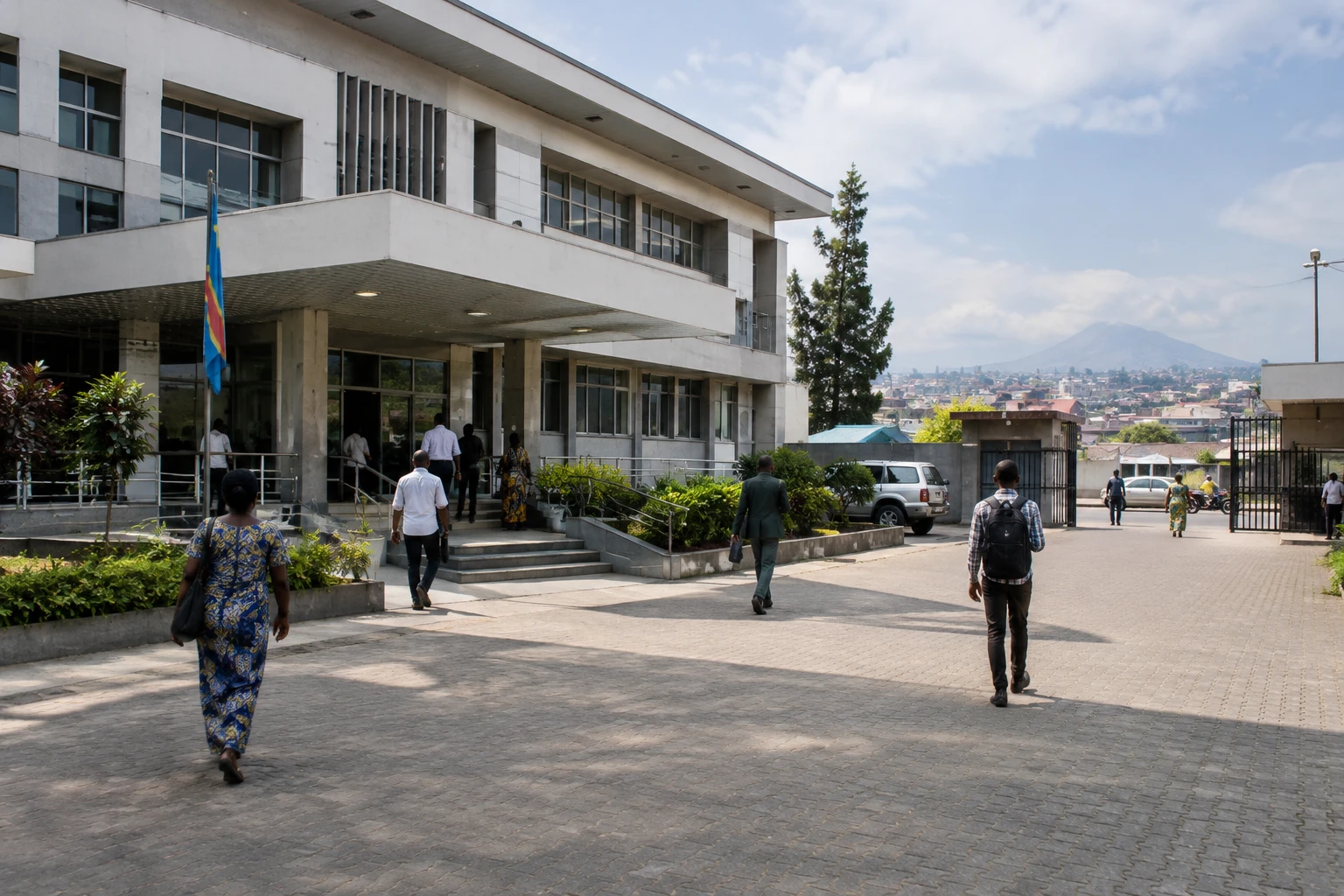
In Goma, the creation of a new coalition led by former president Joseph Kabila further blurs the line between political opposition and armed insurgency. For residents of the east of the Democratic Republic of the Congo (DRC), however, the immediate stakes remain tangible: fighting and changes in control threaten security, displace people and disrupt access to essential services.
A coalition announced in a rebel-held city
On 12 October 2026, in Goma, Joseph Kabila was presented as the leader of the Front for the Refoundation of the Nation (FRN). The new structure brings together political and military figures linked to the Congo River Alliance (AFC) and the March 23 Movement (M23). Radio Okapi and Actualité.cd reported the announcement from the DRC; the Associated Press news agency also covered it.
According to statements made at its launch, the FRN aims to bring together forces opposed to Félix Tshisekedi’s government. A coalition adviser referred to using “all means, including force”. This wording describes the intention announced by its leaders; in itself, it does not make it possible to predict the scale or direction of any potential offensive.
Actualité.cd reports that the FRN has announced the end of the AFC as a structure. But a change of name or organisation does not mean that armed groups disappear. The AP news agency says that figures associated with AFC/M23 are part of the new coalition. Its chain of command and operational links remain to be seen.
An eastern war already the subject of several negotiations
Since fighting resumed in 2021, the conflict between the Congolese army and M23 has shifted the balance of power in North Kivu and South Kivu provinces. Goma, the capital of North Kivu, came under AFC/M23 control in January 2025. The conflict is also part of regional tensions involving the DRC and Rwanda. Kigali disputes accusations of supporting M23; United Nations experts’ reports nevertheless document Rwanda’s role in the conflict.
Several diplomatic frameworks are addressing the issue. The Southern African Development Community (SADC), a regional organisation of which the DRC is a member, deployed a military mission before beginning its withdrawal in 2025. In parallel, the Doha process is seeking to bring Kinshasa and AFC/M23 closer together. A statement published by Qatar says that discussions continued in August 2026 with the African Union, the United States, Switzerland and Togo, the AU mediator.
This diplomatic architecture relies on identified interlocutors and negotiated commitments. Kabila’s arrival at the head of a coalition that includes AFC/M23 figures therefore raises a practical question: who can commit the movement in discussions and guarantee that an agreement is implemented? Analysts interviewed by the AP say the realignment could complicate negotiations. This is a risk, not yet an established outcome.
Joseph Kabila’s political weight
Joseph Kabila led the DRC from 2001 to 2019. He left office after the December 2018 presidential election, won by Félix Tshisekedi. The two men had previously governed as political allies, before their relationship deteriorated. Since then, Congolese authorities have accused Kabila of links to the insurgency; the former president denies the accusations, which should not be confused with facts established in court.
His presence at the head of the FRN changes the coalition’s political significance: it brings together a former president and groups engaged in an armed struggle against the central government. This does not prove that all his former allies or voters support the move. But the announcement could heighten tensions between Kinshasa and part of the opposition, while making it harder to distinguish political dissent from military action.
For residents of areas under control or contested, these realignments first mean uncertainty. Fighting can disrupt travel, trade and access to healthcare or schools. In towns, businesses and public services are directly exposed to changes in control. In rural areas, people often depend on roads and markets whose security can change rapidly. The SADC statement in 2025 had already highlighted the need to restore essential services in Goma.
What to watch next
The significance of the announcement will depend on verifiable developments: the FRN’s actual composition, its actions on the ground and its position in the Doha negotiations. It will also be important to see whether the Congolese government and mediators adapt their discussion formats to the new structure, or continue to treat AFC/M23 as their interlocutor.
At regional level, the stakes go beyond the balance of power between two leaders. An expansion of the fighting could weigh on efforts by SADC, the East African Community and the African Union to contain the crisis. For Kinshasa and neighbouring capitals alike, the central issue remains a verifiable ceasefire and a political process capable of reducing the fighting without overlooking the consequences for the Congolese people.