Algeria
 Egypt
 Libya
 Morocco
 Sudan
 Tunisia
 Benin
 Burkina Faso
 Cabo Verde
 Côte d'Ivoire
 Ghana
 Guinea
 Guinea-Bissau
 Liberia
 Mali
 Mauritania
 Niger
 Nigeria
 Senegal
 Sierra Leone
 The Gambia
 Togo
 Cameroon
 Central African Republic
 Chad
 DR Congo
 Equatorial Guinea
 Gabon
 Republic of the Congo
 São Tomé and Príncipe
 Burundi
 Comoros
 Djibouti
 Eritrea
 Ethiopia
 Kenya
 Malawi
 Mauritius
 Mozambique
 Rwanda
 Seychelles
 Somalia
 South Sudan
 Tanzania
 Uganda
 Angola
 Botswana
 Eswatini
 Lesotho
 Namibia
 South Africa
 Zambia
 Zimbabwe
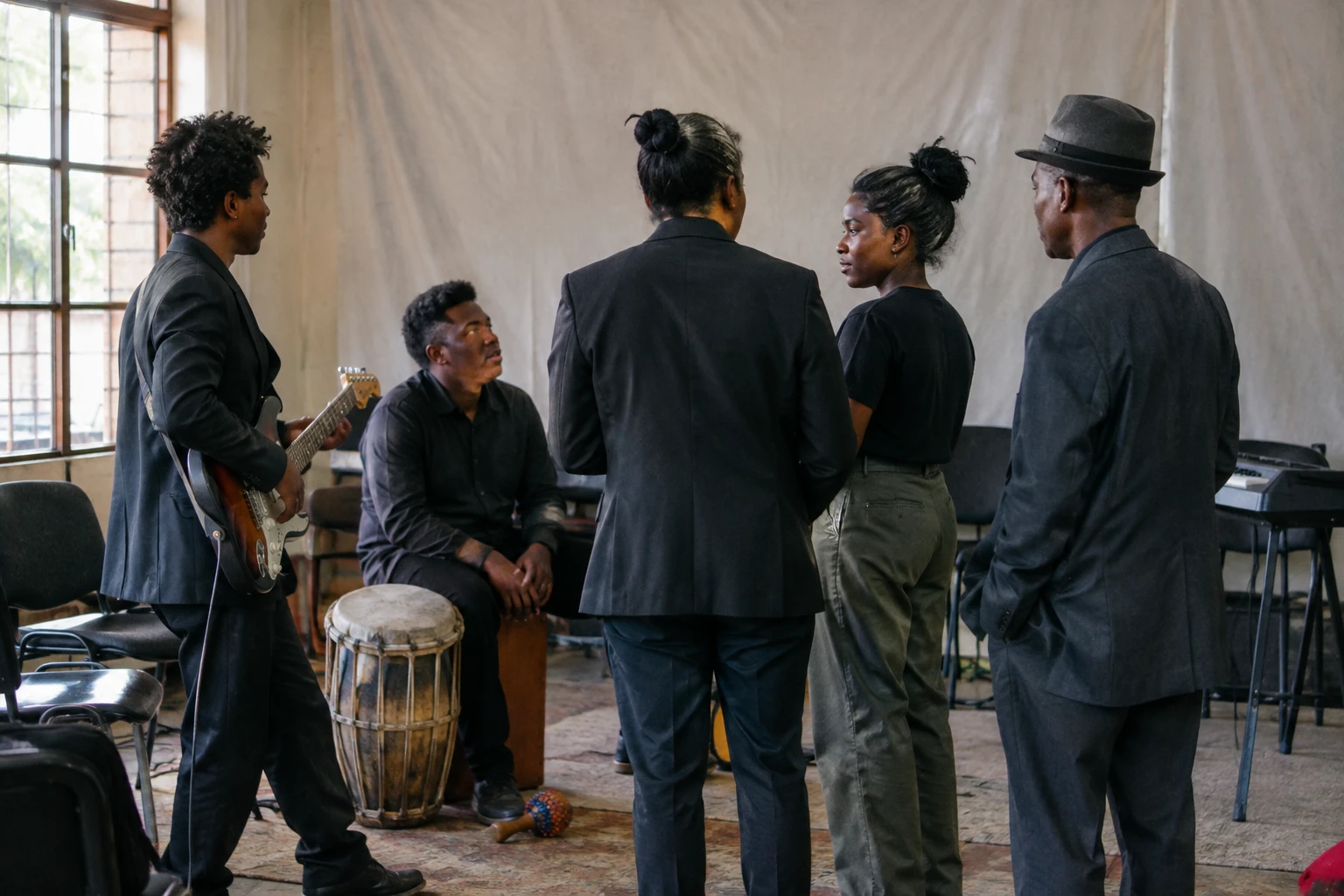
A rhythm can carry a village’s memory all the way to stages around the world. In Madagascar, Eusèbe Jaojoby helped turn salegy into popular music able to connect local traditions, electric instruments and audiences far from the island.
From north-eastern Madagascar to the stages of Antananarivo
Born in 1955 in Amboangibe, near Sambava, in the Sava region, Jaojoby grew up surrounded by traditional songs. At celebrations, he recalls, residents sang together, sometimes a cappella, moving from house to house. These communal practices were among the starting points of his career. Afrisson traces his beginnings in north-eastern Madagascar, while the pan-African media outlet Music In Africa confirms his origins and his role in spreading salegy.
At the age of 15, he moved to Diego-Suarez, now Antsiranana, to continue his studies. A singing competition opened the door to the stage. He later joined Los Matadores, a band that played in the city’s clubs. Jaojoby also performed popular songs and American soul, notably by Otis Redding and James Brown. This encounter between musical repertoires did not erase his roots; rather, it shaped how he made them heard.
Salegy is built around an upbeat rhythm, often described as 6/8, and traditions of song and dance. In its modern form, it combines these foundations with amplified instruments. Jaojoby summed up this blend as an encounter between Malagasy songs and instruments from the West. Researcher Jenny Fuhr also records this definition in her thesis on music and identity in Madagascar. Her academic study documents the musician’s account of the genre’s evolution.
A living genre shaped by generations
Jaojoby is among the artists who helped popularise salegy from the 1980s onwards. In 1987, his contribution to the compilation Les Grands Maîtres du Salegy and the track “Samy Mandeha Samy Mitady” helped make his voice known beyond its original audience. Music In Africa notes that the compilation also introduced variations of the genre to listeners outside Madagascar. The musician did not create a tradition on his own: alongside other Malagasy artists, he played an important role in its modernisation and circulation.
This distinction matters. Reducing salegy to the career of a single star would overlook the communities, musicians and regional styles that have shaped it. Related forms of music sometimes go by other names in different regions. They are heard at celebrations, in cabarets and at concerts, and continue to evolve through new performers. Music In Africa describes salegy’s presence across different Malagasy scenes, while a study by the Centre for Studies and Research on the Indian Ocean also highlights the music’s social and political uses.
Jaojoby’s success is due in part to his ability to bring different legacies into dialogue without freezing them in time. The rhythm brings people together, but does not flatten Malagasy experiences. It invites listeners to hear how a musical form rooted in local practices can become a shared language while retaining its distinctive accents and histories.
Beyond the stage, another professional life
Jaojoby’s career has not been confined to concerts. He has also worked as a radio journalist and held public administration posts at different times. The training he undertook in East Berlin in 1982, mentioned in his account, recalls the international context of the Cold War, when Malagasy people could pursue training in various countries. These experiences trace a path less linear than that of a conventional music career.
He has also served in an advisory capacity to the presidency, according to available biographical information. This temporary proximity to institutions does not, however, sum up his work. Rather, it sheds light on the different spheres in which Malagasy artists have been able to work: the media, public administration, the local music scene and international cultural exchanges.
In Antananarivo, the country’s capital, music is part of a cultural landscape where artists from the regions, urban audiences and independent venues meet. The Jao’s Pub, opened by the musician in the capital, is described by Malagasy sources as a venue hosting artists and concerts. This matters: music is passed on not only through albums and tours, but also in spaces where new talent can perform.
Culture as a story of the country
Madagascar is a member of the Southern African Development Community (SADC), a regional co-operation organisation that includes several countries in the Indian Ocean and southern Africa. Music travels beyond these institutional frameworks through tours, diasporas and exchanges between artists. On this wider stage, Jaojoby’s career is a reminder that Malagasy cultural productions are part of regional and international networks without losing their local roots. SADC lists Madagascar among its member states.
The musician has also voiced environmental concerns. In the account provided, he refers to the destruction of forests and water shortages, and expresses the hope that future generations will join forces to protect the planet. These remarks should be attributed to the artist: on their own, they do not provide a quantified assessment of Madagascar’s environmental situation. They nevertheless show how an artist can link his attachment to his country with concrete issues, without reducing Madagascar to a story solely about its difficulties.
Nearly half a century after his debut, Jaojoby remains a major figure in salegy. His legacy is measured not only by the recognition he has received or the stages he has played. It also rests on a simple idea: traditions are not static. They are passed on, transformed and reinvented, in Madagascar and among Malagasy communities living elsewhere.