Algeria
 Egypt
 Libya
 Morocco
 Sudan
 Tunisia
 Benin
 Burkina Faso
 Cabo Verde
 Côte d'Ivoire
 Ghana
 Guinea
 Guinea-Bissau
 Liberia
 Mali
 Mauritania
 Niger
 Nigeria
 Senegal
 Sierra Leone
 The Gambia
 Togo
 Cameroon
 Central African Republic
 Chad
 DR Congo
 Equatorial Guinea
 Gabon
 Republic of the Congo
 São Tomé and Príncipe
 Burundi
 Comoros
 Djibouti
 Eritrea
 Ethiopia
 Kenya
 Malawi
 Mauritius
 Mozambique
 Rwanda
 Seychelles
 Somalia
 South Sudan
 Tanzania
 Uganda
 Angola
 Botswana
 Eswatini
 Lesotho
 Namibia
 South Africa
 Zambia
 Zimbabwe
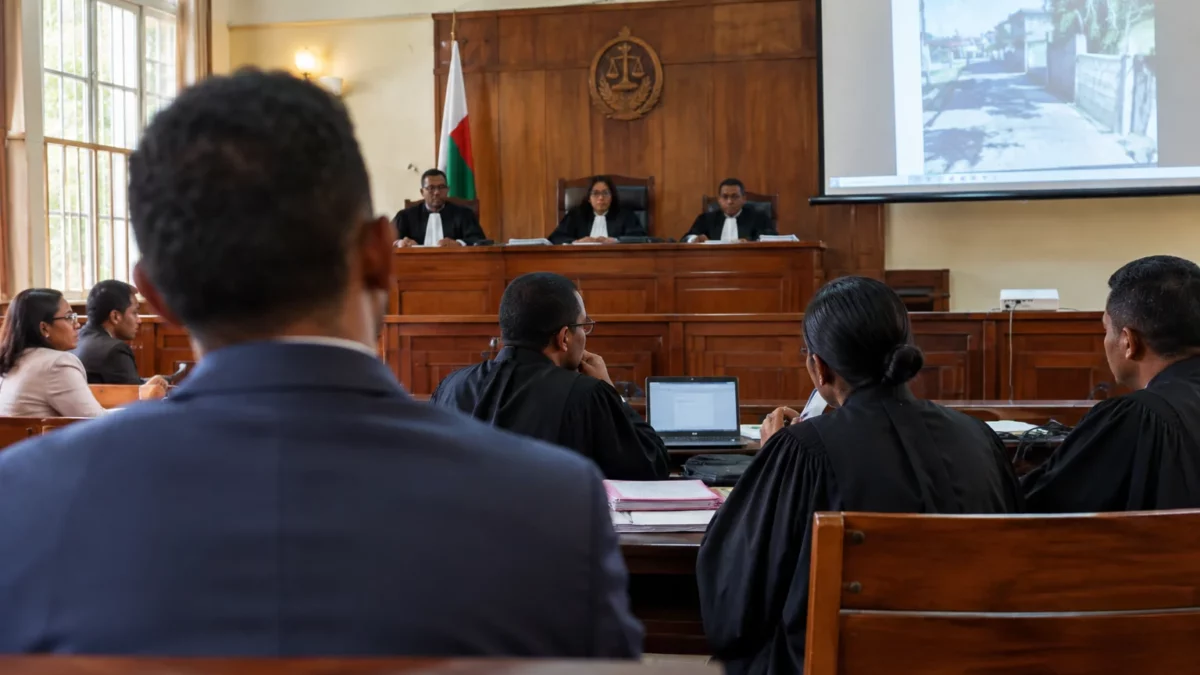
In Antananarivo, the footage shown in the courtroom does not, by itself, reveal the cause of the Ambohimalaza deaths. It does, however, place actions, testimony and accusations at the centre of a trial in which the evidence remains disputed.
Footage that does not yet settle the case
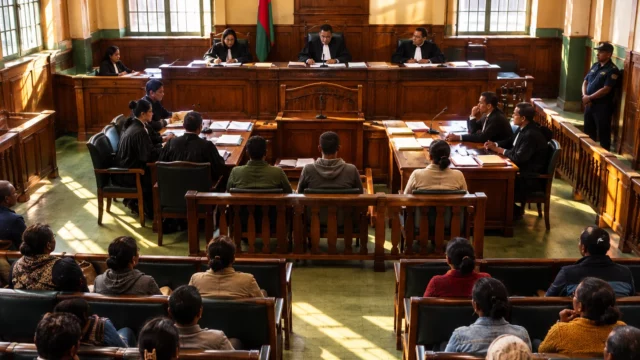
On 20 November 2026, the third day of the trial, the Ordinary Criminal Court watched surveillance recordings made at a birthday party on 14 June 2025, near the Malagasy capital. Thirty-five people died after the meal, according to the toll reported at the opening of the trial. Eleven people are on trial and deny the accusations.
In one sequence, a woman serves herself from the buffet before the festivities begin. The owner of the premises says he recognises his wife, who died in the tragedy. The organiser’s mother, for her part, identifies one of the accused as a cook. The prosecution alleges that a toxic powder was put in the dishes. These identifications are matters discussed in court, not a judicial conclusion.
The Court also played statements recorded during the investigation. An accused traditional healer says the cook asked her for a substance intended to make someone ill. The cook, who initially admitted the charges, has since retracted her confession before the judges. She says the gendarmes extorted it from her. This allegation must be examined in an adversarial process; at this stage, it is not a judicial finding.
Medical and police evidence remains disputed
The proceedings are not concerned solely with what happened around the buffet. The victims’ families are also asking for the gendarmes responsible for the investigation, intensive care doctors and the former health minister to testify. They want to clarify the symptoms observed, the treatment provided at the hospital and the circumstances in which the suspects’ statements were obtained.
The civil parties have called for these witnesses to be heard. The public prosecutor said that a summons procedure was under way, reports Malagasy media outlet 2424.mg on the civil parties’ requests. Their testimony matters beyond the search for someone responsible: medical evidence may help establish the timeline of the symptoms and test hypotheses about the cause of the deaths.
This caution matters because early accounts of the tragedy did not always agree on the death toll or the cause of the illness. An official Malagasy report on 18 June 2025 referred to 20 deaths and said investigations had confirmed food poisoning. Later reports cited a higher toll and questions about medical analyses. The trial must establish what the expert evidence actually shows, without confusing suspicion, laboratory results and proof of guilt.
Transparency tested against judicial safeguards
The hearings have been broadcast live, a measure announced by the Ministry of Justice and reported by the Malagasy press. The broadcasts allow some members of the public to follow proceedings beyond the Anosy courthouse in Antananarivo. But visibility is no substitute for examining the evidence or respecting the rights of the accused and the victims.
In a case attracting such attention, each image can fuel interpretations before the Court has assessed the full case. The distinction is essential: recognising someone in a video does not, in itself, prove that they contaminated a dish; a statement obtained during an investigation must be assessed in light of the circumstances in which it was obtained and the evidence that corroborates it.
The court must therefore weigh several types of evidence: the available recordings, witness testimony, toxicological analyses and medical data. Hearing the investigators could also shed light on allegations of violence and the retraction of confessions. For the relatives, the aim is to obtain verifiable answers. For the accused, it is to be able to answer the charges in a fair trial.
A national issue with regional echoes
Ambohimalaza is first and foremost a Malagasy case, heard by the country’s institutions and painful for the families concerned. It also raises a practical question of public trust: how do health authorities, investigators and the justice system account for a mass-casualty event when the initial explanations remain disputed? The answer will depend on the quality of the expert evidence and whether it can be examined publicly.
Madagascar is a member of the Southern African Development Community (SADC), a regional framework for co-operation between states. The trial is not a regional proceeding, but the rigour of the investigation and judicial transparency form part of wider debates about access to justice and institutional accountability. The SADC lists Madagascar among its members, according to the regional organisation’s institutional document.
What happens next will depend in particular on the hearings requested by the families and the scientific evidence presented to the Court. Until that evidence has been tested, the hypothesis of poisoning and the identity of any potential perpetrators remain at the centre of the debate, not established facts.