Algeria
 Egypt
 Libya
 Morocco
 Sudan
 Tunisia
 Benin
 Burkina Faso
 Cabo Verde
 Ghana
 Guinea
 Guinea-Bissau
 Liberia
 Mali
 Mauritania
 Niger
 Nigeria
 Senegal
 Sierra Leone
 The Gambia
 Togo
 Cameroon
 Central African Republic
 Chad
 DR Congo
 Equatorial Guinea
 Gabon
 Republic of the Congo
 São Tomé and Príncipe
 Burundi
 Comoros
 Djibouti
 Eritrea
 Ethiopia
 Kenya
 Madagascar
 Malawi
 Mauritius
 Mozambique
 Rwanda
 Seychelles
 Somalia
 South Sudan
 Tanzania
 Uganda
 Angola
 Botswana
 Eswatini
 Lesotho
 Namibia
 South Africa
 Zambia
 Zimbabwe
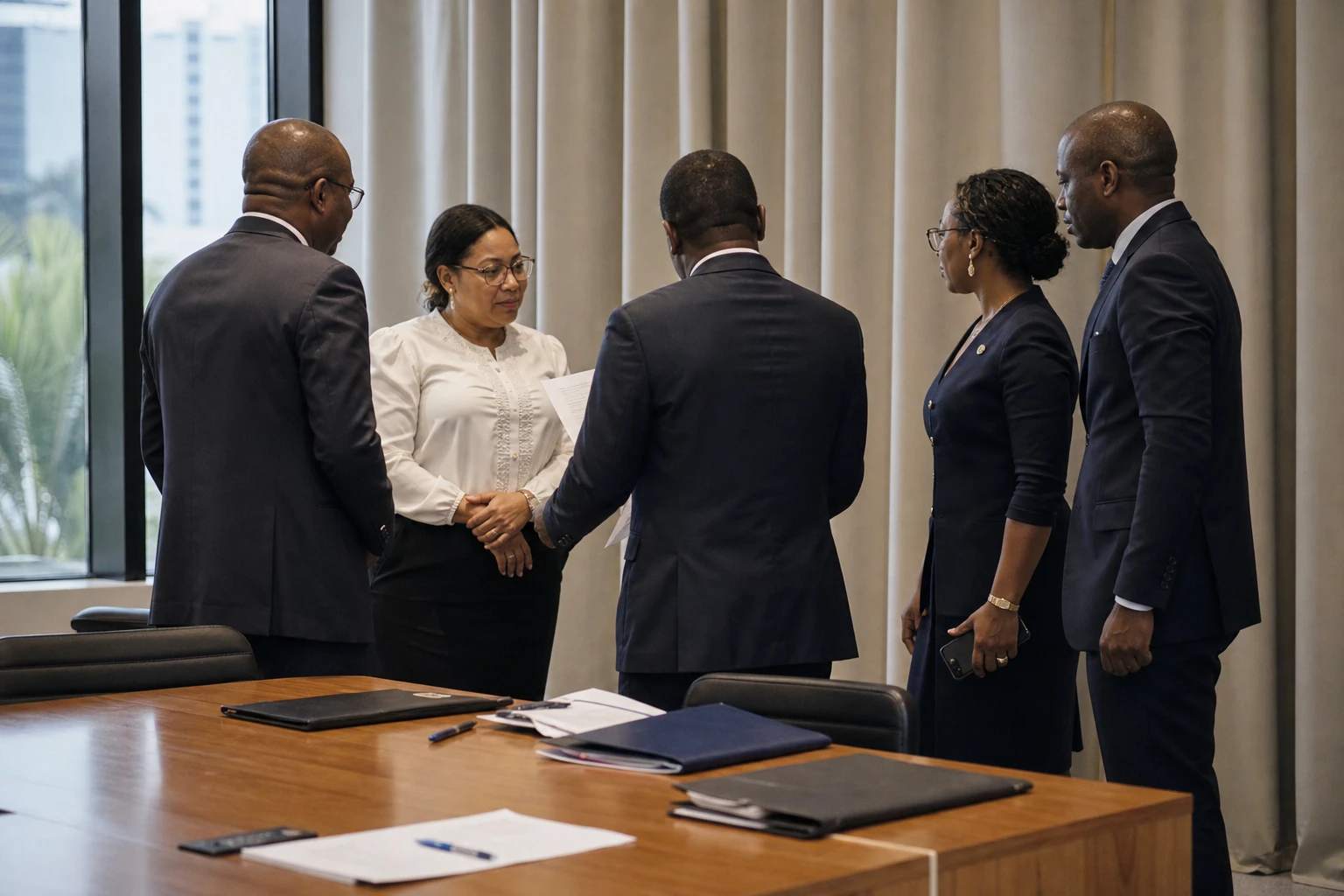
For a small Ivorian business, the obstacle is not limited to the cost of credit. It is often the lack of sufficient collateral. The new agreement between the Société de garantie des crédits aux petites et moyennes entreprises ivoiriennes (SGPME) and Cofina Côte d’Ivoire is specifically intended to ease this constraint.
Risk-sharing to widen access to credit
Signed on Monday 5 October 2026, the agreement provides for an individual guarantee of CFA3 billion, or about $5.1 million. SGPME will cover up to 50% of financing granted by Cofina Côte d’Ivoire to small and medium-sized enterprises (SMEs).
The arrangement applies to loans with a maximum term of five years. It also includes signature-based commitments, such as sureties or guarantees required for certain contracts. For businesses majority-owned by women, coverage can reach 80%.
The mechanism does not mean that SGPME lends money directly. It shares part of the risk with the financial institution. In the event of default, the guarantee therefore limits Cofina’s exposure, without removing the beneficiary business’s repayment obligations.
For entrepreneurs, the stakes are concrete. A company with a strong order book but few assets to offer as collateral may be able to submit a more acceptable application to a lender. The final decision, however, still depends on an assessment of its repayment capacity, governance and the viability of the project.
A step in SGPME’s expansion
The agreement comes as SGPME gradually expands its role in financing Côte d’Ivoire’s productive sector. According to data provided by the institution, CFA108.77 billion in financing had been mobilised as at 31 March 2026 for the benefit of 3,715 SMEs. These operations were backed by CFA54.80 billion in guarantees.
Côte d’Ivoire’s Ministry of Trade subsequently reported an even higher volume as at 30 April 2026. It recorded 3,860 beneficiary SMEs, with CFA114.73 billion in credit mobilised and CFA59.05 billion in guarantees. These figures illustrate the scheme’s rapid expansion, although the different reporting scopes and dates must be distinguished.
The Partial Portfolio Guarantee, or GPP, is one of the main tools used. It makes it possible to cover part of a pool of loans granted by a financial institution. The individual guarantee signed with Cofina works differently: it targets a specified amount and a particular partnership.
This distinction matters. The GPP can facilitate broader and more standardised lending. An individual guarantee, by contrast, makes it possible to tailor support to a financial institution’s products and clientele. The two approaches can therefore complement each other.
SGPME was created to address a persistent difficulty in Côte d’Ivoire: SMEs play an important role in economic activity and employment, but continue to face unequal access to formal financing. A lack of collateral, weak financial statements and irregular cash flows often make it harder to obtain a bank loan.
The role of SGPME in financing SMEs is now part of the national economic strategy.
Cofina aims to deepen its ties with SMEs
For Cofina Côte d’Ivoire, the agreement is intended to increase its financing capacity while managing credit risk. The institution operates in mesofinance, a segment between microfinance and conventional bank lending. It serves, among others, entrepreneurs whose needs exceed those met by small loans but whose businesses remain too fragile for some banks.
Data provided for the end of February 2026 show nearly 92,000 clients and more than 18,000 projects financed since Cofina Côte d’Ivoire began operating. Cumulative financing is said to have exceeded CFA256 billion. These indicators give an idea of the size of the network concerned, but do not indicate the volume of new loans that will actually be guaranteed under the agreement.
The agreement builds on an existing partnership with FIN’Elle, a Cofina subsidiary specialising in financial support for women. On 19 June 2025, SGPME and FIN’Elle signed an agreement for an individual guarantee of CFA1.2 billion, with coverage of up to 80%.
This focus addresses a clearly identified problem. Women entrepreneurs can face additional obstacles to accessing credit, particularly when they have fewer assets to offer as collateral or operate in sectors with low levels of formalisation. Prioritising businesses led by women is therefore intended to address part of this imbalance.
A challenge for the next phase of economic transformation
The issue of SME financing extends beyond the financial sector. Côte d’Ivoire’s National Development Plan 2026-2030 provides for a 70.2% contribution from the private sector to an overall budget of CFA114,838.5 billion. Under this framework, SMEs are expected to contribute to job creation, industrial subcontracting and local processing.
The National Development Plan 2026-2030 focuses in particular on businesses’ access to finance and markets. Without risk-sharing instruments, however, some small businesses may remain excluded from projects linked to public procurement, agricultural value chains or industrial investment.
The challenge, then, will be to turn the guarantee into sustainable economic activity. A financed business must be able to produce, sell, repay and invest again. Post-disbursement monitoring will be just as important as the initial provision of credit.
At regional level, Côte d’Ivoire’s experience is of interest to the Economic Community of West African States (ECOWAS), which is seeking to strengthen trade and value chains among its members. Better-financed SMEs can become regional suppliers, provided they meet standards, maintain reliable accounts and can handle larger orders.
The next indicator to watch will therefore be not so much the announced amount as the number of businesses actually financed, the share going to women, and the distribution of loans between Abidjan, other cities and rural areas. The agreement’s impact will be measured by its ability to move the guarantee from institutional balance sheets into the real activities of Ivorian businesses.