Algeria
 Egypt
 Libya
 Morocco
 Sudan
 Tunisia
 Benin
 Burkina Faso
 Cabo Verde
 Ghana
 Guinea
 Guinea-Bissau
 Liberia
 Mali
 Mauritania
 Niger
 Nigeria
 Senegal
 Sierra Leone
 The Gambia
 Togo
 Cameroon
 Central African Republic
 Chad
 DR Congo
 Equatorial Guinea
 Gabon
 Republic of the Congo
 São Tomé and Príncipe
 Burundi
 Comoros
 Djibouti
 Eritrea
 Ethiopia
 Kenya
 Madagascar
 Malawi
 Mauritius
 Mozambique
 Rwanda
 Seychelles
 Somalia
 South Sudan
 Tanzania
 Uganda
 Angola
 Botswana
 Eswatini
 Lesotho
 Namibia
 South Africa
 Zambia
 Zimbabwe
A price squeezing the sector as the season gets under way again
In Côte d’Ivoire, cocoa is not decided solely on international markets. It is also decided in villages, in a family’s immediate income, in access to inputs and in the ability to sell a harvest without waiting. When the farmgate price falls to CFA francs 1,200 per kilo, the tension is not caused only by the figure. It stems from the gap between promises of stability and the reality on the ground.
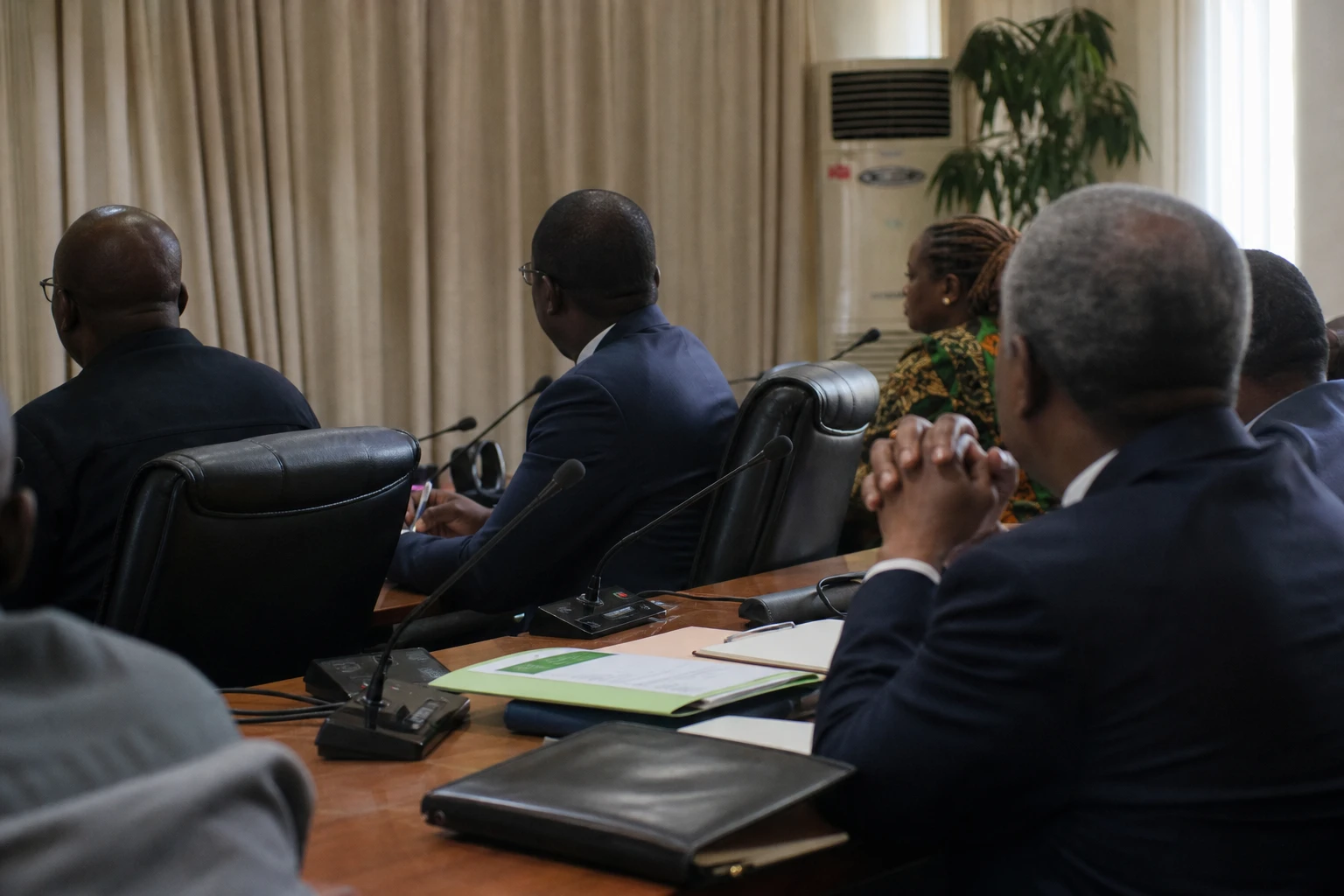
The strain comes as the 2026-2027 main crop season was launched on 1 September 2026 in Abidjan, during the National Cocoa and Chocolate Days. The government maintained the guaranteed minimum cocoa price at CFA francs 1,200 per kilo, citing volatility in world prices and the sustainability of the marketing system.
A protest from the ground up, facing a well-structured system
The Synap-CI union responded by calling, from 16 September, for an indefinite strike to demand better pay for producers. Its central argument is simple: in its view, the set price does not cover actual production costs and reflects neither farmers’ workload nor the stocks still present in collection areas. Several producer organisations echoed this position, denouncing a price they consider too low and governance that is not sufficiently representative.
The government and the Coffee-Cocoa Council, for their part, offer a different interpretation. According to the official government performance review platform, CFA francs 280 billion in direct support and CFA francs 231 billion in budget adjustments have been mobilised to clear stocks. The same source says the sector must also adapt to market volatility and marketing constraints.
At the same time, the Coffee-Cocoa Agricultural Interprofessional Organisation called on producers to remain calm on 8 September in Abidjan, urging them to comply with the national traceability system and producer card requirements. It also announced a listening tour in production areas, due to begin in Divo on 12 September. The message is clear: the protest exists, but the sector remains under tight institutional oversight.
Stocks, traceability, exports: the real fault lines
The heart of the dispute is not limited to price. It also concerns the movement of beans. Synap-CI says a residual stock from the previous season remains on plantations, while the Coffee-Cocoa Council says it bought 100,000 tonnes of cocoa in storage on 5 August. This divergence is fuelling mistrust between some producers and the regulatory bodies.
On the ground, the first figures published for the new season nevertheless show purchases picking up. Between 7 and 13 September, 26,000 tonnes were bought from producers, still at CFA francs 1,200 per kilo, according to the Coffee-Cocoa Council as reported by the Ivorian press. The same source says 38,000 producers have already carried out transactions using their producer cards, while 600 cooperatives are taking part in delivery operations.
This system is not merely administrative. It determines access to the European market, which absorbs about 70% of the beans exported by Côte d’Ivoire, according to figures reported on the ground by the Ivorian press. In other words, traceability has become a commercial passport as well as an internal control tool. For exporters, cooperatives and producers joining the system, the producer card is now a mandatory step.
The debate over stocks is also shaped by a wider context: the 2025-2026 season was marked by severe pressure on global supply, followed by a gradual decline in international prices. The International Cocoa Organization says prices were highly volatile in 2024-2025, reaching historic highs before falling from January 2025. It also notes that Côte d’Ivoire produced about 1.681 million tonnes during this period, confirming its central role in the global balance.
What this episode says about Côte d’Ivoire, and beyond
Cocoa remains a backbone of the Ivorian economy. The government says it accounts for about 17% of GDP and supports a large share of the working population. Beyond the scale of the figures, this means that a change in price quickly affects school expenses, food purchases, cooperatives’ cash flow and shipments to the ports of Abidjan and San Pedro. The crisis is therefore not abstract. It affects the daily lives of hundreds of thousands of rural households.
Côte d’Ivoire also remains the world’s leading cocoa producer, a position recognised by the Coffee-Cocoa Council and the International Cocoa Organization. This gives the country a particular responsibility in West Africa, alongside Ghana in regional coordination of the sector. When Ivorian farmers challenge a price, the signal goes beyond national borders: it raises questions about the distribution of value, stock management and the ability of producer states to cushion volatility in the global market.
What happens next will depend on two concrete factors. First, whether unions can broaden their actual membership base on the ground. Second, how the Ivorian state manages the current season, balancing marketing discipline, budget support and announced local processing. The ministry says it aims to raise local processing to 43% to 50% by 2030. The challenge for the sector is simple: generate less noise and more added value locally.