Algeria
 Egypt
 Libya
 Morocco
 Sudan
 Tunisia
 Benin
 Burkina Faso
 Cabo Verde
 Côte d'Ivoire
 Ghana
 Guinea
 Guinea-Bissau
 Liberia
 Mali
 Mauritania
 Niger
 Nigeria
 Senegal
 Sierra Leone
 The Gambia
 Togo
 Cameroon
 Central African Republic
 Chad
 DR Congo
 Equatorial Guinea
 Gabon
 Republic of the Congo
 São Tomé and Príncipe
 Burundi
 Comoros
 Djibouti
 Eritrea
 Ethiopia
 Kenya
 Madagascar
 Malawi
 Mauritius
 Mozambique
 Rwanda
 Seychelles
 Somalia
 South Sudan
 Tanzania
 Angola
 Botswana
 Eswatini
 Lesotho
 Namibia
 South Africa
 Zambia
 Zimbabwe
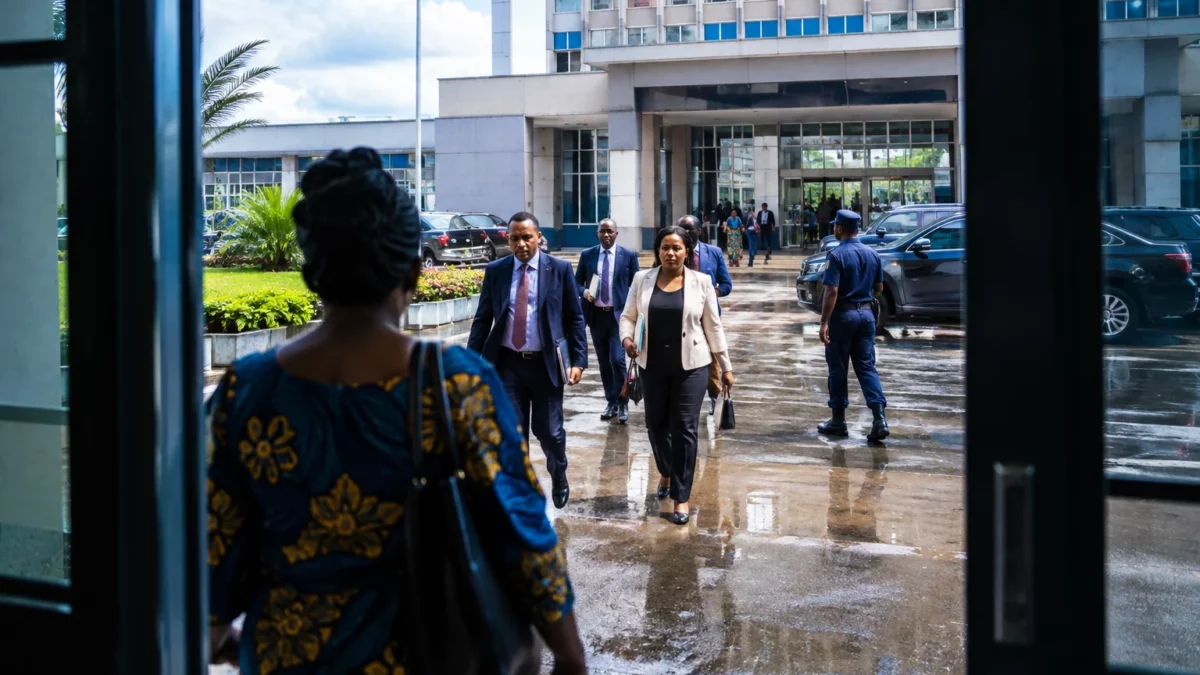
In Walikale, in the east of the Democratic Republic of the Congo, a statement posted on social media can weigh on already sensitive military relations. Kinshasa’s summoning of a Ugandan representative highlights a central question: how far does security cooperation between the two countries extend, and where does respect for Congolese sovereignty begin?
Security cooperation put to the test
Since 2021, the Congolese and Ugandan armies have conducted joint operations against the Allied Democratic Forces (ADF), an armed group active in North Kivu and Ituri. The campaign, known as Operation Shujaa, responds to a threat affecting both countries. However, it involves Ugandan troops deployed on Congolese territory, a politically sensitive issue in the DRC.
The two states also share economic interests and concerns over cross-border movement. But their cooperation does not eliminate disputes or Kinshasa’s concerns about statements by Ugandan officials. In July 2025, Congolese authorities had already summoned the Ugandan ambassador following developments they considered worrying, reaffirming their commitment to the country’s territorial integrity.
This regional context is shaped by several armed crises and competing diplomatic initiatives. The DRC belongs to the East African Community (EAC), a regional integration organisation, and the Southern African Development Community (SADC), which has also been involved in security efforts. Relations with Kampala are therefore part of a balancing act in which the fight against armed groups coexists with political rivalries and concerns over sovereignty.
Kinshasa seeks official clarification
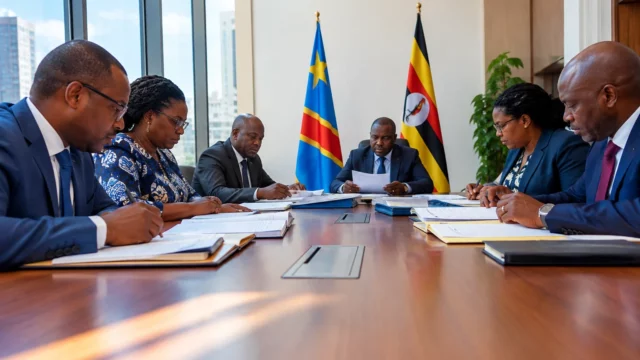
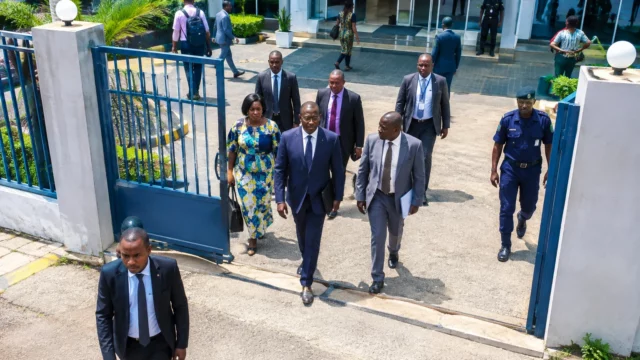
On 24 November 2026, the Congolese government summoned the head of mission at Uganda’s embassy in Kinshasa. The move followed posts on X by General Muhoozi Kainerugaba, the head of the Ugandan army and son of President Yoweri Museveni. The Congolese Press Agency (ACP) reports that Kinshasa described the remarks as being of “particular gravity” and requested clear explanations from the Ugandan authorities.
In the posts, the general appeared to support the capture of Walikale by a group identified as the Front for the Refoundation of the Nation (FRN), while also raising the possibility that Ugandan forces might seize the town themselves. The regional newspaper The EastAfrican also reports the remarks and their reference to the FRN. The statements are attributed to his X account, which became inaccessible after they were posted. Its unavailability alone does not establish whether the account was deactivated by its owner or suspended by the platform.
Muhoozi Kainerugaba also cited the security of the Bahema community and accused the Democratic Forces for the Liberation of Rwanda (FDLR) of threatening it. These claims are part of his posts and do not, in themselves, amount to independent verification of the alleged facts. Community affiliations in this region are complex; presenting them as automatic justification for outside intervention could inflame tensions.
In its statement, Kinshasa asked Uganda to clarify its official position and take steps to prevent such remarks from being repeated. The Congolese government says it remains committed to regional peace while defending its sovereignty and institutions. At the time of the available reporting, the sources consulted had not reported any official Ugandan response to this latest summons.
Walikale, a strategic territory and exposed communities
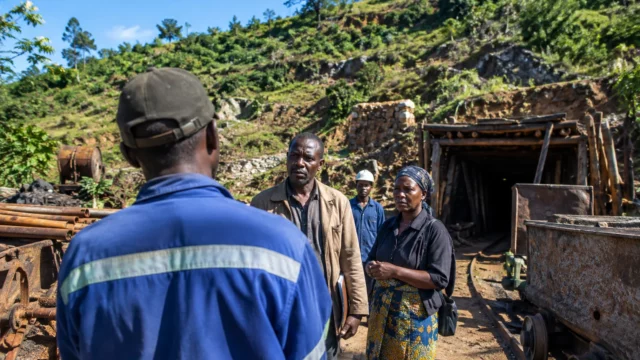
Walikale is in North Kivu province, a region where state authority is challenged by the presence of armed groups and recurring clashes. The territory is also associated with mineral resources, notably gold and tin. This wealth gives the area economic weight, but it is not enough to explain the conflicts: local control, armed alliances and insecurity also affect daily life.
For residents, security uncertainty can hamper travel, access to markets and the continuity of farming or mining activities. Decisions taken in Kinshasa and Kampala therefore have repercussions far beyond relations between political leaders. They also affect local communities, traders and workers who depend on roads that are sometimes vulnerable.
Remarks by a senior military leader carry particular weight, even when posted on social media. They can be interpreted as a political signal, fuel suspicions about a neighbouring state’s intentions or complicate coordination between armies. Kampala has previously faced controversy over Muhoozi Kainerugaba’s posts; nevertheless, the available sources do not allow the conclusion that his messages represent the Ugandan government’s official position.
The next challenge: distinguishing words from decisions
The diplomatic summons does not, by itself, signal a break between the two countries. It formalises a protest and requests a response. The immediate question will be whether the Ugandan authorities repudiate the remarks, explain them or publicly distance themselves from them. Kinshasa, for its part, will have to maintain a balance between defending its territorial integrity and cooperating against the ADF.
At the regional level, this episode highlights the limits of a security response based on military partnerships without strong political trust. EAC and SADC states are closely monitoring the balance in the Great Lakes region, where any escalation can affect several borders. For people in eastern Congo, the practical priority remains security and the ability to resume their activities without rivalries between armed actors or neighbouring states adding to the risks.
What happens next will therefore depend less on the disappearance of an X account than on verifiable actions: Kampala’s official position, the course of joint operations and the situation around Walikale. Until these points are clarified, the general’s posts will remain a source of diplomatic tension, but cannot be equated with a Ugandan military decision without further evidence.